Verticality in 3D games: who's in charge, the player or the map?
Nov 25th '26 5:08pm:
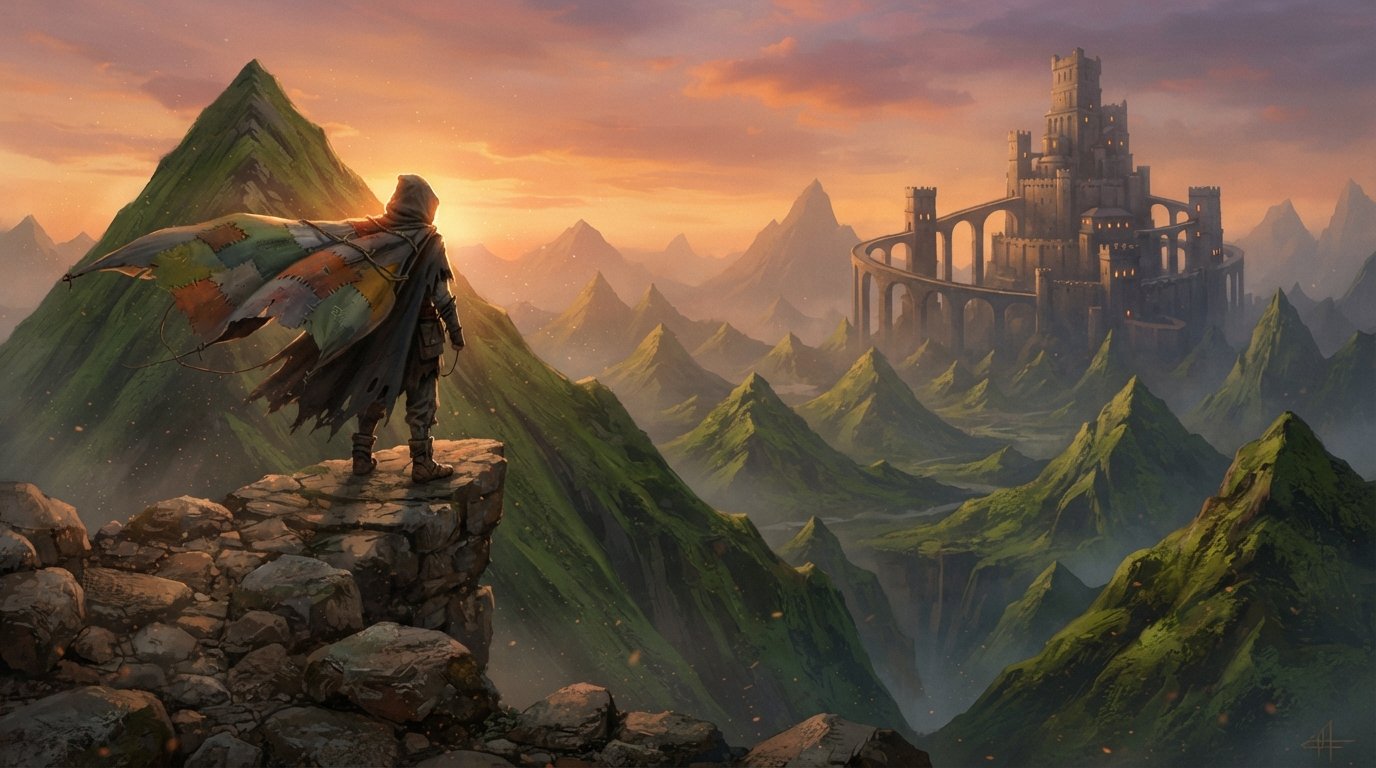
According to Source Gaming, when Shigeru Miyamoto tried the Breath of the Wild prototype, he spent the whole time climbing trees. That's it. No quest, no reward waiting at the top.
The anecdote says more about design than it seems to. Climbing in a 3D game can be fun on its own, as long as the body responds well and the summit shows you something you hadn't seen yet. My thesis is this: in a flat world, exploring means walking; in a world with height, exploring means choosing. Do I climb, go around, glide, give up? Verticality was the cheapest way level design found to turn distance into a decision.
Two studios got there by almost opposite routes.
## Triangles of different sizes
In 2017, at CEDEC, director Hidemaro Fujibayashi and senior lead artist Makoto Yonezu explained the "triangle rule" that shaped Hyrule's terrain. Kotaku reported that the event had eight panels devoted to the game, but this was the talk that stuck. It reached Western audiences through Matt Walker's translation, Walker being at Capcom, posted as Twitter threads and later compiled by third parties. Keep that in mind, because I'll come back to it at the end.
The logic, per 80.lv's summary, is to give the player a choice: go over the triangle or around it. What interests me more is the size. The Radiator Blog, which also broke the talk down, describes big triangles visible from far away, medium ones that ask for a light climb but hint that something is on top, and shallow hills that barely count. Without that variety the rule would be a repeating pattern. With it, the horizon stops being backdrop and becomes a list of invitations, each with a different price. Rectangles do other work: according to Zelda Universe, they're for hiding things that are hard to find.
What's missing from most of these summaries is the glider. Source Gaming notes that it rewards climbing by letting you cover a long distance on the way down, and that this gives the mechanic consistency: the player forms a hypothesis ("that looks like it has something on top"), tests it, and a wrong guess costs little. If you know the way back is free, you take bigger risks. Climbing becomes a bet instead of a punishment. Game Developer puts the effect another way: triangle-based design reduces the need for artificial shortcuts.
## Kyoto as a ruler
The starting point was apparently almost comic. According to Mark Brown's GMTK video, Nintendo used Google Maps data to have Link run around Kyoto and scramble up Himeji Castle, just to get a feel for scale and density. I couldn't find this in a primary Nintendo source, so it stays tagged to the video.
## Lordran, or the world that folds in on itself
If Breath of the Wild uses height to open paths, Dark Souls uses it to close them into loops.
TheGamer describes Lordran as a 3D Metroidvania with levels that loop back and connect to each other, and recalls that the first game cut fast travel from its first two acts. You learn the map with your legs. You climb a tower, open a shortcut, and realize the place you were an hour ago is right under your feet. TechRaptor calls it a single world, with no levels hidden behind loading screens, and says that's where a lot of players let out a small gasp.
Miyazaki never hid his preference. In an interview around Dark Souls III, quoted by Geek Culture, he said he likes players to "climb" into areas instead of crossing them horizontally. And to the PlayStation Blog, about Sekiro, he said FromSoftware has always designed its stages with verticality in mind and sees it as one of its strengths.
Notice the difference. Hyrule gives you many exits and lets you choose. Lordran gives you few, all connected, and makes you remember. In one, height serves choice; in the other, it serves memory. I prefer the second, and I know that's taste.
## When the sky gets messy
Tears of the Kingdom is proof that more height doesn't solve everything.
In Nintendo's "Ask the Developer" series in 2023, Fujibayashi said the previous game's walls gave height, but the play itself was mostly two-dimensional. This time they wanted real verticality: sky, surface and Depths, three layers, per HotHardware. What strikes me as most honest in the interview is what went wrong. The team kept adding floating islands one by one to test new mechanics, until the designers scolded them for making the sky messy. According to Game Developer, seen from the ground the first islands looked like loose bits of trash. According to GamesRadar, the designers won the argument and the number was cut.
There's a second lesson in the Depths. Famitsu, via Nintendo Everything, reported that the base landforms were put together in a very short time, and Zelda Dungeon describes an inverted relationship with the surface. The same Zelda Dungeon piece argues it's where the triangle rule is applied least effectively. The explanation is mine, not a source's: the rule depends on being able to see far, and in a dark underground there's no horizon to hang an invitation on.
## An open map that wants to be a tower
Elden Ring puts the same tension on the other side. VideoGamer argues that the open world lost the vertical connectivity of the first Dark Souls. That's an opinion, but FromSoftware seems to have heard something similar: speaking to PC Gamer ahead of Shadow of the Erdtree, Miyazaki described the DLC map as a middle ground between open field and legacy dungeon, with a better sense of verticality. PC Gamer went as far as writing that the result was one of the studio's finest worlds. A writer's line, yes, but it points in the same direction.
## What nobody measured
Almost everything I read is testimony from the people who made the games, several of them in translation or through third-party summaries. I didn't find a single retention, playtime or drop-off figure that isolates the effect of height. I know the creators believe in this. I can't prove players like vertical maps more, on average, than wide ones. What would change my mind is a vertical, legible world failing, and I don't know of one that failed for being vertical, only for being illegible.
In 2023, Game Informer asked Fujibayashi whether Kyoto also had islands floating above it. He laughed and invited the journalist to go and see.
---
- Zelda Breath of the Wild's ingenious design is all about triangles, Nintendo Life, 2017: https://www.nintendolife.com/news/2017/10/zelda_breath_of_the_wilds_ingenious_design_is_all_about_triangles_apparently
- 5 design lessons learned from Breath of the Wild, Game Developer, n.d.: https://gamedeveloper.com/design/5-design-lessons-learned-from-i-the-legend-of-zelda-breath-of-the-wild-i-
- Holism: Breath of the Wild's golden triangles, Source Gaming, 25 Nov 2017: https://sourcegaming.info/2017/11/25/holism-breath-of-the-wilds-golden-triangles/