Resident Evil 1.5 and the 90s Games Cancelled Halfway Through
Nov 10th '26 12:38pm:
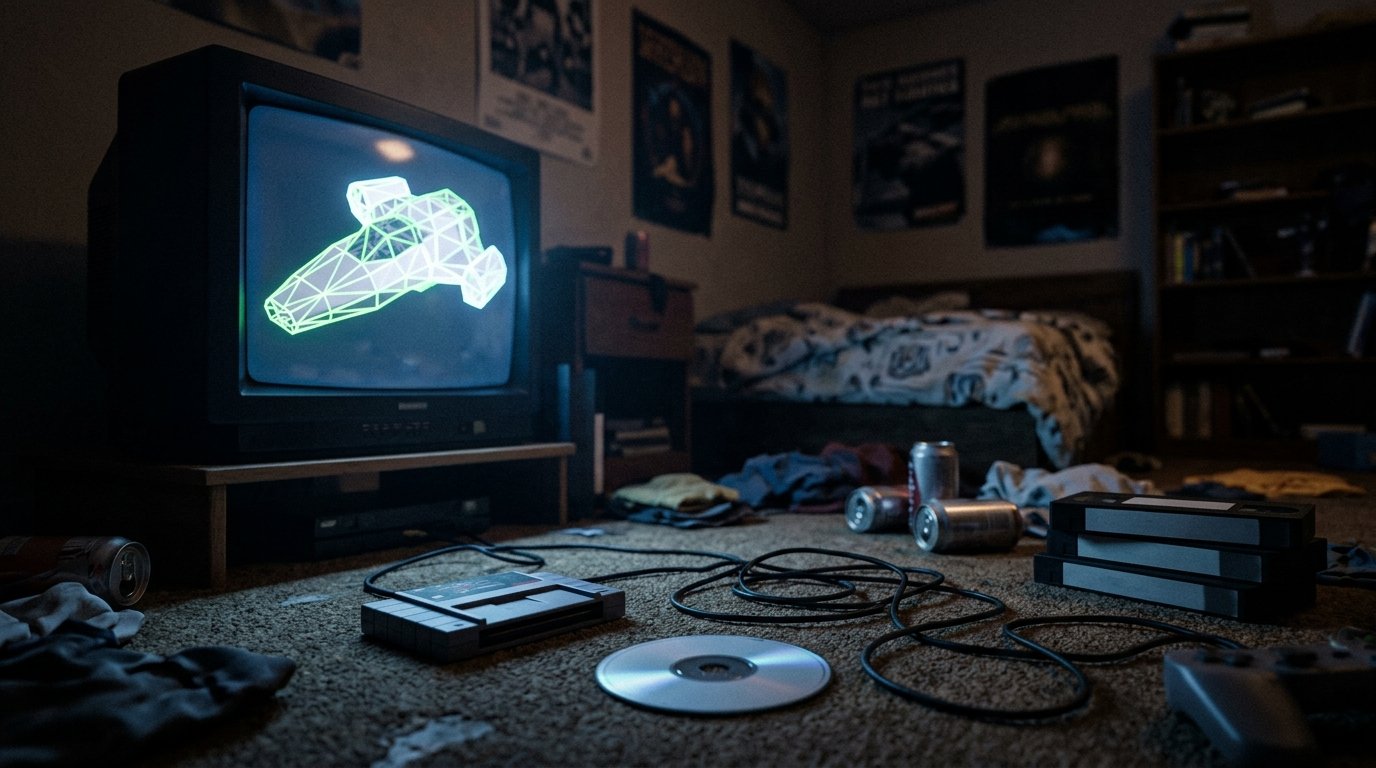
The build of Star Fox 2 that Nintendo eventually released is dated September 12, 1995. The game was finished and had been through testing and localization, according to GamesRadar, yet it only reached the public in September 2017, tucked inside the SNES Classic. Twenty-two years in a drawer.
When people talk about the cancelled games of the 90s, the explanation is almost always the same: they were too good, or too far ahead of their time, and the company didn't understand what it had. It makes a good story. It's rarely the true one. The best-known cases of the decade died of scheduling, disorganization and hardware that flopped, and only one died of poor quality. It was also the only cancellation that did the game any good.
#### Star Fox 2 lost to a console that didn't exist yet
The unofficial version is the one everybody knows. The Nintendo 64 was about a year away, and Nintendo wanted 3D to be its own banner, not a side trick of an SNES with an extra chip. The Super FX polygons that had made the first Star Fox feel like magic in 1993 were about to age overnight. Dylan Cuthbert, the programmer, wasn't exactly furious: GamesRadar summed up an interview with him by saying he didn't mind the delay much, partly because he didn't want the SNES game compared with the PlayStation.
Not everything was lost. According to NinDB, Miyamoto himself admitted that around 30% of Star Fox 64's content came from Star Fox 2. Cuthbert, who later founded Q-Games, brought back the map-based strategy side in Star Fox Command on the DS. The press of the time didn't sneer either: three magazines preferred it to the original, and Edge, more critical, read it as Nintendo's attempt to keep the SNES relevant.
In 2017 Nintendo settled the matter its own way. In a Famitsu interview quoted by Siliconera, Takao Shimizu explained that games using the Super FX chip were one of the problems when planning the SNES Classic, and that things only moved once the chip's emulation was sorted. By the time the game shipped, it had been circulating in emulators for years. Sources disagree on when the ROM leaked (1999 for some, 2002 for others), and there was even a fan translation into English. It was a smart move: Nintendo took its most famous "lost" game and turned it into a reason to buy the box.
One loose note. NinDB claims the game was designed around the SNES mouse and that adapting it to the controller hurt it. I couldn't find a second source, so treat it as a lead, not a fact.
#### Sonic X-treme and the two halves that didn't talk
Here hardware matters less than indecision.
The game began in 1994 at Sega Technical Institute in California, as Sonic Mars, for the Genesis. It went through the 32X and ended up on the Saturn. Christian Senn, the designer, told Edge (as quoted by Sealion Press) that the company couldn't decide which platform the game was meant for, and that sentence says almost everything. In the middle of this there were two teams: Senn and Ofer Alon on the engine for the main game, and Chris Coffin on a separate engine for the boss fights, designed after he saw a NiGHTS level. According to RetroJunk, Sega's president, Hayao Nakayama, preferred Coffin's engine and ordered the whole game rebuilt in its image. Alon left, frustrated.
In May 1996 there was a playable demo at E3, and Sega of America pushed the title hard to save the Saturn's Christmas. Then came the summer. Senn fell so ill he was reportedly told he had six months to live, according to Wikipedia, and Coffin came down with severe pneumonia. Producer Mike Wallis was left with an unfinished game and two months to the deadline. He cancelled. The hole in the schedule was plugged with the Saturn port of Sonic 3D Blast on November 30, 1996, and STI still made Dynamite Deka (Die Hard Arcade) before shutting down.
The year of cancellation doesn't line up across sources. Wikipedia says 1996, while Mega Visions and the Unreleased Games wiki say 1997, with August as the month. My guess: stopping work is one thing, admitting it publicly is another.
For years there's been a rumor that Yuji Naka was responsible for the project's end. Senn himself, in a recent PopRewind interview, treated it as speculation.
The idea of a "Sonic too ambitious for its own good" is comfortable, but ambition was never the problem. The problem was asking the Saturn for 3D without deciding whose game it was.
#### Resident Evil 1.5, or the objection the thesis can't wave away
So far the thesis holds up. Now comes the objection, and it comes in earnest: there was a cancelled game where the company was right.
What's now called Resident Evil 1.5 started in early 1996, about a month after the first game was finished. Hideki Kamiya was directing for the first time and Shinji Mikami was producing. By July 1996 there was already a demo at the V-Wrap Festival in Japan, with two protagonists: Leon Kennedy and a college student and motorcyclist named Elza Walker, who later gave way to Claire Redfield. Leon started on the roof of the police station and worked his way down saving survivors, in a modern-looking station, far from the building that looks like a museum in the final version. Release was planned for May 1997. The Resident Evil 2 we know only came out in January 1998.
It was between 60% and 80% done when Capcom pulled the brake, and the number varies by source (Kamiya mentioned about 70%, according to 3DJuegos). Mikami says in interviews that the game wasn't much fun. Kamiya, in a conversation with Satoru Iwata, took the blame: he accepted every suggestion his team made. SVG also points out that he didn't much like horror.
Restarting at 70% is the most expensive and the most correct decision on this list. And Capcom never pretended it hadn't happened: the deluxe edition of the Resident Evil 2 remake includes a costume for Claire based on Elza's art.
This doesn't knock down the thesis, it sharpens it. Cancelling for lack of quality does happen. But it only worked because Capcom had a brand that sold and room in the schedule to start over, something Sega, in 1996, didn't have.
#### Prey, the cancellation that was never announced
Prey was announced in 1995 by the Rise of the Triad team, with Tom Hall in charge and a 3D engine built from scratch. Hall left in August 1996 to found Ion Storm. Paul Schuytema arrived, threw everything out and started over, this time with portals. The 1997 E3 demo drew heavy praise. And then it was forgotten, on purpose.
Scott Miller, founder of 3D Realms, told GamesRadar that the priority became Duke Nukem Forever. Corrinne Yu was hired in 1998 to rebuild the engine, and in March 2000 references to the game vanished from the company's website. MobyGames says Yu was fired around then. There was never an official cancellation. Human Head picked the project up in 2001, but 3D Realms only admitted it in 2005, according to TCRF.
The Prey that shipped in July 2006 used id Tech 4 and none of the earlier work. Duke Nukem Forever came out in 2011.
#### Mother 3 isn't from the 90s (and stays on the list anyway)
Cancelled in August 2000, with the exact day varying between the 20th and the 22nd depending on the source. But it was announced in the middle of the decade as the successor to EarthBound for the SNES, moved to the Nintendo 64 and then to the 64DD. The accessory's commercial failure and the team's inexperience with 3D finished it off. Wikipedia says it was Iwata who cancelled it ahead of Space World 2000.
It was resurrected in 2003 for the Game Boy Advance and came out on April 20, 2006, in Japan only, where it was a hit. In 2024 it reached Nintendo Switch Online, again in Japan only. As far as I could confirm, it still has no official English edition.
## 7. Sources
- Star Fox 2 dev wasn't too upset that its canceled sequel was delayed by 22 years…, GamesRadar, s.d.: https://www.gamesradar.com/platforms/nintendo/star-fox-dev-wasnt-too-upset-that-its-canceled-sequel-was-delayed-by-22-years-because-he-didnt-want-the-snes-game-to-be-compared-to-the-obviously-far-superior-playstation
- Star Fox 2, Nintendo Wiki (Fandom), s.d.: https://nintendo.fandom.com/wiki/Star\_Fox\_2
- Cancelled SNES games, NinDB, s.d.: https://www.nindb.net/snes/cancelled.html
- How Star Fox 2 Made It Into The Super Nintendo Classic Edition, Siliconera, 22/10/2017: https://www.siliconera.com/2017/10/22/star-fox-2-made-super-nintendo-classic-edition/
- Star Fox 2, Lost Games Wiki, s.d.: https://lostgames.shoutwiki.com/wiki/Star\_Fox\_2
- Star Fox 2, Lost Games (arquivo), s.d.: https://bosnan.vercel.app/lost-games/starfox-2-snes
- Star Fox 2 (espelho da Wikipédia), s.d.: https://ipfs.ssi.eecc.de/ipns/en.wikipedia-on-ipfs.org/wiki/Star\_Fox\_2
- Sonic X-treme, Wikipédia, s.d.: https://en.wikipedia.org/wiki/Sonic\_X-treme
- Sonic X-treme (cronologia), RetroJunk, s.d.: https://www.retrojunk.com/a/woNUpWf7bA/privacy
- Sonic X-treme, Unreleased Games wiki, s.d.: https://unreleasedgames.miraheze.org/wiki/Sonic\_X-treme
- Sonic X-treme, Sonic Retro, s.d.: https://info.sonicretro.org/Sonic\_X-treme
- Yuji Naka responds to rumors…, Mega Visions, s.d.: https://www.megavisions.net/yuji-naka-responds-to-rumors-he-was-responsible-for-sonic-x-tremes-cancellation/
- Sega's Sonic, Sealion Press, s.d.: https://sealionpress.co.uk/post/sega-s-sonic
- Resident Evil 1.5, Wikipédia (via Wikiwand), s.d.: https://www.wikiwand.com/en/articles/Resident\_Evil\_1.5
- Resident Evil 1.5, Wikipédia, s.d.: https://en.Wikipedia.com/wiki/Resident\_Evil\_1.5
- Resident Evil 1.5 y su cancelación…, 3DJuegos, s.d.: https://www.3djuegos.com/juegos/articulos/2409/0/resident-evil-15-y-su-cancelacion-el-dia-que-capcom-decidio-que-re2-debia-ser-un-survival-horror-diferente/
- Resident Evil 1.5 (história do desenvolvimento), Arcadology, s.d.: https://arcadology.net/?p=58
- The Untold Truth Of Resident Evil 2, SVG, s.d.: https://www.svg.com/144255/the-untold-truth-of-resident-evil-2
- The Legend of Resident Evil 2, Modern Horrors, s.d.: https://modernhorrors.com/the-legend-of-resident-evil-2/
- The Surprising Origins of Your Favorite Games, GamesRadar, s.d.: https://gamesradar.com/the-surprising-origins-of-your-favorite-games
- Prerelease:Prey (2006), The Cutting Room Floor, s.d.: https://tcrf.net/Prerelease:Prey\_(2006)
- 22 years. 3 developers. Only 2 games. The fascinating history of the Prey series, GamesRadar, s.d.: https://www.gamesradar.com/ds-only-games-coming-this-year
- Prey (2006), MobyGames (trivia), s.d.: https://www.mobygames.com/game/23082/prey/trivia/
- EarthBound 64, Wikipédia, s.d.: https://en.wikipedia.org/wiki/EarthBound\_64
- Mother (video game series), Wikipédia, s.d.: https://en.wikipedia.org/wiki/Mother\_(video\_game\_series)