Neo Geo: Why Did Nobody Play These Fighting Games?
Oct 25th '26 10:52am:
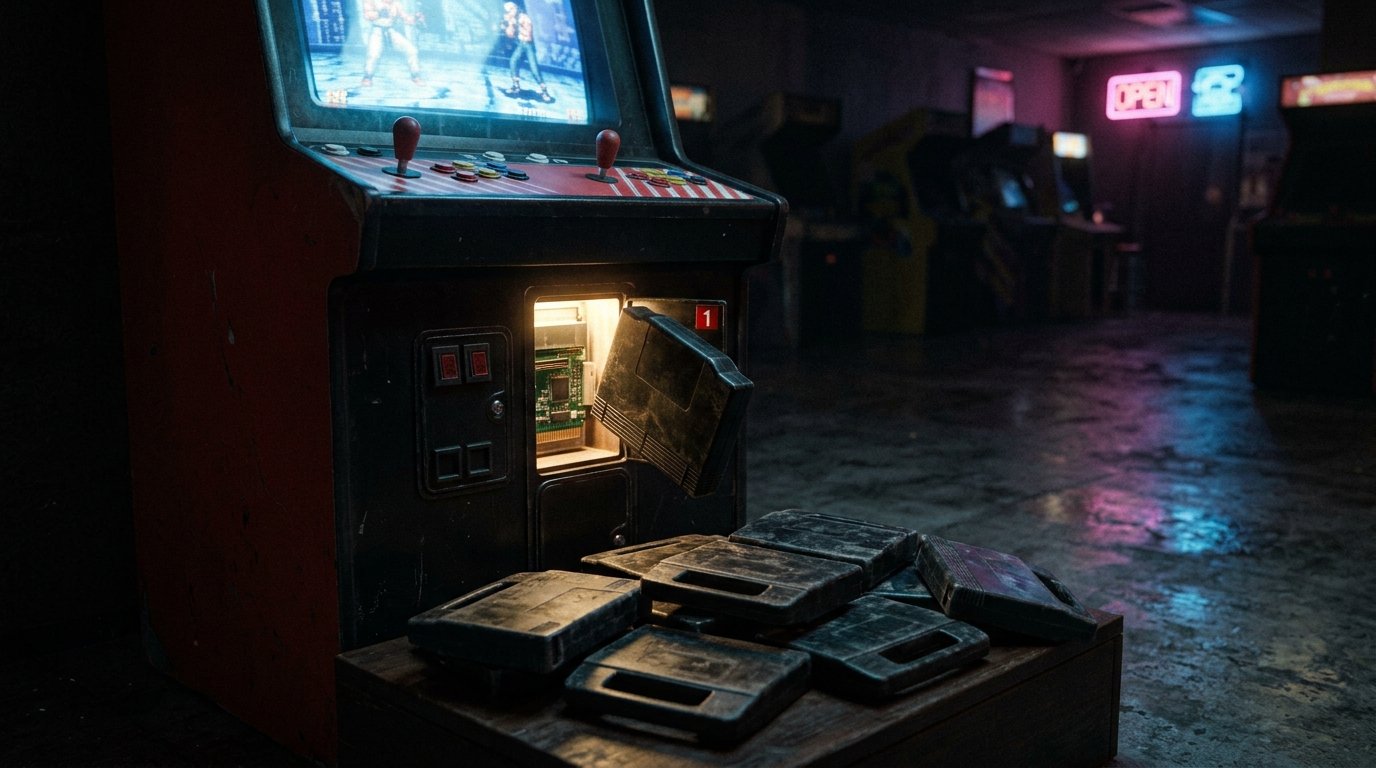
Ask anyone who spent afternoons in 90s arcades to name Neo Geo fighting games. The list almost always comes out the same: The King of Fighters, Samurai Shodown, Fatal Fury, maybe Art of Fighting if memory helps. Four series.
The platform had well over thirty fighting games.
The rest weren't all bad, and that's where the story gets strange.
The explanation is in the wallet. The Neo Geo arrived in 1990 with an unusual pitch: the same hardware in arcades (MVS) and at home (AES), with the same cartridges on both sides. At home, the top-tier console cost $649 with two games included, and each new cartridge ran between $200 and $300, depending on the title and year. Whoever paid that bought what they already knew was good. In arcades the logic was similar but crueler: multi-slot cabinets let the operator put four or six games in a single machine and wait to see which ones earned coins. The ones that didn't were pulled from the slot and put on a shelf.
A mediocre fighting game on the Neo Geo had nowhere to land. It either worked fast, or it sat on the shelf.
#### Kizuna Encounter, the sequel to a game nobody played
Kizuna Encounter: Super Tag Battle came out in 1996, published by SNK itself, and continues the universe of Savage Reign, from 1995. Note the date. 1996 is the year of The King of Fighters '96, when SNK already had the series that paid the bills in its cabinets. Nobody was going to spend a slot on the sequel to a game that had barely had a first part.
What Kizuna offered was different from the rest of the house. Teams of two, with partner swaps during the fight, whereas in KOF the team advanced one at a time, in turn, never crossing paths. It's a game design that asks the player for a different head, and the Neo Geo wasn't the place where you asked that of someone who had just dropped a coin.
The original cartridge was never cheap and still isn't.
#### Gowcaizer and the company that closed right after
Voltage Fighter Gowcaizer is from 1995 and was made by Technos, the house of Double Dragon and Kunio-kun. Few people connect Technos's name with a fighting game of colorful costumes and superhero poses, with the aesthetic of the Japanese hero shows known as tokusatsu. It's not what you'd expect from a company that built its reputation throwing punches in dirty streets.
Technos went bankrupt in 1996. Gowcaizer was one of the last things to come out of there, and maybe that's why almost nobody remembers it as part of a bigger story.
#### Waku Waku 7
Sunsoft, which the world knew for the NES Batman, tried the genre twice on the Neo Geo: Galaxy Fight: Universal Warriors in 1995 and Waku Waku 7 in 1996. The second is the one that deserved better luck. Saturated colors, characters out of a cartoon, shameless humor and a faster pace than Samurai Shodown, the game it was competing against in the same cabinet. The number in the title refers, apparently, to the seven main fighters.
It was a fighting game for people who didn't want a serious-faced fighting game. In the arcades of 1996, that person wasn't the one calling the shots.
#### Kabuki Klash
Hudson Soft, more associated with the PC Engine and Bomberman, published Kabuki Klash in 1995, based on the Tengai Makyō RPG series (Far East of Eden in the West). In Japan the series had an audience; in the West almost nobody knew what it was. The result is a game whose natural audience was thousands of miles from the cabinets that received it.
#### Breakers
Visco, better known for arcade soccer games, released Breakers in 1996 and a follow-up, Breakers Revenge, in 1998. I'll say little about the rest, because it isn't worth inventing. But a sequel two years later tells me someone inside Visco believed in the game more than the market did.
#### The ones that were genuinely bad
I won't pretend they were all unfairly forgotten. Fight Fever, from 1994, by Viccom, is regularly cited as one of the worst fighting games on the platform, and that reputation is no accident. If my thesis is that price hid good games, I have to admit it hid the bad ones too. Only the bad ones at least deserved the oblivion.
On a PlayStation, a weak fighting game ended up on sale and found a second life among kids with no alternative. On a Saturn, the same. On the Neo Geo there was no sale big enough, and so no second life. A mediocre fighting game never became a cult favorite, because it was never played by enough people for a cult to form.
Then there are the late ones, 2002, 2003, when SNK had already gone bankrupt and Playmore was publishing. Matrimelee, Rage of the Dragons. Those are another story, and a stranger one.