Steam Server Issues Explained: What Downdetector Isn't Telling
Oct 21st '26 3:55pm:
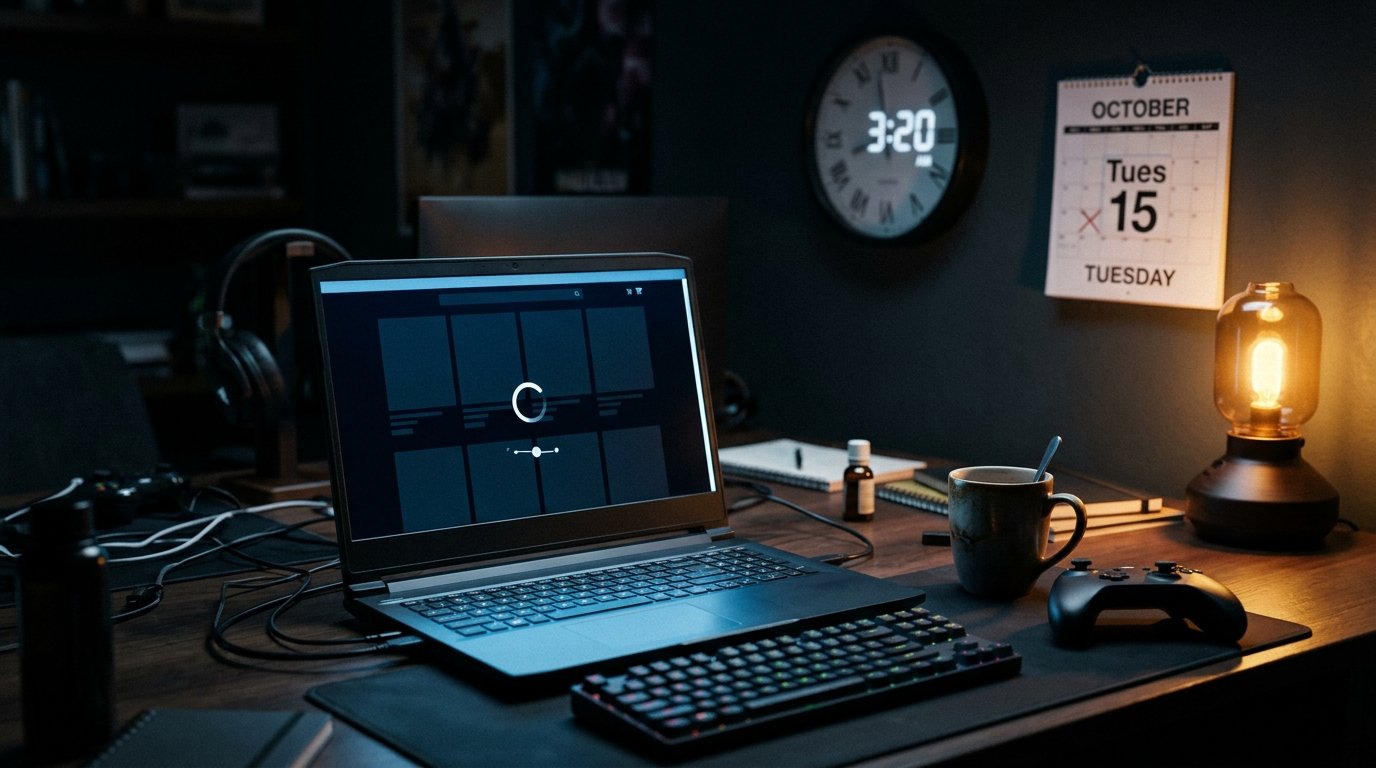
Steam started throwing connection errors on the evening of Tuesday, October 20, 2026. Downdetector's own post says user reports pointed to problems since 6:20 p.m. EDT. I found no statement from Valve about what went wrong. The reports follow a familiar shape: people can't reach servers, some can't download or log in, and the official silence goes on. The timing is the part worth noticing. 6:20 p.m. Eastern is 3:20 p.m. on the US West Coast, on a Tuesday, and a suspicious number of Steam's recent wobbles have landed in that same slot.
## What the reports show, and what they leave out
Start with what is actually on the record, because an outage story invites a lot of confident filler.
- **Trigger:** Downdetector flagged Steam problems from 6:20 p.m. EDT on Oct. 20, 2026.
- **Complaint mix (US-focused tallies):** server connection problems led at 51% of reports, downloads and updates came to 23%, and login issues to 14%.
- **Other symptoms:** Workshop errors and sync failures were also reported.
- **Independent monitors:** SteamPeaks listed its monitored services as up, and Entireweb reported no major ongoing outage.
- **An earlier blip:** Sportskeeda logged a smaller spike earlier on Oct. 20, around 5:28 a.m. IST, with reports peaking above 700 before dropping sharply.
- **Cause and fix time:** no confirmed cause, no restoration timeline, and no Valve statement that I could find.
That last line is the important one. A mixed picture, with loud complaints and green status dashboards, usually means a partial failure. Maybe one region, one set of login servers, or one backend service is struggling while the storefront limps along for everyone else. It is a different animal from the total blackouts Steam has had.
The scale matters too. The Oct. 20 numbers look modest next to Steam's worst recent days. On Dec. 24, 2025, Downdetector reports climbed past 75,000. On Dec. 16, 2025, they passed 41,000 by 3:30 p.m. PT. On Feb. 20, 2026, they passed 18,000 within about fifteen minutes. The earlier spike this week topped out in the hundreds. Whatever happened Tuesday evening, nothing I've seen suggests it belongs in that top tier unless the counts climbed after I looked. That's an honest caveat, and it's the one most "Is Steam down?" posts skip.
## The comparison nobody makes: Steam against a bad day for the cloud
There's a second comparison worth making, and it's against the rest of the internet that day. Tom's Guide ran a live blog on October 20 about a Google Cloud disruption it described as a "power event," which took out Spotify, Revolut and others in the UK. Its coverage window began at 10:25 UTC, hours before Steam's evening reports.
I'm not claiming a link, and I want that to be clear. I've seen nothing tying Steam's problems to Google Cloud, and Valve runs a great deal of its own infrastructure. But the temptation to stitch the two together is exactly what makes outage coverage unreliable. Two incidents on the same calendar day get fused into a single story because the headline writes itself. If a cloud provider's failure had been behind Steam's, you'd expect a broad cluster of unrelated services to fail together, at the same moment. A Tuesday-evening wobble that nobody else shares points somewhere else.
Where? The history offers a better lead than the coincidence does.
## The Tuesday pattern
Line up the dates from the incidents above and a few things stand out. Nov. 11, 2025 was a Tuesday, with more than 6,000 reports as of 3:25 p.m. PT. Dec. 16, 2025 was also a Tuesday, and the 41,000 figure was logged at 3:30 p.m. PT. Jan. 27, 2026 was a Tuesday as well, with more than 3,600 reports as of 3:15 p.m. PST. On Oct. 7, 2025, another Tuesday, PC players reported hanging logins and a storefront claiming it had no connection, with over 30,000 Downdetector reports. And now Oct. 20, 2026, a Tuesday at roughly 3:20 p.m. PT.
That's five incidents on the same day of the week, and at least four of them clustered in the same hour on the West Coast clock. The others in my list break the pattern: the Silksong launch spike on a Thursday, the Christmas Eve surge on a Wednesday, the February one on a Friday. Those have their own explanations. The Silksong spike, for example, coincided with Hollow Knight: Silksong hitting the store. A game launch is a traffic story. A Tuesday afternoon with no launch attached is a different kind of story.
Here is the piece of background that makes it more than numerology. Valve has historically run routine Steam maintenance on Tuesday afternoons, Pacific time. Hardcore Steam watchers have grumbled about it for years, since the store tends to hiccup around then. Valve hasn't said that maintenance explains any of the incidents above, and I'm not saying it does. What I'm saying is that anyone investigating "why does Steam keep falling over" should check the Tuesday slot before they check anything exotic. When the same hour recurs across months, the boring explanation deserves first look, because boring explanations are usually right.
My own read, as someone who has watched these spikes come and go: a large share of Steam's mid-sized outages look like **change events** rather than **capacity events**. Capacity problems, like a big launch or a sale, produce slow, grinding failures that track traffic. Change problems, a deploy or a configuration push going slightly wrong, produce sudden, awkward failures at scheduled hours. The Tuesday cluster looks like the second kind.
## Why a Downdetector spike is a weaker signal than it looks
Before anyone builds a theory on the numbers, a word about the instrument. Downdetector counts complaints, not failures. It flags an incident only when problem reports run well above the normal volume for that time of day. A modest evening on the platform can therefore look dramatic in the chart, and a daytime incident with many users already online can look bigger than it was.
Three things distort the picture. First, **reporting is self-selecting**. A dropped Steam connection prompts a small share of affected people to click a report button, and that share changes with the news cycle. Second, **geography is blurry**. A cluster of Eastern US reports at 6:20 p.m. EDT doesn't tell you whether the failing component sits in a US data center, a CDN edge, or an ISP route. Third, and this one gets forgotten, **the dashboards disagree with each other**. In December 2024, Tom's Guide reported that Downdetector showed up to 10,000 reports while the Steamstat.us status page listed everything as working fine for a while. If the monitors can't agree, no single graph can settle the question.
So the useful version of the Oct. 20 story is smaller than the usual headline: **some users had trouble connecting, and the cause is unconfirmed.** Anyone claiming more is guessing.
## The silence is part of the story
Valve's communication habit deserves a straight-faced critique. The company is famously terse, and with outages it tends to say nothing until the problem is fixed, if it says anything. Players cope by crowdsourcing: Downdetector, Reddit, X, and unofficial status pages. In effect the user base performs Valve's incident communications for it, with worse data.
I think this has a real cost, and I don't think it's only reputational. When players can't tell a regional hiccup from a platform failure, they start doing things that make it worse. They restart the client repeatedly, hammer the login screen, or reinstall. The Steam error pages themselves aren't much help. Some players on October 7, 2025 reported a relaunch taking ten minutes to get through login, while a different user's client came up fine. That sort of split experience is the signature of a partial failure, and it's the situation in which one honest line from Valve ("login servers in region X are degraded, we're on it") would remove most of the noise.
I'd add one more point in Valve's defense, because fairness matters. Steam serves a very large and very spiky audience, and incidents measured in minutes are rare relative to the hours of uptime. Nobody should read a Tuesday evening hiccup as a sign that the platform is unreliable. The criticism isn't that Steam breaks. It's that the explanation for why it breaks, and when, is left entirely to guesswork.
## What a stuck Steam actually costs you
An outage matters less for the games you can't launch than for the ones you assumed you could. Steam isn't only a store. It is where your library authenticates, where your cloud saves sync, where Workshop content for your mods lives, and where your friends list sits. The reported symptoms on Tuesday, Workshop errors and sync failures among them, are the ones that bite offline-minded players hardest, because they interrupt things people believed were local.
A practical, unglamorous tip from years of living with this: if you're already signed in and Steam starts misbehaving, think before you hammer the login. Steam's **Offline Mode** lets you keep playing games that don't need an online connection, and it's usually a better move than restarting the client ten times and waiting. The caveat, which people learn the hard way, is that you generally have to set it up while Steam is still reachable. If your session is already half-dead, you may be locked out of it. It's worth a five-minute check on a quiet afternoon rather than during the next incident.
There's a larger point under the practical one. Players have handed a lot of their game ownership to a single service, and tolerated it because the service is excellent. Each incident, even a small one, is a reminder that "my library" is a permission and not a possession. I don't think that's a reason to leave Steam. I do think it's a reason to ask Valve for better incident communication, in exchange for the trust people extend.
## What I'd watch next
If I were covering this for the long term, I'd keep a simple log: date, weekday, time in Pacific, complaint mix, and whether any launch or sale was running. A dozen entries would tell you more than any single outage article can. If Tuesdays at 3 p.m. keep appearing with no launch to explain them, then Valve's maintenance routine, or whatever else runs on that clock, belongs in the investigation. If they stop appearing, the pattern was just five dots I connected.
I don't know which it is. Valve could settle it in two sentences, and so far it hasn't. How many more Tuesdays will it take?