Ocarina of Time Remake: Why a 1998 Game Still Rules Zelda Talk
Oct 14th '26 2:19pm:
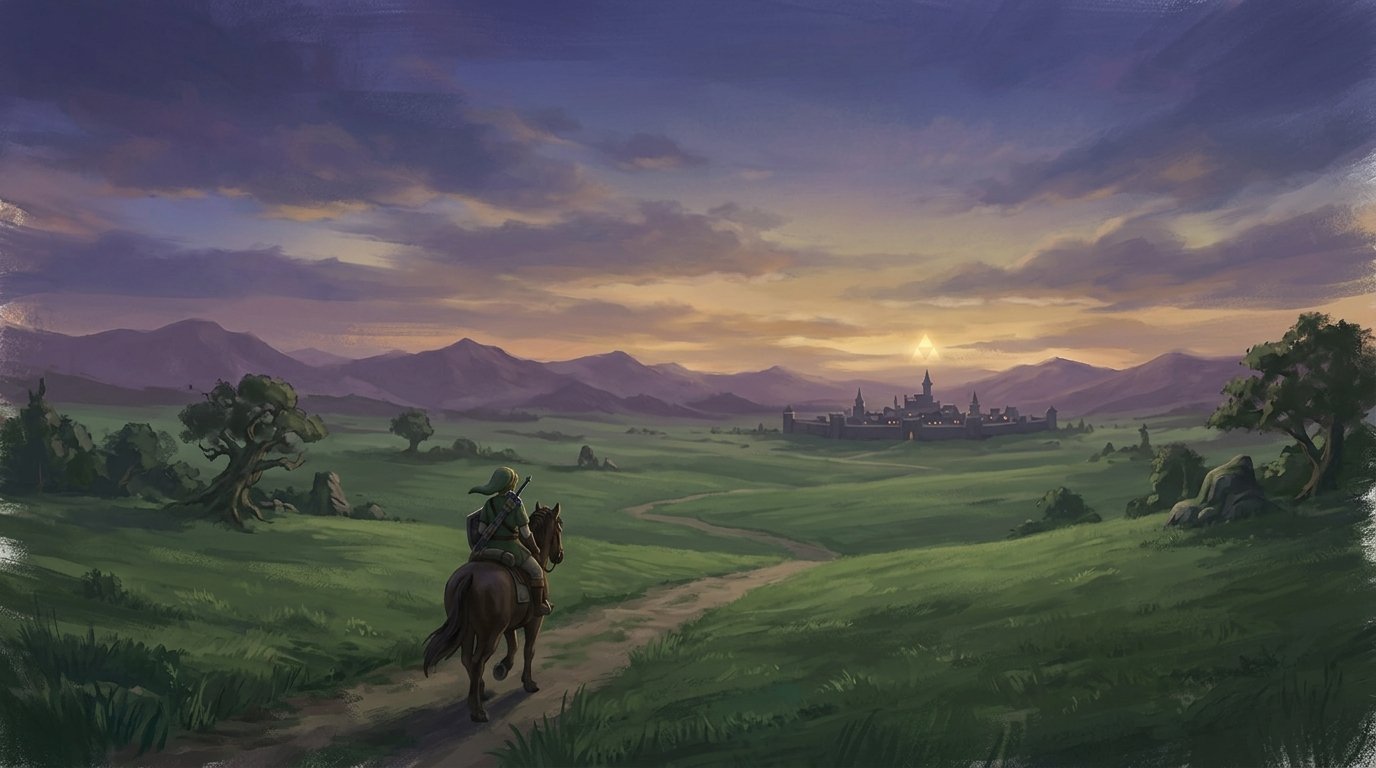
*The Legend of Zelda: Ocarina of Time* returns on November 5, 2026, exclusively on Nintendo Switch 2, rebuilt from the ground up almost 28 years after the original reached the Nintendo 64 in the winter of 1998. Nintendo revealed the remake in June and then showed gameplay and fixed the date at the Zelda 40th anniversary Direct on September 8. The usual question around a remake is whether it looks good. The better question here is whether a game this canonized can be touched without losing the thing people actually remember.
## What Nintendo has confirmed about the remake so far
Most of what we know comes from the September Direct and Nintendo's own product page, and it is more specific than the vague June teaser.
- **Release date:** November 5, 2026, on Switch 2 only. A physical edition exists.
- **Movement and control:** a run button, faster swimming, motion-controlled aiming, full camera control, and button-based jumping instead of automatic jumps.
- **Items:** you can scroll through your inventory, similar to *Breath of the Wild*.
- **Presentation:** fully voiced cutscenes, expanded dialogue and an orchestral soundtrack.
- **Hardware tie-in:** a Zelda 40th anniversary edition of the Switch 2 console arrives on October 29, a week before the game.
- **Where to play the original today:** the N64 version is available on Switch and Switch 2 with Nintendo Switch Online + Expansion Pack.
That list reads like a polish pass, and I think that's the right way to read it. This is not the 2011 treatment. The 3DS version, built by Grezzo, added updated graphics, motion controls and stereoscopic 3D but kept the skeleton of the 1998 game, and the changes were largely cosmetic and ergonomic. The Switch 2 version goes further on the visuals while being oddly conservative on the structure. Nintendo's own description talks about "timeless gameplay," which VGC read as a sign the core experience stays intact. A remake that promises to leave the design alone is a very Nintendo thing to say, and also a risky one, because it puts the entire weight of the project on a game whose flaws everybody already knows.
The second comparison worth making is with how other companies approach this. Capcom's *Resident Evil 4* remake in 2023 rebuilt pacing and combat around modern expectations and still kept the spirit of the original. Nintendo's own 2019 *Link's Awakening* remake went the opposite way: a toy-box rendering of an otherwise unchanged game. *Ocarina of Time* sits somewhere between the two. Nothing on the list above rewrites a dungeon. Everything on it removes friction from the way you hold the controller.
## How a 1998 cartridge wrote the grammar of 3D games
To understand why the stakes feel high, you need the numbers from back then, and I'd double-check them against your own sources before publishing. *Ocarina of Time* was the first 3D *Zelda*, it fit on a 32 MB cartridge, and it sold somewhere around 7.6 million copies on the N64, which made it one of the console's biggest titles. The reception was close to unanimous: a 99 on Metacritic, and Japan's *Famitsu* reportedly gave it a perfect 40 out of 40.
Those scores matter less than what the game did with its time. The N64 had one analog stick and a handful of buttons, and 3D action games of the period mostly struggled to answer a basic problem: how do you fight something when the camera and the player disagree about what's in front of you? *Ocarina* answered with Z-targeting, a lock-on that let the camera and Link look at the same enemy, and with context-sensitive buttons that let one button do different things depending on where you stood. Those two ideas didn't stay in Hyrule. You can trace lock-on systems through a quarter-century of action games, and half the "press A near a door" logic in modern adventure design.
There's an irony in that. The ideas were so successful that they became invisible. A player coming to *Ocarina* in 2026 doesn't see an invention, they see a game that works the way every other game works, only slightly clunkier. That is the central problem with praising a pioneer. If you did everything right, nobody can tell you did it first.
## What the highlights reel leaves out
### The seven-year jump is a loss, not a reward
Ask people for their favorite *Ocarina* moment and you get the Master Sword, the Temple of Time, Epona, the Lon Lon Ranch. The sequence is worth looking at again, because it is built on a cruel little trick. You pull the sword, you're sealed away for seven years, and when you wake up the world you spent hours learning has been taken apart. The market is a ruined square. The castle town is full of zombies. The Kokiri Forest feels smaller and wrong.
Games now are generally terrified of taking things from you. Progress is supposed to be additive; you gain levels, you gain gear, you gain a map you can fast-travel across. *Ocarina* hands you the biggest power fantasy in the series, the hero's sword, and immediately charges you for it. I'd argue that's the real engine of the game's reputation, and it has little to do with the dungeons. It's the first time many players felt an adventure game make them *grieve* a place that was never even real.
The question for the remake is whether fully voiced cutscenes and expanded dialogue help or hurt that moment. I can see both outcomes. A voiced Zelda and a voiced Ganondorf could sharpen the dread. They could also over-explain what the original left to silence and a changed skybox.
### Hyrule Field is empty on purpose
Here is the claim that gets me the most arguments: the game's best design decision is how little it fills the world. Hyrule Field is a huge, mostly empty plain you cross again and again. During the day you ride. At night, skeletal creatures dig up out of the ground and you fight them with a sword you barely know how to use. There is no icon on a map telling you where to go next and no meter filling with completion percentage.
Most modern open worlds treat emptiness as a failure of production budget, a gap to be filled with side activities. *Ocarina*'s emptiness was a pacing tool. It is what made the first time you reached Lon Lon Ranch, with its fence and a stranger's horse, feel like arriving somewhere. Travel was the quiet between the loud parts, and the quiet is why the loud parts hit.
That is the part of the game I'm most nervous about in a remake. Running ability, faster swimming and a free camera are all things that make traveling faster and less awkward. They're good changes. But every convenience also shortens the walk, and a shorter walk means less silence. Nintendo is aware of this, I think. Whether the remake keeps Hyrule Field's loneliness or quietly sands it down is a question no trailer can answer.
## Where it genuinely aged badly
It's dishonest to write about this game without admitting how much of it creaks. The original N64 version ran at a low frame rate by modern standards, and the camera is stubborn in tight spaces. Navi interrupts you at the worst moments with the same line. Changing boots in the Water Temple means pausing, opening a menu, swapping, closing the menu, repeating, and the temple is a monument to exactly that kind of inventory friction. The 3DS port acknowledged it: the enhanced version made the Water Temple a bit less challenging to navigate.
This is where I think the remake's list of changes is aimed correctly. A scrollable inventory, button-based jumping and a free camera all target interaction problems, not design problems. The Water Temple is still a maze. It just won't punish you for the menu.
But here's the part people skip. Some of the friction was the point. The original game's clumsiness made you feel small in dungeons that were supposed to be larger than you. When you remove all the roughness, you also remove some of the sense of being outmatched. I don't have a clean answer on whether that's a net gain. I suspect it is, for most people, and that a minority will miss the roughness.
## The test the remake can't pass
In 1998, nobody knew what a 3D adventure was supposed to look like. The first time you rode out into Hyrule Field was a genuine surprise, because the genre had no precedent for it. That shock is gone, and no engine can bring it back. Every player in 2026 arrives with 28 years of third-person adventures in their head, many of which borrowed directly from this one.
So the remake has to work on a different fuel: memory. For anyone who played the original, it's a chance to revisit a place with better lighting. For everyone else, it's a well-regarded old game wearing a new coat, and they'll judge it against everything that came after. That's a harder audience to win than it sounds, and Nintendo's decision to anchor the launch to the anniversary, with a limited-edition console a week earlier, tells you how much the company is leaning on affection rather than novelty.
There's an easy way to test the theory before November 5. The original is sitting in the Switch Online library, and playing the first hours again is a better preview than any trailer. Pay attention to when you get bored and when you don't. If the boring parts turn out to be the ones you remember most fondly, then a remake that smooths them out has a bigger problem than the camera.
What happens when the first hour of the remake feels better than the one you remember, and you realize you liked the old one *because* of how it felt?