Marvel Tokon: The 20-Fighter Roster That Won EVO and Lost Steam
Oct 12th '26 9:33am:
Written by: GEmmo
<br>The last team in **Marvel Tōkon: Fighting Souls** was shown at EVO 2026. Ghost Rider, Loki, Blade and Deadpool, christened the Samurai Outriders, completed the game's 20-fighter roster. That was at the end of June. Six weeks later, on August 6, the game arrived on PS5 and PC. The list that dominated the conversation became the least contentious part of the launch, because the daily peak on Steam dropped from roughly 25,000 players to 994, according to Kotaku. Today, October 12, it's worth going back to that roster with the data in hand and asking what it was really selling.
## The 20 of Marvel Tokon, Team by Team
In a four-person team game, the roster is never just a list of names. Arc System Works revealed the fighters in blocks of four, one team at a time, over several months. According to [Insider Gaming](https://insider-gaming.com/marvel-tokon-fighting-souls-full-roster-every-team-character/), the base game has 20 characters split into five teams:
- **Unbreakable X-Men:** Storm, Magik, Wolverine and Danger
- **Amazing Guardians:** Spider-Man, Ms. Marvel, Star-Lord and Peni Parker
- **Fighting Avengers:** Captain America, Iron Man, Black Panther and Hulk
- **Knights of Doom:** Doctor Doom, Magneto, Green Goblin and Carnage
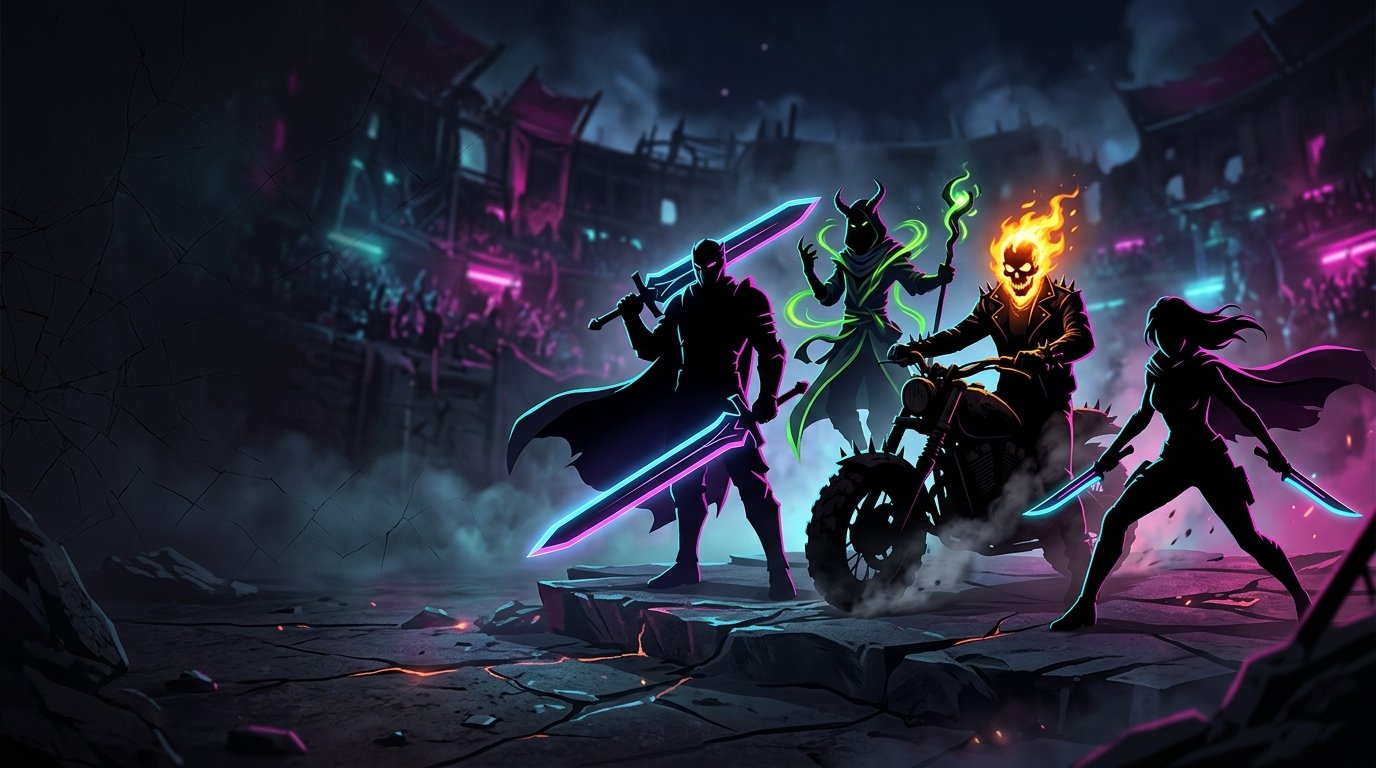
- **Samurai Outriders:** Ghost Rider, Loki, Blade and Deadpool
The groupings follow the order of the published list. Teams are presentation labels and don't affect gameplay. There's one curious detail: when players build their own squad of four, the game generates a custom team name, with the first word coming from the lead fighter and the second from the rest of the group. It's a touch of personality that almost no fighting game bothers to include.
The final team was the strangest of the five. Blade appeared as a fast fighter, sword-centered but with firearms to change up the rhythm, and Loki brought a new Asgard stage. But it was Deadpool who stole the show: packed with fourth-wall-breaking references, with winks at Guilty Gear, Mortal Kombat and Marvel vs. Capcom. A game that presents itself as the genre's heir cracking jokes about its competitors is a move of confidence, or of provocation, and the community read it as both.
## Twenty for a 4v4: The Math Nobody Said Out Loud
Fighting game rosters have their own arithmetic. The old *Marvel vs. Capcom 2* arrived with 56 characters and teams of three, which gives about 27,000 possible trios. With 20 fighters and teams of four, the number of distinct squads is 4,845. That sounds like a lot. But within a team of four, real diversity depends on how many fighters work in each slot (point, assist, closer), and that's where a small roster shows. Twenty names only make five teams with no repeats. By the second week of local tournaments, everyone is playing the same Iron Man.
Some people warned early. Before the roster was finalized, when the game's Steam page leaked it by mistake, some players criticized the roster size as looking short for a 4v4. Arc's defense is a familiar one: *Guilty Gear Strive* arrived in 2021 with just 15 fighters and grew through seasons of content. It's the same logic now, with the **Year 1 Character and Stage Pass**, which adds four characters and a new stage, and with the Ultimate Edition, which bundles it with the base game.
The difference is the terrain. *Strive* competed in a genre where 15 fighters in 1v1 was normal. Marvel Tokon competes against the memory of a franchise that used to have 50 or more characters, and against *Marvel Rivals*, whose roster, as Insider Gaming noted, keeps growing month after month. A free game that adds heroes all year is a standard against which 20 paid fighters measure poorly.
There's also context that explains the list. *Marvel vs. Capcom: Infinite* came out in 2017 and, according to [Gfinity Esports](https://www.gfinityesports.com/article/marvel-tkon-fighting-souls-every-character-confirmed), had no X-Men on the roster at all, reportedly due to Sony and Marvel's corporate priorities at the time. Seeing Storm, Wolverine, Magik and Danger on a team of their own in Tokon sounds, to that audience, like a repair. It's a strong argument in the list's favor, and shouldn't be forgotten just because the rest of the launch went badly.
## What the Drip-Fed Reveal Was Hiding
### A Content Calendar Disguised as a Roster
There's a pattern that anyone who follows launches will recognize. When a studio reveals fighters in groups of four, team by team, over months, it's doing two things at once. One is informing. The other is making sure that every few weeks there's a reason for the game to show up in the feed. It worked: with each new team, the discussion moved on to who was still missing, who was one too many, who would be the next Year 1.
The side effect is less obvious. During those months, the game's public conversation stayed stuck on the question "who's in?" Questions like "can the PC version handle it?", "is the netcode ready?" or "why do I need to link a PlayStation account?" took up far less space. The drip-fed reveal strategy didn't cause the PC problems, but it filled the whole screen while they grew off to the side.
### The Roster Was the Hook, Not the Product
In my assessment, the market's misreading was treating the roster as the product. In a fighting game, the product is how an online match feels at eleven at night, against an opponent ten kilometers away or ten time zones away. A strong roster convinces us to try it. Netcode, stability and how easy it is to get into a match decide whether we stay. And that's where PC failed.
The launch showed this with uncomfortable clarity. According to Kotaku, PC players reported persistent instability, the requirement to link a PlayStation account, and anti-cheat problems. Positive reviews on Steam sat at 49% (44% at launch), and even the streamer Maximilian Dood uninstalled the game live, per IGN as cited by Yahoo. The game's director, Sekine, acknowledged that the PC version fell short of the studio's standards at launch and chose to speak on Steam rather than on the PlayStation blog, where he had written about the betas. Picking the right channel is a good gesture, but in a fighting game a good gesture isn't enough to win back a player who has already uninstalled.
## After August 6: The Roster and the Numbers
It's worth separating two stories that the launch mixed together. The first is the game itself, and that one is favorable. Critics were warm: OpenCritic cites a review that compares the game to *Street Fighter 6* for how it combines good mechanics, teaching tools and a story mode worth playing. FutureFive pointed to the balance between beginners and veterans as a strong point. Anyone who spent their time playing offline has no reason to complain.
The second is the launch, and that one is harsh. Alinea Analytics estimated 485,000 units in the first week, 74% of them on PS5. These are not official Sony numbers and should be treated as an estimate. The same analyst argues the game could have come close to a million copies if the PC launch had gone without controversy. The audience came from the expected sources: 60% of PS5 players had played *Spider-Man: Miles Morales*, 57% *Spider-Man 2*, and 53% were *Marvel Rivals* fans. The license brought in who it was supposed to bring in. What failed was keeping those people afterward. On consoles, Push Square even recommended that PS5 players disable crossplay to avoid problems.
One detail that seems underrated: Kotaku says *Guilty Gear Strive*, which came out in 2021, now has more daily players on Steam than Marvel Tokon. Arc won the roster contest against itself and lost the retention one against its own older game.
## Four Open Slots
The Year 1 pass has a direct consequence. The four future slots are seen by the community as a sixth team on the way, and Arc has already proved it knows how to sell a team with a good reveal. The issue is the order of events. For many people, the decision to buy the pass only makes sense after the game proves the community sticks around. With 994 players on Steam and reviews hovering around 49%, it's reasonable for someone to look at the Ultimate Edition and wait.
For PS5 players, the conversation is different, and friendlier. There are good reasons to play and a roster of fighters with personality. The question that remains, and that no patch answers on its own, is whether a team of four characters revealed on a stage carries enough weight to hold up a fighting game when the servers are empty. Arc now has a year of content to answer it.