Is Minecraft Dungeons 2 Only Worth Playing With Friends?
Sep 29th '26 6:24am:
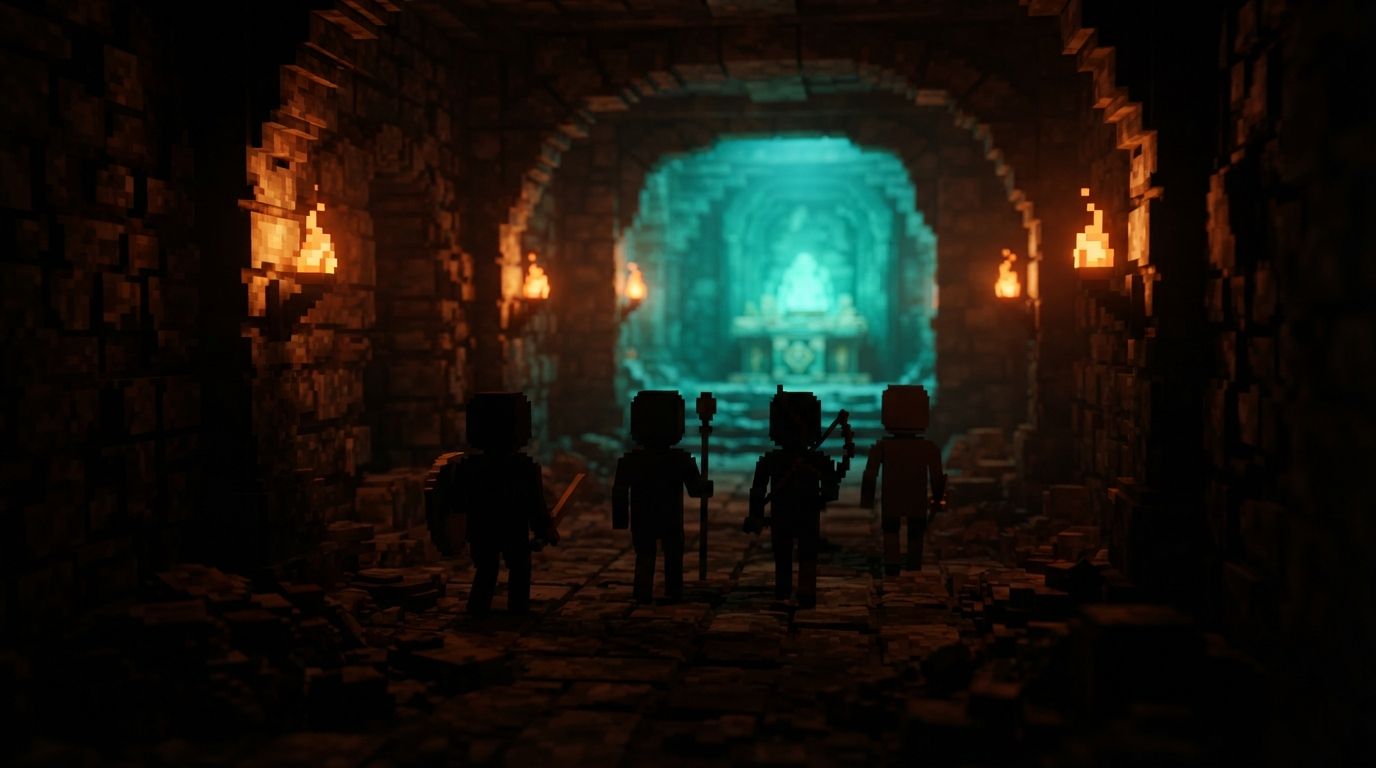
**Minecraft Dungeons 2** launches today, September 29, on PS5, Xbox Series X|S, PC, Switch and Switch 2, and the first reviews, published yesterday, paint a less unanimous picture than the early hype suggested. GameSpot gave it 7/10 and Destructoid 9/10. Checkpoint Gaming wrote a harsh review that advises against playing solo. Almost every critic, even the most generous ones, ends up touching the same point: the game is solid, but it repeats itself.
## Scores, price and platforms: what's confirmed
Before getting into opinions, it helps to put the numbers on the table, because that's where a purchase decision starts.
- **Launch:** September 29, 2026, on PC (Steam and the Xbox app), Xbox Series X|S, PlayStation 5, Nintendo Switch and Switch 2.
- **Price:** $29.99 for the Standard edition and $49.99 for the Deluxe. The Deluxe includes a cape, a pet, four hero skins and the first two DLCs, which have no announced content or dates yet.
- **Game Pass:** the game is included in Game Pass Ultimate and PC Game Pass from day one.
- **Co-op:** one to four players, with couch co-op, online play with crossplay, and a mixed mode where two people on the same screen fill out the party with online players.
- **Campaign length:** around ten hours, according to GamesRadar, slightly longer than the first game's.
- **Known scores:** Destructoid 9/10, Day One 8.5/10, CGM 8.5/10, TheSixthAxis 8.5/10, GamesRadar 3.5/5 and GameSpot 7/10.
These numbers make more sense next to the previous game. The first *Minecraft Dungeons* came out in 2020, and by the time Mojang ended development in September 2023 it had reached 25 million players. It wasn't a critical darling (the visuals and music were praised, while the short story and lack of depth were criticized), but it was an audience success. The sequel therefore inherits an unusual kind of pressure: it doesn't have to prove the formula works, it has to prove the formula can be stretched. Hence the swap from separate levels to a semi-open world, the end of fixed classes, and armor split into several pieces.
The second comparison is with the wider market. GamesRadar describes the game as a family-friendly take on *Diablo*, and Checkpoint Gaming places it in the same territory as loot-driven action RPGs like *Path of Exile*. But those games live on dense systems and an endgame that lasts hundreds of hours. *Minecraft Dungeons 2* competes in a different category: for people who want the loot loop without the spreadsheet. Some critics judge it against the whole genre and others against its predecessor, which explains a good part of the scattered scores.
## What almost everyone praises: combat you can actually read
If there's a consensus in these reviews, it's the combat. GamesRadar highlights that movement is tight and that it's easier to see what's happening on screen than in the first game, which makes decisions clearer. It compares the feel to the series' arcade version: chunkier, more assured. Day One goes further, calling the sequel "the game the original was meant to be," and describes combat that's flashier, tougher and more varied in builds.
There's a detail here that gets lost in the scores. GamesRadar praises how the game drip-feeds new ways to modify your gear, and CGM talks about better loot mechanics. The reward loop is the same, with more layers. For anyone who played the first game, familiarity counts in its favor. For newcomers, the gear has to do the work the story doesn't.
Then there's the question of who's reading. TheSixthAxis argues that Mojang and Double Eleven didn't reinvent anything and that the result is still an ideal pick for family play or for friends. Destructoid goes further and sees an improvement in almost every conceivable way. When two reviews with this tone land on the same day as one that talks about a repetitive game, they're usually judging the same game with different expectations.
## A world too big, or too small?
This is where the reviews contradict each other in an almost comic way. Checkpoint Gaming describes a huge map that, in its reading, is designed to limit exploration, with repetitive quests spread across it. Gamer Social Club, on the other hand, says the map feels relatively small, but that the variety of biomes, from green fields to frozen highlands, makes it feel bigger than it is.
Both statements can be true at once, and that's where it gets interesting. A map can be small in area and tiring in structure, and the fatigue comes mostly from quest design, not size. Checkpoint describes most quests as walking to a place, interacting with an object and fighting waves of the same mobs. If that description is fair, and other critics talk about an ending that turns repetitive, then the problem isn't the world. It's the lack of rhythm between fights.
There's also Gaming Trend, which sees the new dimension, called the Sift, as a genuine addition, the first new dimension in the Minecraft universe in over 15 years, with Java and Bedrock versions planned for next year. It points out, however, that the village upgrades feel underdeveloped. It's a small criticism, but it helps show the pattern: the new ideas exist, but some stop halfway.
## The endgame: the complaint that keeps coming back
If I had to pick one sentence to sum up the problem, it would be this: the game ends better than it learns to continue. Day One calls the endgame lackluster. GamesRadar says the story loses conviction as it approaches the end and that after around five hours the game starts to feel samey. Gamer Social Club predicts that many players will tire of repeating the same final quest. Three different outlets, three different ways of saying the same thing.
Mojang's answer to this is a promise. Playday mentions promised post-launch support, and the Deluxe edition includes the first two DLCs, with no content or dates yet. My reading here is straightforward: buying the Deluxe right now is buying a promise. It could be a good one, and the first game did get additional content for years, but anyone paying $49.99 today doesn't know what they're getting. The $29.99 Standard edition lets you wait and see.
## Solo or with company? The question that decides the purchase
Checkpoint Gaming is the most emphatic: for adults, playing solo has a "second-screen" quality, and its advice is to avoid it. It's a strong opinion, and the others don't fully contradict it. GamesRadar says the game works solo, online or on the couch, but the rest of the reviews lean toward co-op as the natural way to play. TheSixthAxis notes that Microsoft and Mojang clearly prefer you not to be alone, and highlights online matchmaking as an important addition.
There's a practical detail almost nobody mentions. Joining a friend's campaign midway is easy: whoever arrives late catches up mainly through gear. On console, online play requires a subscription, Game Pass on Xbox and PlayStation Plus on PS5. And the mixed mode solves an old problem, that of a couch group that couldn't join friends online. Anyone with kids at home and a second controller has the strongest argument for buying here.
## The pattern behind the scores
### Sequels to a spin-off that worked
When a spin-off works, the sequel has two options: take risks or refine. Mojang has already tried very different formats with the brand, like the strategy game *Minecraft Legends*, the augmented-reality *Minecraft Earth* and the narrative adventure *Story Mode*. *Dungeons* was the one that built a loyal community, and the reviews of this second game use the same language: GamesRadar says that when you're perfecting a formula, it's not the time to add wild new ingredients. Gamer Social Club says Mojang and Double Eleven played it safe.
This vocabulary is revealing. It doesn't describe a failed game, it describes a game that avoids failing, and that difference explains why scores range from 7 to 9 without anyone talking about a disaster. It's hard to give a low score to something well made, and it's hard to give a top score to something that doesn't take risks.
### My read: the right score depends on who's buying
If I had to boil this down to a verdict, I'd say the right score depends on who's buying. For a family that wants an accessible co-op game, the score is high, and the $29.99 price, which TheSixthAxis considers surprisingly good value, reinforces it. For an adult who wants action-RPG depth and plays alone, the score is lower, because what the harshest reviews describe is exactly what that person would run from.
GamesRadar also mentions some technical problems: disappearing keys, characters that stop following you, and cases of getting stuck in the scenery, along with small frame drops on Xbox Series X near the Storm Towers. None of this is dramatic, but it's the kind of flaw patches usually fix in the first week. It's worth revisiting the reviews in a month.
## On PS5, the math is different
For PlayStation players, there's a difference the Xbox-focused reviews don't discuss. Game Pass includes the game on day one only on Xbox and PC. PS5 players pay full price, and online play requires PlayStation Plus. On the other hand, crossplay connects all platforms, so nobody is left out just because they chose a different console. Since prices vary by region, check the amount in your local store before deciding.
My practical suggestion: if you have kids at home or a regular group of friends, buy the Standard edition and ignore the Deluxe until there's confirmed content. If you mostly play solo, wait for the first weeks of patches and for a sale. The game isn't going anywhere.
## What the reviews leave open
There's one question no review can answer, because only time will: what happens when launch enthusiasm fades. The first game reached 25 million players by being available and easy to play, not by being the best in its genre. This sequel is, by consensus, better in almost everything, but nobody seems certain that's enough to hold the same audience. If the endgame doesn't improve, Mojang will have to explain why a game everyone describes as safe needed so much help staying interesting.