Crazy Frog Beat Coldplay and Then Vanished: What That Says About the Industry
Sep 27th '26 5:41pm:
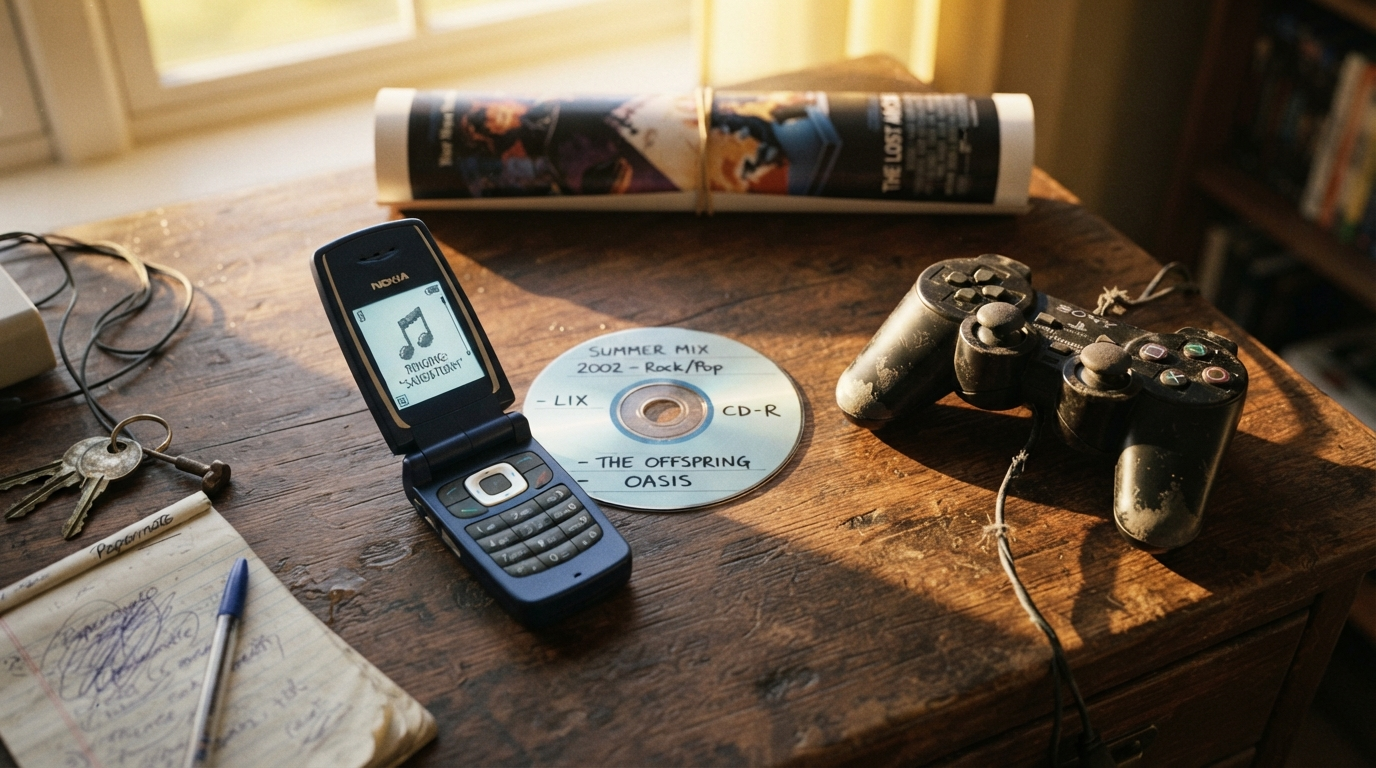
In June 2005, a blue-eyed, bug-eyed frog — with visible genitalia, no less, which drew a formal complaint to the UK's Advertising Standards Authority — knocked Coldplay off the top of the British charts. "Axel F," Crazy Frog's electronic take on the *Beverly Hills Cop* theme, outsold "Speed of Sound" four copies to one, spent four straight weeks at number one, and closed out 2005 as the UK's third best-selling single of the year. Twenty years later, ask anyone under twenty-five who Crazy Frog is. The most likely answer is silence, or a laugh from someone who only knows the recycled meme. That's not an accident of collective memory. It's a structural problem with how the 2000s entertainment industry manufactured phenomena — and, in most cases, had no idea what to do with them afterward.
## The comfortable consensus: "it was just a fad"
The most repeated explanation for this forgetting is simple and, conveniently, lets every studio and label off the hook: these were internet fads, products of chance, doomed to evaporate the moment the novelty wore off. Napoleon Dynamite, Crazy Frog, Homestar Runner himself — none of it, the theory goes, had enough substance to last, because it was born from the passing noise of a still-forming web, not from career planning or franchise strategy.
It's a comfortable explanation because it keeps the industry out of the center of the story. It puts the blame on the audience, who supposedly "got bored," or on the format, which was supposedly "too shallow." The problem is that this reading doesn't survive contact with the numbers.
## Why that explanation doesn't hold up
Napoleon Dynamite cost 400,000 dollars to make. It grossed more than 46 million dollars worldwide — roughly 115 times its budget, one of the most absurd percentage returns in recent Hollywood history. This wasn't a niche success that flew under the radar: it was a T-shirt-and-catchphrase phenomenon ("Vote for Pedro"), quoted at graduation parties across the country. If it had really been just passing noise, Fox wouldn't have bet on an animated series in 2012, reuniting the original cast eight years later. The series existed. It premiered to 9.5 million viewers on its first airing — a respectable debut audience for anything in 2012. And it was cancelled after six episodes, with viewership dropping by half nearly every week.
That's not the behavior of an audience that "naturally got tired" of the character. It's the behavior of an audience that liked the 2004 film exactly as it was — raw, low-budget, directed by someone who hadn't yet learned the franchise formula — and rejected the polished, retooled version built for a TV grid. The industry didn't lose the character by accident. It tried to repackage something that only worked in its original form and discovered, too late, that the packaging *was* the product.
With Crazy Frog, the pattern repeats in a different way. The character was born in 1997 as a sound recorded by a seventeen-year-old Swedish teenager imitating the noise of a moped, ended up in animator Erik Wernquist's portfolio under the name "The Annoying Thing," and only became a global phenomenon when the ringtone company Jamster bought the rights in 2003 and turned the audio into an aggressive marketing campaign sold directly to mobile phones. The commercial success was real and measurable: simultaneous number-one status in at least eight European countries, including Australia, Ireland, Belgium, Denmark, France, New Zealand, Norway, Ukraine, Spain, and Sweden. But the entire business model depended on one specific piece of technology — the paid ringtone, downloaded via premium SMS — that died along with the flip phone. When the smartphone arrived and killed the ringtone market between 2008 and 2010, Jamster had no plan B for the character. There was no cinematic universe, no game, no established toy line — nothing built to survive the extinction of the very platform that had created it.
## The pattern nobody was naming
This is where the piece that nostalgia coverage of "forgotten characters" usually skips comes in: the 2000s were the last decade in which the industry could produce massive cultural phenomena without owning the infrastructure to manage them afterward. Virality happened through fragmented channels the companies themselves barely understood — ringtones, forwarded emails, Flash Player, MSN Messenger, early YouTube — and when the phenomenon exploded, nobody on the corporate side had a playbook for "what to do next year." Compared to the model that came later, this is striking: Marvel spent the entire 2010s building exactly that infrastructure, with a ten-year plan, multi-film contracts signed before the first hit even landed, and a licensing department dedicated to stretching every character out for decades. Crazy Frog and Napoleon Dynamite were born in the era before that playbook existed. They were the product of a one-off marketing execution succeeding, not of franchise architecture.
### The contrast that proves the rule: who escaped being forgotten
It's worth looking at the opposite end of the spectrum, because it confirms the argument rather than contradicting it. Homestar Runner, the Flash animation site created by Mike and Matt Chapman in 2000, had an equivalent peak of popularity — the "Strong Bad Emails" were mandatory conversation in any American classroom in 2004 and 2005, spawned merchandise licensed by the duo themselves, and even a video game released years later. The crucial difference wasn't talent or luck: it was ownership. The Chapman brothers never sold the character to an ad agency or a record label. They kept the site, kept the rights, and when natural interest declined along with Flash Player's death, they simply paused — no humiliating cancellation, no forced reboot, no Fox unilaterally deciding it was time to reanimate the corpse. Homestar Runner isn't a mass phenomenon today, but it also didn't disappear the way Crazy Frog disappeared: the site has published sporadically between 2014 and today, because whoever controlled the intellectual property also understood the character.
That's the gap nostalgic "remember these characters?" coverage almost never mentions: the deciding factor in surviving being forgotten wasn't the quality of the material or the size of the fame spike. It was who literally owned the character once the spike ended.
## A criticism no one wants to say out loud
In my reading, the reason this story is so uncomfortable for anyone working in content today is that it exposes an inconvenient truth about Discover itself, about TikTok, about any platform that now decides what gets "revived." In December 2021, Sony announced Crazy Frog's return with a "mash-up of classic hits inspired by TikTok trends" — in the words of the label's own A&R executive, driven by "renewed interest" in the character on YouTube. Notice what that sentence reveals: the decision to bring the character back didn't come from a creative reassessment — it came from a metrics dashboard showing organic traffic spikes generated by teenagers who weren't even born in 2005. The industry didn't learn to take care of its own characters; it learned to monitor when the algorithm resurrects them on its own and chase the residual profit, without ever paying back, proportionally, the people who did the original creative work — in this case, a Swedish animator and a teenager who recorded a motorbike sound for fun.
This isn't unique to Crazy Frog. It's the standard model for how streaming platforms and social networks treat anything that "goes viral again": they treat it as free raw material, not as the property of someone who already did the hard part decades ago.
## What's left unanswered
I don't know if there's a fix for this — the asymmetry between whoever creates the viral moment and whoever, decades later, profits when the algorithm rediscovers that moment seems too structural for a platform policy tweak to solve. What I do know is that the next time an old video starts circulating again and someone comments "I can't believe I forgot about this," it's worth asking who, exactly, is getting paid for the reappearance. Most of the time, the answer isn't whoever created it.