Crossplay in Jump Space: What Keepsake Games Promises Without Promising
Sep 19th '26 8:35am:
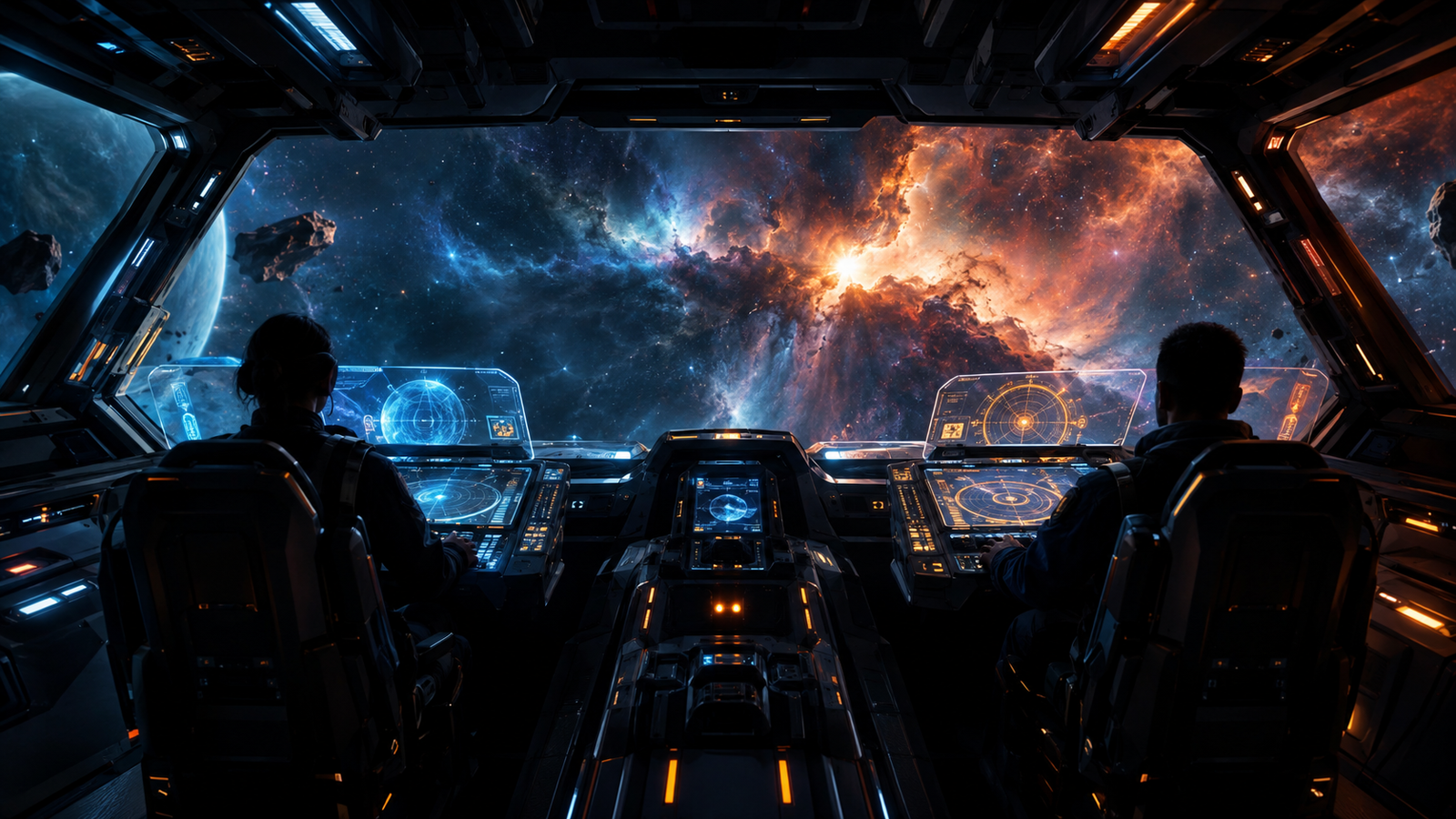
When Keepsake Games launched Jump Space into early access on September 19, 2025, simultaneously on Steam and Xbox Game Preview, one specific question dominated the forums before the download servers had even finished spinning up: can I play with a friend on console if I'm on PC? The answer, confirmed by the developers themselves to the press, is no — not yet, anyway. Crossplay between the two platforms is absent from the launch package, and the Swedish team was careful to say it's something they **"hope to, but can't promise"** to add down the line.
<br>That might sound like bad news for a game built, from top to bottom, to be played in a group. But the story behind that absence has less to do with some isolated technical limitation and more to do with how small studios calculate risk during an early access launch — and why that math almost never favors crossplay right out of the gate.
## What's Actually Confirmed About Jump Space's Platforms
Before getting into the why, it's worth pinning down what's actually on the table today. Jump Space is a cooperative FPS for up to four players, developed by Keepsake Games AB, a Swedish studio founded by veterans who passed through Hazelight (the studio behind *It Takes Two*), Mojang (*Minecraft*), and Coffee Stain (*Satisfactory*, *Goat Simulator*). The game, which was previously announced under the working title *Jump Ship* and had to be renamed due to trademark complications, arrived on the market under the following conditions:
- **Launch platforms**: PC via Steam (Early Access) and Xbox Series X|S (Game Preview), both on the same day, September 19, 2025.
- **Price**: $19.99 (£16.75 in the UK), identical across both storefronts.
- **Console exclusivity**: for now, it's exclusive to Xbox among consoles — the developers themselves said a PS5 version is "likely in the future," but there's no date or official confirmation.
- **Xbox Game Pass**: not included in the subscription during the early access period, despite confusion caused by the game's renaming.
- **Co-op mode**: online, up to 4 players, but restricted to players on the same platform — meaning Steam plays with Steam, Xbox plays with Xbox.
<br>The game's commercial performance helps explain why this limitation draws so much attention. It had already surpassed 500,000 players during public demos, landing in the Top 3 most-played demos at the June Steam Next Fest. At launch, it had racked up more than 1 million wishlists on Steam. A few weeks later, it held "Very Positive" reviews with over 3,500 ratings on Steam and a 4-out-of-5 score on the Xbox Store, based on more than 500 reviews — 56% of them five stars. By October, the game was competing on Xbox's paid charts alongside names like *EA Sports FC 26* and *Hollow Knight: Silksong*, partly because Microsoft counts free-trial downloads toward its ranking criteria.
<br>In other words: this isn't a game too small to justify investing in crossplay. It's a game that deliberately chose to postpone that decision.
## A Pattern That Keeps Repeating: Why Small Studios Leave Crossplay for Later
This is where the layer that standard Jump Space coverage tends to skip comes in. Crossplay isn't a switch you flip — it's an entire layer of network infrastructure, cross-authentication between services (Steam, Xbox Live, eventually PSN), shared matchmaking, and, above all, synchronization testing that multiplies the surface area for possible bugs. For a studio the size of Keepsake — which, despite its founders' heavyweight résumés, is still a relatively small operation headcount-wise — adding that layer on day one of an early access launch means testing not just the game, but three different network ecosystems at once, at exactly the moment when the game's own code is still shifting week to week.
<br>It's no coincidence that this pattern keeps repeating across the indie industry. *Spacelords* — previously called *Raiders of the Broken Planet* — is a nearly textbook case: the game launched without crossplay, struggled commercially, and only got cross-platform support between Xbox and Steam after a complete overhaul into a free-to-play model, months after its original release. The lesson there wasn't "crossplay doesn't matter" — it was "crossplay arrives once the game has already proven it's worth the engineering investment."
<br>That appears to be exactly the calculation at play with Jump Space. The anti-crossplay confirmation didn't come as a final refusal — it came as a postponement conditional on results. The official language speaks of something they **hope** for, not something ruled out. For a team that's already watched its own game hit 500,000 players in demos alone, the business logic is probably simple: stabilize each platform's user base separately first, then evaluate whether the audience justifies the effort of unifying servers.
### What No One's Talking About: The Irony of Keepsake's Own Résumé
There's one detail that went largely unnoticed in the launch coverage and that, in my view, deserves more attention than it got. Part of the Keepsake team came from Hazelight — Josef Fares's studio responsible for *It Takes Two*, a game that is, by design, impossible to play alone and that has offered, since launch, the Friend's Pass feature, letting a second player join their friend's campaign for free regardless of platform. *It Takes Two* didn't exactly have traditional crossplay across every combination on day one, but the studio's design philosophy has always centered on removing barriers between people who want to play together.
<br>Jump Space is born out of that same cooperative-design culture — it's a game built to be played with "your 65-year-old dad," as one player described their own demo experience in a Reddit thread about the game's announcement — but it arrives on the market with a structural barrier that works against that philosophy at exactly the most sensitive point: putting a group together. If you and a friend decided to buy the game on different platforms for any reason — regional pricing, controller preference, an already-established library — you simply can't crew up together until further notice.
### The Historical Early Access Pattern Keepsake Is Following
Stepping back a bit, it's worth noting that almost no mid-sized indie co-op FPS has launched with full crossplay in recent years. The common practice is: launch with each storefront's own network support, stabilize servers, and only then open up the possibility of cross-platform matchmaking — usually mentioned in patch notes as a "quality of life" addition quarters after the initial launch. The practical reason is that each platform certification (Steamworks on one side, Microsoft's XDK on the other) carries its own security, moderation, and reporting requirements, and syncing all that requires dual compliance approval before any technical testing can even begin.
<br>For a studio that's simultaneously managing a temporary console exclusivity deal — since PS5 is left out for now — engineering priority clearly went toward making sure Steam and Xbox each work well on their own before adding another variable to the equation.
## What Changes (and What Doesn't) If You Want to Play Right Now
For anyone who's already decided to buy the game, the practical recommendation is simple and direct: agree on a platform with your group **before** buying, not after. Since the price is identical across both stores — the same $19.99 on both Steam and the Xbox Store — there's no financial advantage to picking one over the other; the choice should be driven entirely by where most of your group already is. If half the crew has a PC and the other half only has an Xbox, the realistic scenario right now is that one side needs to buy the game again on the other platform just to play together — there's no shortcut.
<br>One footnote worth adding about Xbox Game Pass, because the confusion around the game's old name (*Jump Ship*) generated mistaken expectations in several forums: even as a temporary Xbox console exclusive, Jump Space is **not** included in the subscription during early access. The game requires Xbox Game Pass Core simply because it's multiplayer online — not because it's in the Game Pass catalog — and it's easy to conflate the two requirements when searching quickly.
<br>Late January would be a reasonable bet for a first meaningful network update, given the roadmap pace Keepsake had already been signaling since Gamescom, but the developers themselves never attached a date to anything crossplay-related — only the stated intent.
<br>What's clear, looking at the sales numbers and the historical track record of other indie co-op games, is that the decision to leave crossplay out wasn't negligence or some insurmountable technical limitation — it was a calculated priority. The question that remains open isn't "why doesn't it have it" anymore, but rather: how quickly will Keepsake decide the audience is big enough to justify the investment — and whether, by the time that happens, PS5 will already be on the table to complicate the math even further.