Control Resonant: Why Combat Carries a Game Its RPG Systems Can't
Sep 18th '26 2:31pm:
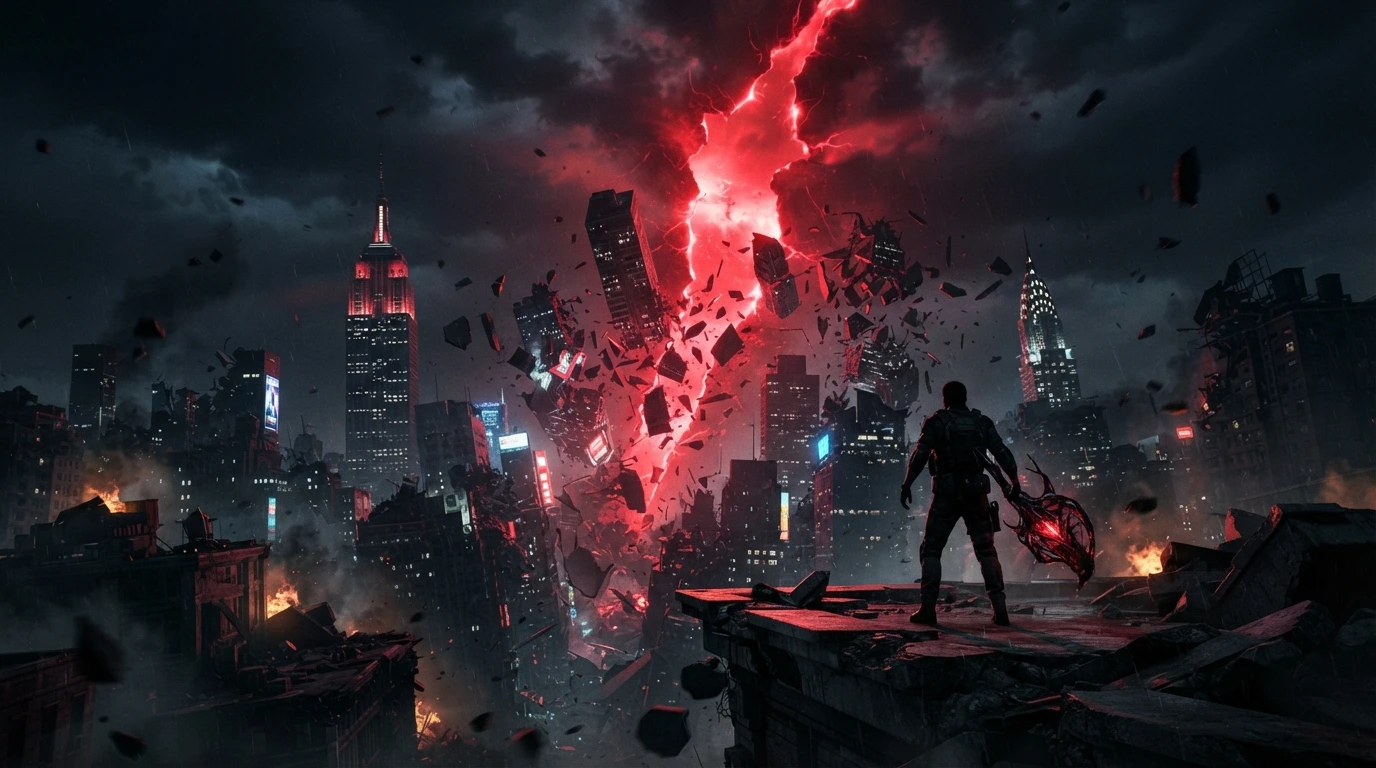
Michael Higham closed out his review of *Control Resonant* on IGN today, September 18, six days before the game's official launch on September 24 for PlayStation 5, Windows, and Xbox Series X/S — the macOS version follows later, still within 2026, according to Remedy Entertainment's announced schedule. The verdict isn't quite what months of marketing had been hinting at: the combat works, and works well, but the game loses momentum right at the end, at the exact moment an action-RPG needs to prove it has the systemic depth to sustain dozens of hours. It's a split review — neither a pan nor a unanimous rave — and that's precisely the kind of score, mild on the surface, that tends to say more about a game than a flat ten or a flat three ever could.
<br>It's worth marking the context: seven years separate this launch from the original 2019 *Control*, a game that earned Remedy recognition at award shows like the D.I.C.E. Awards and that spun off a shared universe with *Alan Wake* through the AWE expansion, cementing what's now called the Remedy Connected Universe. *Resonant*, then, isn't just another sequel — it's the bet that tests whether that universe can carry the weight of a game on a much larger scale.
### What IGN's Review Actually Points To
Before interpreting the verdict, it's worth isolating what's actually being evaluated, because the formula shift here is structural, not cosmetic.
- **Protagonist and premise**: the game swaps Jesse Faden for her brother, Dylan Faden, a "parautilitarian" who existed as a supporting character in the first game and who is now released by the FBC (Federal Bureau of Control) to help contain an escaped extradimensional entity that has taken over downtown Manhattan, all while searching for his estranged sister himself.
- **Combat shift**: where the original was a third-person shooter with telekinetic elements bolted on, *Resonant* shifts the weight toward melee combat, with its primary weapon, the "Aberrant," able to shapeshift into different types of armaments mid-fight.
- **Scale**: the game adopts an open-world structure, something the first *Control* never attempted — it was compact, almost claustrophobic, confined to the halls of the Oldest House.
- **Direction**: Mikael Kasurinen directs, with Juha Vainio producing and the Northlight Engine — Remedy's proprietary engine — handling the technical backbone.
<br>That list matters because every one of those points is exactly where IGN's review found friction. Higham acknowledges the combat system is responsive and stylish enough to carry much of the experience, but notes the RPG mechanics — progression, skill trees, everything meant to give the player's choices strategic weight — don't have the depth the presentation promised. And he flags something more specific, and more telling: the game grows tedious in its final hours, a classic symptom of an open world that grew in square footage before it grew in content variety.
<br>Compare that to two distinct reference points. First, to *Control* itself, from 2019: that game was praised precisely for its economy — every room of the Oldest House carried narrative and mechanical weight, with no fat on it. An open world spanning Manhattan multiplies the playable space several times over, but the review suggests Remedy didn't multiply the content design filling that space by the same proportion. Second, to the broader recent pattern of action-RPGs that dress up a real-time combat backbone with progression systems that function more as facade than substance — a problem that has already shown up in other franchises attempting this same jump from linear game to open-world RPG in recent years. This isn't a Remedy-exclusive problem. It's an industry-wide problem disguised as an isolated creative decision.
### The Pattern Remedy Had Already Shown
Anyone who's followed Remedy since *Alan Wake* knows the studio has a near-stubborn trait: it consistently favors narrative ambition over systemic polish. *Alan Wake 2* earned generous praise for its atmosphere and dual-protagonist structure, but no one ever called that game mechanically deep — and no one needed to, because it never tried to be. The problem with *Resonant* is that by adopting an open-world action-RPG structure, it *invites* comparison with games that live and die by the depth of their systems. Remedy changed the rules on itself here, and it's fair that the criticism holds it to them.
<br>There's also a pacing pattern worth noting: FBC: Firebreak, the multiplayer spin-off released in 2025, had already landed to a mixed reception — a sign Remedy was testing formats outside its narrative comfort zone before betting everything on *Resonant*. A small studio stretching itself across two fronts at once — multiplayer and open world — within a window of a little over a year is a calculated risk, and IGN's score is, to some extent, that risk's bill coming due.
### Why "Tedious in the Final Hours" Is the Most Important Line in the Review
Here's where it's worth taking a stance rather than just reporting. The review mentions, almost in passing, that the game grows tedious toward the end — and it's tempting to read that as a footnote buried inside an otherwise largely favorable write-up. It isn't. Games that decline in their final hours, rather than sagging evenly or actually improving, tend to suffer from one very specific problem: the mid-game content was built on a repeatable template — side missions sharing the same structure, recycled combat encounters, map space filled with padding rather than intentional design — and that template only holds up so long before the player starts to see the skeleton underneath the skin.
<br>That doesn't invalidate the game — IGN makes clear the combat carries the experience even as everything else loosens up, and that the characters stay compelling even within a story the review itself describes as more conventional than expected from a *Control* sequel. But it does serve as a specific warning for anyone deciding between buying at the September 24 launch or waiting. If what drew you in were the combat trailers — the Aberrant shifting shape, the brisk rhythm of melee fights — the game likely delivers that from start to finish. If what drew you in was the promise of an RPG with real build depth and meaningful choice, it's worth tempering expectations before deciding.
### The Question Nobody's Asking About This Launch
The more interesting question isn't whether *Control Resonant* is good — it's fairly clear, from the coverage, that it is. The more interesting question is whether the industry will keep treating "open world with RPG systems bolted on" as an automatic prestige upgrade, even when the recent track record shows, repeatedly, that studios with linear-game DNA tend to stumble on exactly this transition. Remedy isn't the first to fall into this particular trap, and it's unlikely to be the last. What varies, case by case, is whether the charisma of the combat and the characters is strong enough to carry the weight the systems design dropped on the floor.
<br>Six days before launch, that's the question left hanging — and no score, high or low, settles it on its own.
<br>Source: https://www.ign.com/articles/control-resonant-review