PSP 3 Handheld vs PS5 Pro: the trick behind the TFLOPS
Sep 17th '26 7:31am:
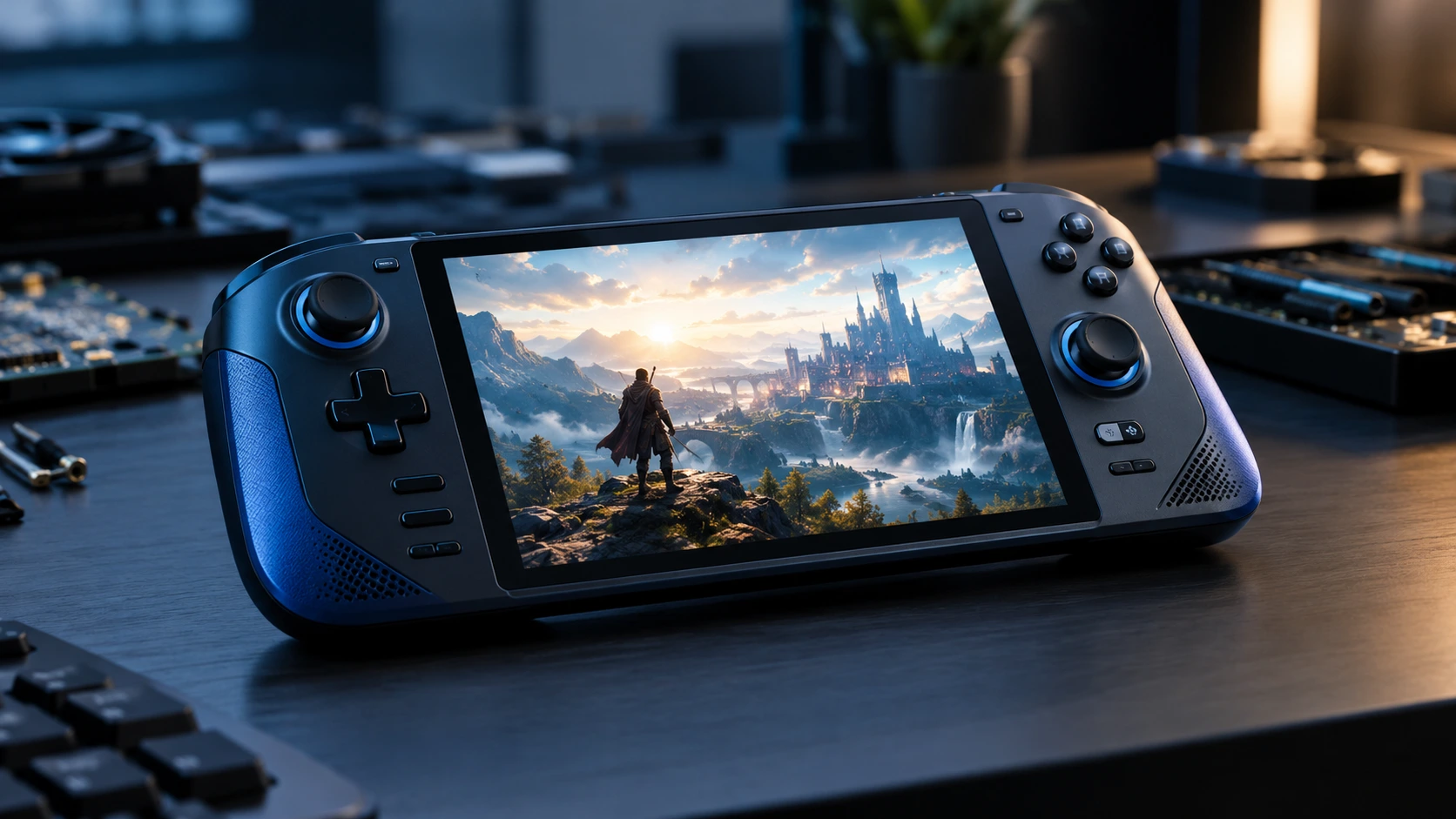
A report published this week by hardware specialist site GameGPU describes, in unusually granular detail, the specs of Sony's next handheld — internally known as Project Canis and already circulating on forums as the "PSP 3 Handheld." According to that source, the console will run on a 3-nanometer AMD chip with six Zen 6 cores, 24 GB of unified LPDDR5X memory, and an RDNA 5 graphics unit with 16 compute units, all squeezed into a thermal envelope of just 15 to 25 watts. The number making noise, though, isn't any of those — it's the **14 TFLOPS** claimed when the console is docked to a TV, put directly against the PlayStation 5 Pro's 16.7 TFLOPS. It's a figure that sounds like near-parity with a top-tier home console. It's also a figure that needs unpacking before it means anything at all.
## The numbers behind the "almost PS5 Pro"
Before any interpretation, it's worth laying the spec out plainly, because this is where the story actually gets interesting — and where most of the coverage stops without going any further.
- **Processor:** AMD Canis, 3nm, six Zen 6 cores (four Zen 6c + two low-power Zen 6 LP)
- **Memory:** 24 GB LPDDR5X, 192-bit bus
- **GPU:** RDNA 5, 16 compute units, with Dual-Issue FP32 instruction support
- **TDP:** 15W to 25W
- **Real graphics output:** 4.91 TFLOPS in handheld mode (1.2 GHz), 6.75 TFLOPS docked (1.65 GHz)
- **"Equivalent" output via PSSR 3.0:** 10-11 TFLOPS handheld, up to 14 TFLOPS docked
Notice the gap between the third line and the fourth. The chip, on its own, delivers 6.75 TFLOPS at best — less than half the PS5 Pro's 16.7 TFLOPS. The 14 TFLOPS figure only shows up once **PSSR 3.0** enters the picture — the AI-driven image reconstruction technology that, per the leak, will render internally at 540p and reconstruct up to native 1080p on the built-in screen. It's that reconstruction leap — not the silicon — that produces the marketing number.
The second comparison worth making here isn't with PlayStation's own lineup, it's with the direct competitor in the handheld space. The Nintendo Switch 2 uses a more limited scaler, without a separate dedicated neural unit, which, according to the insider cited in the report (going by the handle KeplerL2), leaves Sony with a structural edge on that specific front — especially since the PSP 3 Handheld would, in theory, be capable of running PS4, PS5, and eventually PS6 library titles locally. That matters because it reframes the product entirely: this isn't just "a handheld that runs PS5 games" anymore, it's a device built to be compatible with three console generations at once — an ambition none of its direct rivals are currently promising at this scale.
## The "equivalent" TFLOPS trick
### A pattern we've seen before
Anyone who follows Sony hardware closely will recognize the move immediately. When the PS5 Pro was announced back in 2024, the company also leaned much harder on "effective" performance with PSSR than on raw silicon numbers — because the raw numbers, on their own, weren't particularly impressive given the price jump being asked. The difference now is that the gap between real and "equivalent" is even wider: with the Pro, reconstruction was a boost layered onto already-decent hardware; here, it's practically the whole product. Without PSSR 3.0 performing well, the PSP 3 Handheld doesn't come close to justifying the comparison currently making headlines.
That's not necessarily dishonest — it's how the entire mobile hardware industry has communicated performance since AI upscaling became viable on small silicon. But there's a practical difference between saying "the AMD Canis delivers 6.75 TFLOPS" and saying "the PSP 3 Handheld reaches 14 TFLOPS," even if both statements, in the right context, are technically defensible. The second one is the one that ends up on homepage headlines, and it's also the one carrying the most unresolved assumptions — chief among them the actual quality of the reconstructed image, something no spec leak can capture.
### Where this could fall apart
This is the part most of the coverage is skipping over. Rendering internally at 540p — a resolution lower, remember, than standard DVD definition — and reconstructing up to 1080p demands extremely aggressive reconstruction work. The report itself acknowledges that classic FSR-style algorithms, attempting that same jump, produce heavy blur, flickering on fine lines, and ghosting on moving objects. Sony's bet is that PSSR 3.0's dedicated neural unit solves the problem where generic software falls short. It's a plausible bet — Sony has a reasonably solid track record with the original PSSR on the PS5 Pro itself — but it remains unproven in a mobile context, where battery life and heat impose limits a desktop console simply doesn't face.
There's a second problem here too, more structural than technical: Sony has already tried, twice, to make a premium dedicated handheld — the original PSP and the Vita — and both eventually lost ground to simpler, cheaper business models, or got cannibalized by the company's own mobile ecosystem (the Vita, worth remembering, never fully recovered from its launch price and the lack of consistent first-party support over the years). A handheld launching in late 2027, with a TDP window this tight — 15W to 25W — while trying to run games originally designed for a desktop console with far more thermal headroom, is repeating a formula that has historically demanded near-flawless execution to avoid disappointing. In my reading, the bigger risk here isn't the silicon itself — it's the expectation management a number like "14 TFLOPS" creates before a single real game has run on the screen.
It's also worth flagging the timing: a launch near the end of 2027 puts this device right alongside increasingly consistent rumors about an eventual PS6, which raises a question the leak doesn't answer — is this handheld meant as a companion piece to a generation that's winding down, or as a bridge to the next one? The answer completely changes how you should read the 24 GB of unified memory and the PS4/PS5/"future PS6" compatibility mentioned in the same breath in the report.
## What this means for anyone comparing consoles today
For anyone who looks only at TFLOPS figures when deciding where to place their trust — whether in hardware or in expectation — the honest exercise is separating two questions currently being treated as one: "is this chip powerful?" and "can this chip, with AI's help, look powerful?" The answer to the first, based on what we have, is modest — 6.75 raw TFLOPS isn't a number that impresses a reader used to comparing desktop hardware. The answer to the second depends entirely on a technology that hasn't been independently tested outside of a press report.
None of this makes the project uninteresting. A handheld capable of locally running a three-generation PlayStation library is, objectively, a more ambitious product than anything Sony has attempted before in this category. But the gap between the marketing promise and the actual play experience — especially at a 540p base resolution, exactly the kind of territory where any reconstruction flaw shows up immediately on a small screen viewed up close — is precisely the sort of detail that only gets resolved with real units in the hands of independent reviewers, not with a leaked spec sheet months ahead of any official announcement.
Sony, as of this publication, has neither confirmed nor denied any of these figures.
Link: https://en.gamegpu.com/news/zhelezo/psp-3-handheld-vyjdet-na-14-tflops-s-pssr-3-0-protiv-16-7-tflops-u-ps5-pro