Fortune's Weave Proves Fire Emblem Learned From Engage's Mistakes
Sep 16th '26 5:13pm:
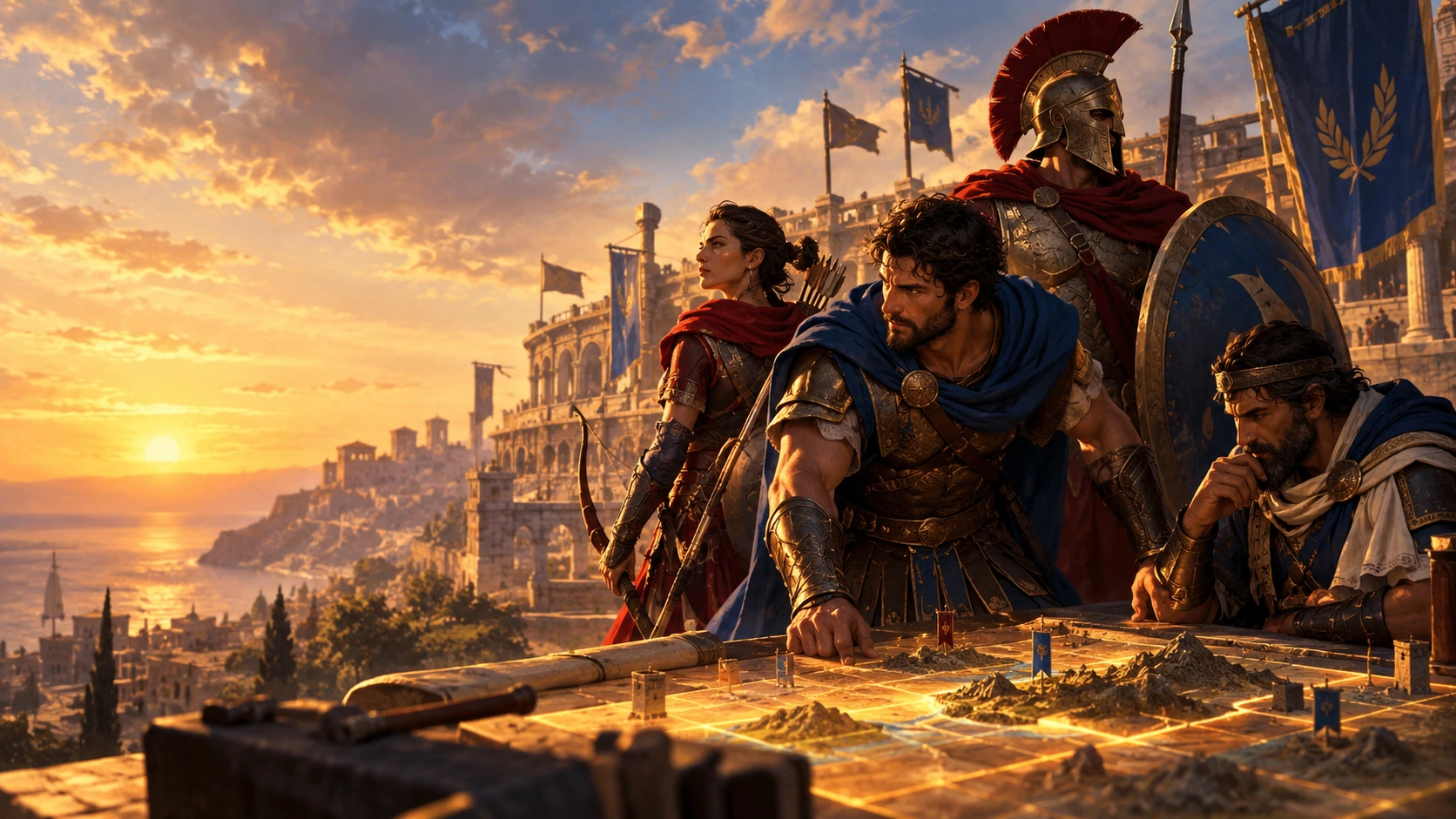
At 9 a.m. on September 16, the embargo lifted, and within an hour Metacritic already showed 53 reviews accumulated for *Fire Emblem: Fortune's Weave*, with an aggregate score of 89 and thirteen outlets — including IGN — handing out a perfect 10. The game launches exclusively on Nintendo Switch 2 this Thursday, September 17, and what should have been just another strong tactical RPG release turned, within a matter of hours, into the kind of critical consensus the franchise hadn't seen since *Three Houses* in 2019. The question nobody's asking out loud is whether that consensus is about the game that actually exists, or about the relief that Intelligent Systems didn't repeat *Engage*'s stumble.
## The Numbers Behind the Acclaim
No single score explains much on its own, but the pattern around it does. *Fortune's Weave* is among the few 2026 releases to cross the 88-point mark on the aggregator — territory only *Three Houses* had reached within the modern series, when it hit somewhere close to 89 back in 2019. *Engage*, the direct predecessor from 2023, stumbled well below that, sitting around 78, penalized for exactly what fans missed most: a cast that felt decorative and a story treated as an obstacle between battles rather than the point of them.
It's that contrast — not the raw number — that gives the current reception its weight. *Fortune's Weave* didn't just restore what *Engage* had cut; it restored it in excess: four playable protagonists (Dietrich, Theodora, Cai, and Leda), each with their own campaign within a three-part structure, more than 100 hours of content across the routes, and a time-travel system tying it all to a fifth protagonist, the Mediator Eshmel. The ambition alone would be news. What turns this into analysis, rather than mere coverage, is where that ambition collides with the rest of the year's release calendar.
Because *Fortune's Weave* isn't competing in isolation. September and October 2026 are stacked with *Blood of Dawnwalker*, the *The Witcher 3* remaster, and the Switch 2 port of *Dragon's Dogma 2*, with *Ocarina of Time* and *GTA* still to come in November — and it's precisely in that sea of massive-scale RPGs that a 150-hour Fire Emblem needs to justify why it deserves a player's time ahead of the competition. The answer critics gave, en masse, was: because it delivers quantity without sacrificing mechanical quality. Except "without sacrificing" is doing a lot of work in that sentence, and that's exactly where launch-day coverage tends to soften what deserves to be said more bluntly.
**Some numbers behind that widespread optimism:**
- **89** average on Metacritic, based on 53 reviews tallied within the first hours
- **13 outlets** awarded a perfect score, including IGN, VGC, and Gamereactor
- **100 to 200+ hours** of reported length, depending on how many routes a player completes
- **Four parallel campaigns** in Part One, followed by a Part Two and Three that converge into a central narrative
- **September 17, 2026**: official launch date, Switch 2 exclusive
It's worth noting these numbers come from an extremely short window. Launch reviews of 150-hour RPGs are, by definition, assessments made under deadline pressure — most critics hadn't finished all four routes before publishing. That doesn't invalidate the score, but it explains why it tends to capture the enthusiasm of the opening hours more than the fatigue that shows up dozens of hours later, something more than one review already hints at between the lines.
## A Pattern That Goes Back to Awakening
Anyone who's followed the series closely — and I have, since *Awakening* pulled Fire Emblem back from the brink of cancellation in 2012 — recognizes a pendulum swing that repeats every two or three entries. Intelligent Systems alternates between phases of maximum accessibility, designed not to scare off anyone who's never touched tactics games, and phases of maximum density, aimed at players who already know the genre and want to be buried in systems. *Fates* was accessibility taken to the extreme, sold as three separate versions. *Three Houses* was density taken to the extreme, with a military academy sim bolted onto an SRPG. *Engage* tried to recover some lightness and misjudged it, delivering a cast too cartoonish to carry the emotional weight the series had trained audiences to expect.
*Fortune's Weave* is, quite clearly, the pendulum swinging back toward density with full force — except this time multiplied by four protagonists instead of a single boarding school. And there's an irony here that none of the launch reviews seem eager to explore: *Three Houses* itself, now remembered as the series' peak, received an almost identical wave of initial praise back in 2019 — followed, months later, by a far more divided debate over sluggish pacing and structural repetition between routes. The community celebrating *Fortune's Weave* today as "the best Fire Emblem ever made" is largely the same one that revised its opinion of *Three Houses* a year after launch.
### What the Praise Isn't Saying
Tucked into the middle of even the most enthusiastic reviews — usually near the end of the piece, where few readers make it — is a chorus of complaints that sound small in isolation but form a pattern once you add them up. More than one outlet pointed out that the four armies of Part One are oddly unable to communicate with each other: Theodora recruits Battalions, a mechanic returning from *Three Houses*, while Cai tends to mounts to unlock skills — and neither route borrows the other's system until the storylines converge, dozens of hours later. It's the kind of design decision that seems intentional in theory (giving each campaign its own identity) and frustrating in practice (learning something interesting only to lose it for hours on end).
Another point that surfaces sporadically, almost buried, is the sheer administrative overload — managing meals, theater outings, training sessions, explorable dungeons in the *Shadows of Valentia* mold, all stacked on top of an already dense battle system. One review describes the feeling as having "more admin than I like," a short phrase that sums up a discomfort the high score tends to obscure: somewhere between hour 60 and hour 100, the game stops feeling immersive and starts feeling like work.
My bet, writing the day after the embargo, is that this critique will grow rather than fade over the coming weeks — exactly as happened with *Three Houses*. The difference between "this is ambitious" and "this is bloated" usually only becomes clear once launch-day hype cools and the average player, with no review deadline looming, has to decide whether it's worth finishing a second route, let alone a third or fourth.
There's also a quieter structural issue: the lack of multiple save slots, flagged by at least one critic as a genuine frustration in a game built, by design, to be replayed with different choices. It sounds like a minor technical detail, but for anyone actually planning to explore all four campaigns — which Nintendo itself is selling as the game's defining feature — it's a friction point that runs through the entire experience, not a cosmetic bug.
## A Fight Nintendo Isn't Going to Lose Anytime Soon
Regardless of how this critique evolves over the coming months, one outcome is already locked in: *Fortune's Weave* cements Switch 2 as a platform capable of carrying triple-A-scale tactical RPGs without leaning on Mario or Zelda to drive sales. That changes the calculus for Nintendo itself and for partner studios — if a relatively niche spin-off like Fire Emblem can pull an 89 Metacritic score and thirteen perfect reviews while competing head-on with *Blood of Dawnwalker* and the *Witcher 3* remaster in the same window, the logic of "save the big launches for established IPs" starts to lose its grip.
What remains open — and is where this conversation should actually be heading, instead of repeating the same list of compliments across twenty different outlets — is whether day-one review culture is structurally equipped to assess a 150-hour game in under a week. In practice, the answer has been no: most critics play enough of Part One to form an opinion about combat and ambition, then generalize that opinion to a game that still has two full parts ahead of it. That's not dishonesty, it's a deadline problem. But it explains why today's 89 might not be December's 89, once Metacritic starts folding in user reviews from people who actually finished all four routes.
Which leaves the question none of the reviews published so far have really answered: will *Fortune's Weave* age like *Three Houses* — remembered today with caveats, but still loved — or like the kind of launch the industry itself overrates in the heat of embargo day, only to quietly reassess it a year later?
Source: https://www.theverge.com/games/995539/fire-emblem-fortunes-weave-switch-2-review