LucasArts Closed in 2013 — But It Never Really Went Away
Sep 14th '26 8:25am:
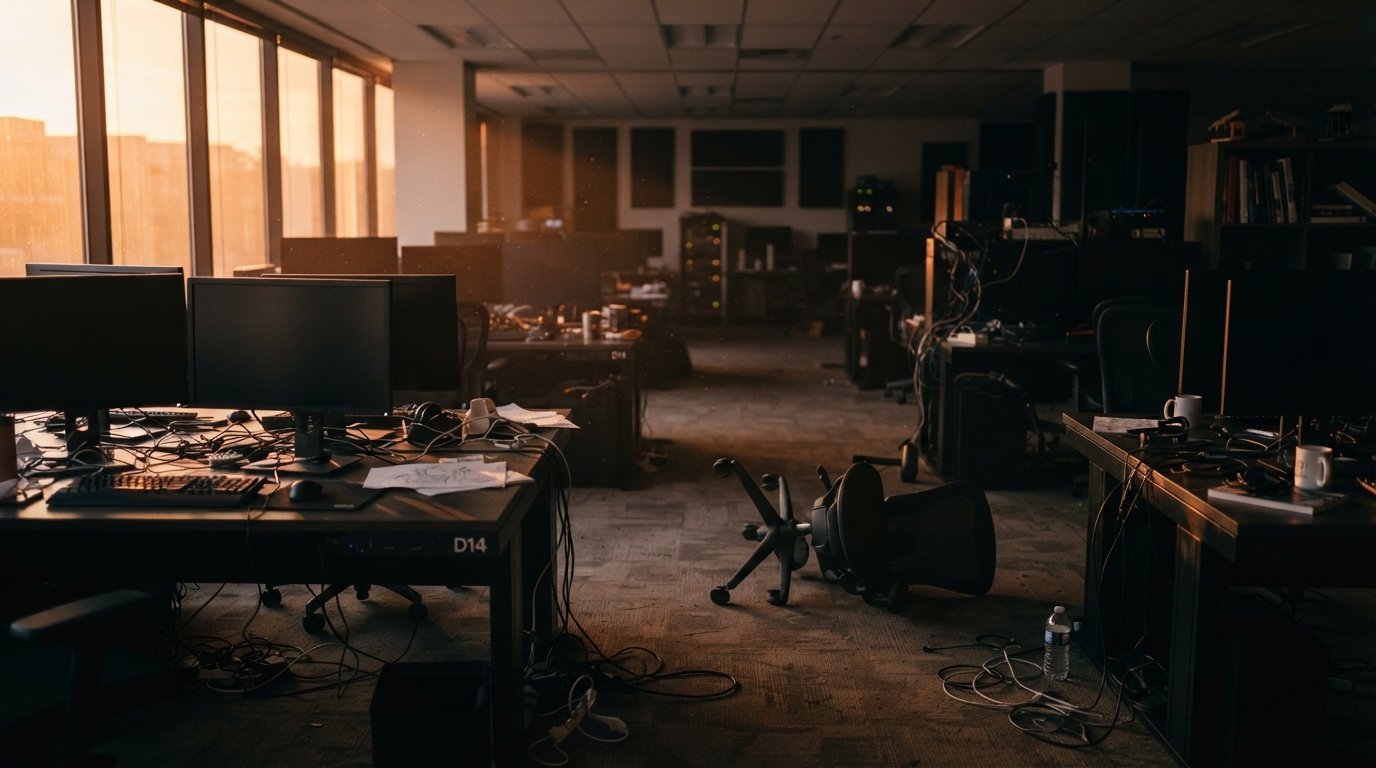
On April 3, 2013, around 150 people were laid off when Disney shut down LucasArts' internal development arm, cancelling the two games the studio had in production — *Star Wars: First Assault* and the ambitious *Star Wars 1313* — and turning one of the most influential publishers in video game history into little more than a brand-licensing department. The official statement talked about shifting the company from an internal development model to a licensing model, "minimizing risk while achieving a broader portfolio of quality" Star Wars games. In practice, it was a corporate obituary dressed up as a restructuring.
## The Numbers Behind the End
The timeline is harsher than it's usually remembered. Disney had closed the Lucasfilm acquisition — and with it, LucasArts — in October 2012, for close to 4 billion dollars. One hundred fifty-four days later, the game studio no longer existed as an active developer. A report from the time counted that exact gap between the deal's signing and the shutdown — just 154 days, the kind of window that usually separates a "we're evaluating synergies" from a "there was never a plan for this asset."
The details that got left out of the headlines matter more than they seem to:
- **150 layoffs**, according to the original Kotaku report that was picked up by multiple outlets at the time
- **2 cancelled games** in advanced stages: *Star Wars 1313*, an action-adventure starring Boba Fett that had been shown at the previous year's E3, and *Star Wars: First Assault*
- **May 2013**, one month later, Disney had already signed a 10-year exclusive licensing deal with Electronic Arts to produce Star Wars games — proof that the decision to close the internal studio wasn't impulsive, but part of a negotiation that was likely already underway before the public announcement
- **September 2012**, still under Lucasfilm control but already under the spotlight of the sale, LucasArts had frozen hiring — a sign employees themselves already read as a bad omen
What this sequence reveals is that Disney never intended to run a development studio. It bought Lucasfilm for the film catalog and the Star Wars brand as a whole; the game studio was a passenger that came along with the package, and passengers that don't generate direct revenue under a franchise-licensing model rarely survive a post-acquisition audit.
## The Diaspora Nobody Tallied Up
Here's the point the 2013 coverage didn't have enough temporal distance to see: LucasArts' shutdown didn't extinguish talent — it just redistributed it, and much of that outcome only became visible years later.
Tim Schafer had already left LucasArts in 2000 to found Double Fine, but the studio had long functioned as a kind of informal incubator for former employees well before the official closure. Telltale Games, founded in 2004 by refugees from the cancellation of another internal LucasArts project (the *Sam & Max* revival), ended up inheriting the *Sam & Max* IP itself and, later, produced its own episodic version of *Monkey Island* — one of the articles covering the shutdown even noted that Sam & Max survived digitally through Telltale, founded by former LucasArts employees, the same way Double Fine was also born from people who had passed through there.
This isn't a coincidence involving two isolated cases. It's a pattern that repeats itself in practically every historically significant studio closure. BioWare lost people to Larian, Bullfrog became a seedbed for half a dozen British studios in the 2000s, and Black Isle gave rise to Obsidian. What makes LucasArts different is the scale and prestige of the catalog left orphaned — *Monkey Island*, *Grim Fandango*, *Day of the Tentacle*, *Full Throttle* — titles that still show up today on lists of the best adventure games ever made, whose original creators spent the next decade trying, with mixed success, to recreate that same creative spark outside the corporate structure that had shaped them.
I've followed this industry long enough to notice an uncomfortable irony here: by closing LucasArts, Disney probably preserved the studio's creative legacy better than it would have by keeping the operation alive under quarterly licensing pressure. A *Monkey Island 3* made by corporate committee in 2015 would hardly have earned the same reputation as the *Return to Monkey Island* that Ron Gilbert released independently almost a decade later, in 2022 — free precisely from the structure the shutdown had dissolved.
## What the Cancelled Star Wars 1313 Reveals About Risk
It's worth circling back to *1313* itself for a moment, because it's the clearest counterexample of why the licensing model won out internally. It was an ambitious project, with proprietary facial-capture technology and a budget that, according to trade press reports from the time, was already reaching tens of millions of dollars with no set release date. For a company that had just spent 4 billion dollars on an entire media asset, keeping an internal studio burning cash on a single high-risk game was exactly the kind of exposure that Disney's press statement, with its language of "minimizing risk," was trying to eliminate. EA, for its part, didn't take on that risk — it took on a ten-year exclusivity contract and spread the risk across multiple studios (DICE, Respawn, Motive), which is structurally a much more defensible bet from the standpoint of an entertainment conglomerate than owning a proprietary game studio outright.
The "LucasArts" brand technically still exists — it shows up in licensing credits and is still used sporadically, including in re-releases and ports of old games that keep getting rediscovered by a generation that never touched a CD-ROM. But the studio as a creative entity died that April morning, and what remained was less a company than a surname scattered across the credits of other people's games, made somewhere else.
It's not as simple a sad ending as it looks in nostalgic retrospectives. It's stranger than that: a company disappeared, and somehow its work kept getting done — just without it.