PS5, PS5 Slim or PS5 Pro: The Guide to Not Getting It Wrong
Sep 13th '26 10:57pm:
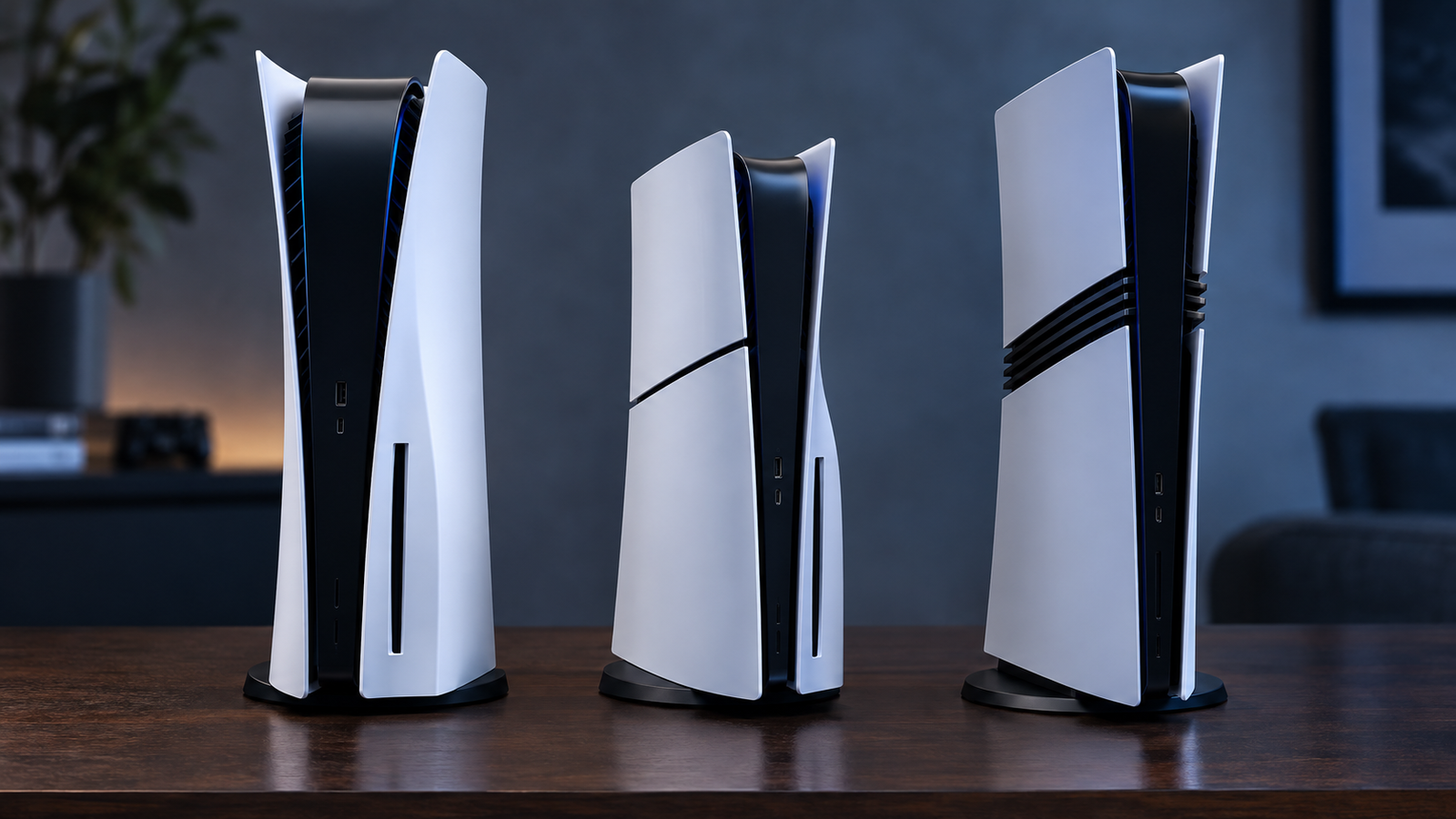
There are currently three distinct versions of the PlayStation 5 on the market — the original 2020 model, the Slim launched in November 2023, and the Pro that hit stores on November 7, 2024 for R$6,999 — and the confusion for anyone deciding which one to buy is almost never about performance. It's about what each box promises and doesn't deliver, like a disc drive sold separately or storage that looks bigger on paper than it turns out to be once the operating system eats its share.
## Is the Original Model Still Worth It, or Is It Just Leftover Stock?
The launch PS5, the one fans nicknamed "the Fat," came out in November 2020 with an 825GB SSD — of which only about 667GB is actually free once the system is installed. It weighs 4.5kg with the disc drive and 3.9kg in the digital version, and has that two-panel white design split by a single line, without the four-way split the Slim brought later. Technically it runs everything the same: same RDNA 2 GPU, same eight-core Zen 2 processor, 16GB of GDDR6 RAM.
Today this model is essentially out of production — Sony no longer manufactures it, and what's left are stock units at some brick-and-mortar stores, usually discounted because nobody wants to hold onto a discontinued part in the warehouse. If one turns up cheap and still sealed, it's not a scam or junk hardware: it's a console equivalent to the Slim in gameplay terms, just bigger and heavier.
## The Numbers That Separate the PS5, Slim, and Pro
This is where it's worth comparing side by side, because the storage difference alone already changes the experience with 100GB+ games installed:
- **PS5 (2020)**: 825GB SSD (~667GB usable), no detachable drive, 4.5kg (disc) / 3.9kg (digital), launch price US$499.99 / US$399.99.
- **PS5 Slim (Nov/2023)**: 1TB SSD, detachable Blu-ray drive (can be removed or bought later for ~US$79.99), 30% less volume, 3.2kg (disc) / 2.6kg (digital), launch price US$499.99 (disc) / US$449.99 (digital) — in Europe, €549.99 and €449.99.
- **PS5 Pro (Nov/2024)**: 2TB SSD, **GPU with 67% more compute units** and 28% faster memory (up to 45% more graphics performance according to Sony), Wi-Fi 7 support, PSSR upscaling technology, no disc drive included — sold separately for about US$79.99 / €119. Launch price: US$699.99 / €799.99 / R$6,999.
Here's something that gets lost in almost every comparison: the Pro isn't simply "the Slim but stronger." It ships with no disc drive in the box, which catches a lot of people off guard when they open the console and realize they need to spend more to play physical media — something not even the base Slim requires, since its disc version comes complete.
## Where People Get It Wrong When Choosing
I spent a while responding to messages from people deciding between these three models, and the most common mistake isn't technical, it's about expectations. Here's the reasoning that usually settles it:
First, decide whether you actually need the Pro. It only pays off visibly if you have a 4K TV with a good refresh rate and play titles that have already received updates with the Fidelity Pro / Performance Pro modes — Spider-Man 2 and Ratchet & Clank: Rift Apart are examples Sony itself cites. Without that, you're paying an extra US$200 for upscaling most people won't notice on a regular TV.
Second, don't assume "Slim" means "weaker." It's a recurring mix-up: the Slim has exactly the same GPU, CPU, and RAM as the 2020 model. The real difference is size, weight, and storage — no performance gain whatsoever there. People who swap the Fat for the Slim expecting a better frame rate end up disappointed, because there's no gain to be had.
Third — and this is the one that generates the most post-purchase complaints — check whether the version you're getting includes a disc drive or not, especially when buying the Pro or the digital edition of any model. Some people buy expecting to pop in a physical game disc and find out at home they need another part, sold separately, sometimes with weeks of delay on delivery.
## And the Special Editions — Is It Worth Paying More for the Cover?
Beyond the three hardware models, Sony sells aesthetic variations: swappable colored covers (silver, blue, red, and the specific line launched with Spider-Man 2 in 2023, which turned into a resale item priced well above list), plus commemorative editions that only change the appearance, never the internal performance. This tends to confuse people searching for "special edition PS5" thinking there's a more powerful version hidden behind the fancy name — there isn't. It's a cover, a collector's box, a game bundle. The internal component is always one of the three described above.
In my assessment, this is the part of Sony's product strategy that works best commercially and worst informationally: it builds collector's desire around a machine that, technically, hasn't changed at all.
If your budget allows you to take your time deciding, the question that settles everything isn't "which edition is better" — it's which of these three internally identical machines fits the size of your entertainment stand and how much you're willing to pay for upscaling you might not even end up noticing.