Sony pays $7.85M and changes nothing on the PlayStation Store
Sep 13th '26 5:50pm:
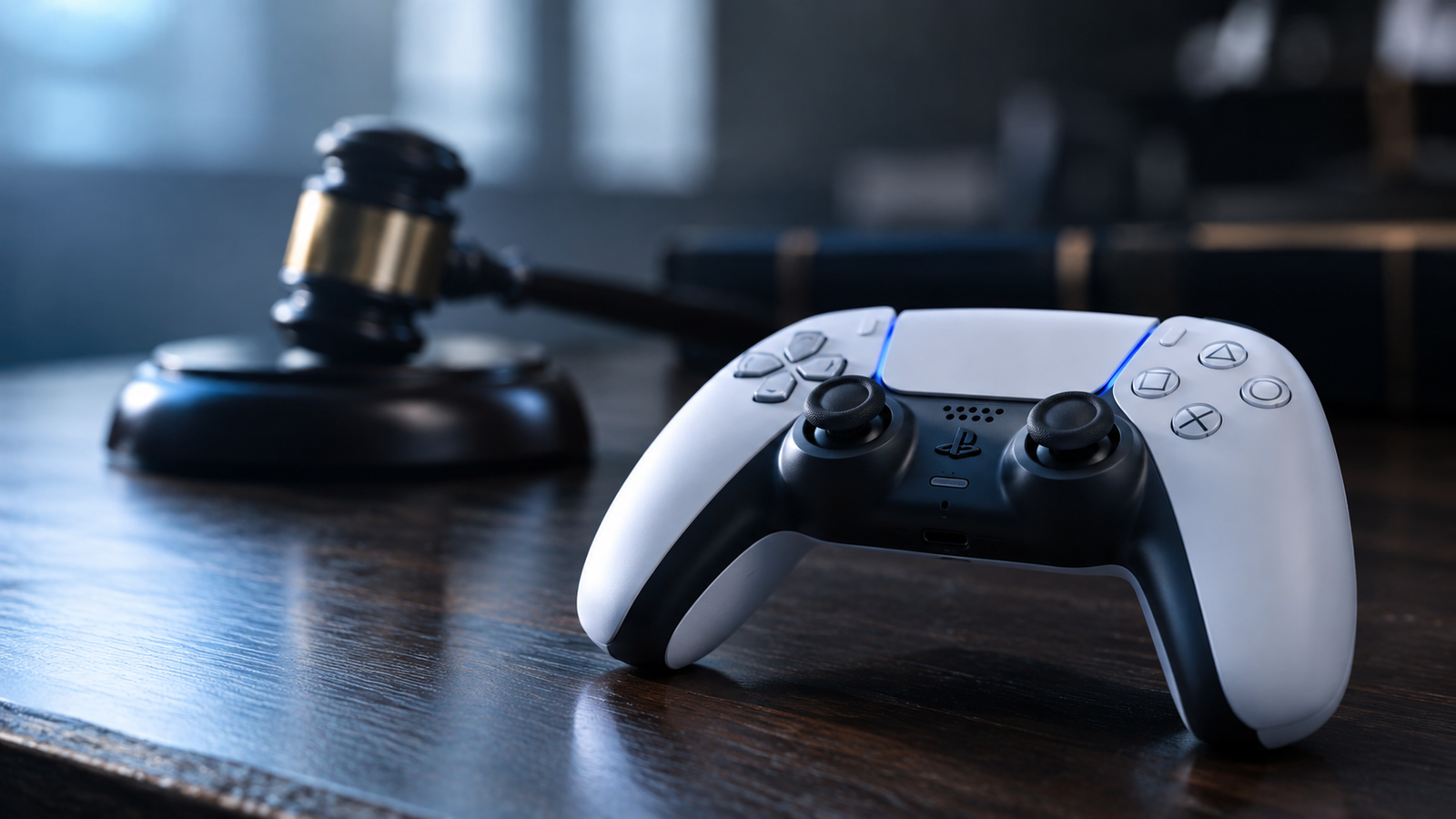
Sony Interactive Entertainment has agreed to create a $7.85 million fund to settle a class action brought by U.S. customers of the PlayStation Store, who alleged they paid more for some digital games after the company blocked retailers from selling title-specific download codes. The settlement already has preliminary approval and will go before a federal judge in Oakland for final approval on October 15, at 2 p.m. Pacific time. There's no admission of wrongdoing — and that absence is exactly what turns a seemingly closed case into something worth unpacking.
## Who Qualifies, and What's Actually Left to Divide
The class covered by the settlement is narrower than it first appears. This isn't every PlayStation Store customer — to qualify, you had to buy, between April 1, 2019 and December 31, 2023, a game that **had previously been sold through a title-specific voucher**, with at least 200 voucher redemptions recorded before April 2019, and that showed a post-discount price increase of at least 50 cents when comparing the periods before and after Sony's policy change.
After court-approved deductions, the amount actually split among consumers will be smaller than the announced $7.85 million:
- **Consumer counsel fees**: up to 25% of the fund, plus litigation expenses;
- **Service awards** for the three named plaintiffs: up to $30,000 total;
- **Automatic wallet credits** for anyone with an active PSN account;
- **Check payments** only for those without an active account who filed a claim by August 27.
In other words: $7.85 million is the gross figure. What's left to divide among a pool of buyers spanning nearly five years of catalog is, in practice, a residual fraction — likely just a few dollars per eligible person, though the exact amount depends on how many claimants ultimately qualify.
## The Number That Makes the Settlement Look Like Pocket Change
Here's the detail most coverage of this case fails to place side by side: in the quarter ended June 30, Sony's Game & Network Services division posted ¥937.1 billion in sales and ¥202.0 billion in operating income. Converting the full settlement amount at the September 11 closing rate of ¥153.554 per dollar comes out to roughly ¥1.21 billion — about **0.13% of a single quarter's games revenue**, before fees and expenses are even subtracted. That's back-of-the-envelope math, not an official Sony figure, but it illustrates the disproportion well.
The number itself isn't what matters here. It's what it protects. Sony reported that downloads accounted for 82% of full-game software sold on PlayStation during the June quarter — a massive shift from the era when physical discs still shared shelf space with third-party digital codes. When that much of the revenue depends almost entirely on a closed storefront, any dispute over "who gets to sell digital games" stops being a legal footnote and becomes a question about the architecture of the entire business.
In the preliminary approval order, the court itself acknowledged that the case — filed in 2021 as *Caccuri v. Sony Interactive Entertainment* — had "just barely" survived the pleading stage, and that discovery from retailers had sharply cut down the plaintiffs' damages estimate. That explains why consumers settled for far less than the original theory suggested: not because the underlying claim lost moral weight, but because the litigation math got weaker once the documents came out.
## Why No One Should Treat This as a Precedent
It's tempting to read "multimillion-dollar settlement" and "anticompetitive practice" in the same sentence and conclude that a court decided something about Sony's closed-store model. It didn't. A settlement with no admission of liability, no ruling on the merits, and no announced change to PlayStation Store policy doesn't establish that Sony's digital model is illegal — it only establishes that continuing to litigate cost more for both sides than settling did.
That matters because Sony reported 125 million monthly active PlayStation users in June, a record for that month, and its digital software revenue is recognized at retail transaction price — meaning every cent of margin on its own storefront counts twice: as revenue, and as control. A $7.85 million payment doesn't move that engineering by a single decimal point. What would move it is a ruling on the merits, a distinct regulatory order, or a separate case that produces a binding antitrust judgment — none of which is what's happening here.
The next concrete checkpoint is the final approval hearing on October 15. It's worth watching the resulting order and any appeal, but anyone actually tracking antitrust risk to Sony's digital distribution business should be watching a different case — not this one.
Source: https://ts2.tech/en/sonys-7-85-million-playstation-store-settlement-heads-to-an-october-hearing/