Ocarina of Time Costs $59.99 in November. The Reason Isn't Nostalgia
Sep 9th '26 7:56am:
Written: João Silva
<br>On Tuesday the 8th, Nintendo confirmed that *The Legend of Zelda: Ocarina of Time* arrives on Switch 2 on **November 5**, priced at **$59.99 digital** and **$69.99 physical** — and chose to make that announcement two weeks before GTA VI's launch, inside a 30-minute Direct dedicated entirely to Zelda's 40th anniversary, with no other game sharing the stage.
That's not a small detail. It's the first time in years the company has reserved an entire broadcast to celebrate a single title and its legacy, rather than folding the announcement into a generic Direct where ten other games are fighting for attention.
### The numbers that came out of Tuesday
- **Release**: November 5, 2026, exclusive to Switch 2 (no version for the original Switch)
- **Price**: $59.99 digital / $69.99 physical, with a textured foil cover on the first print run
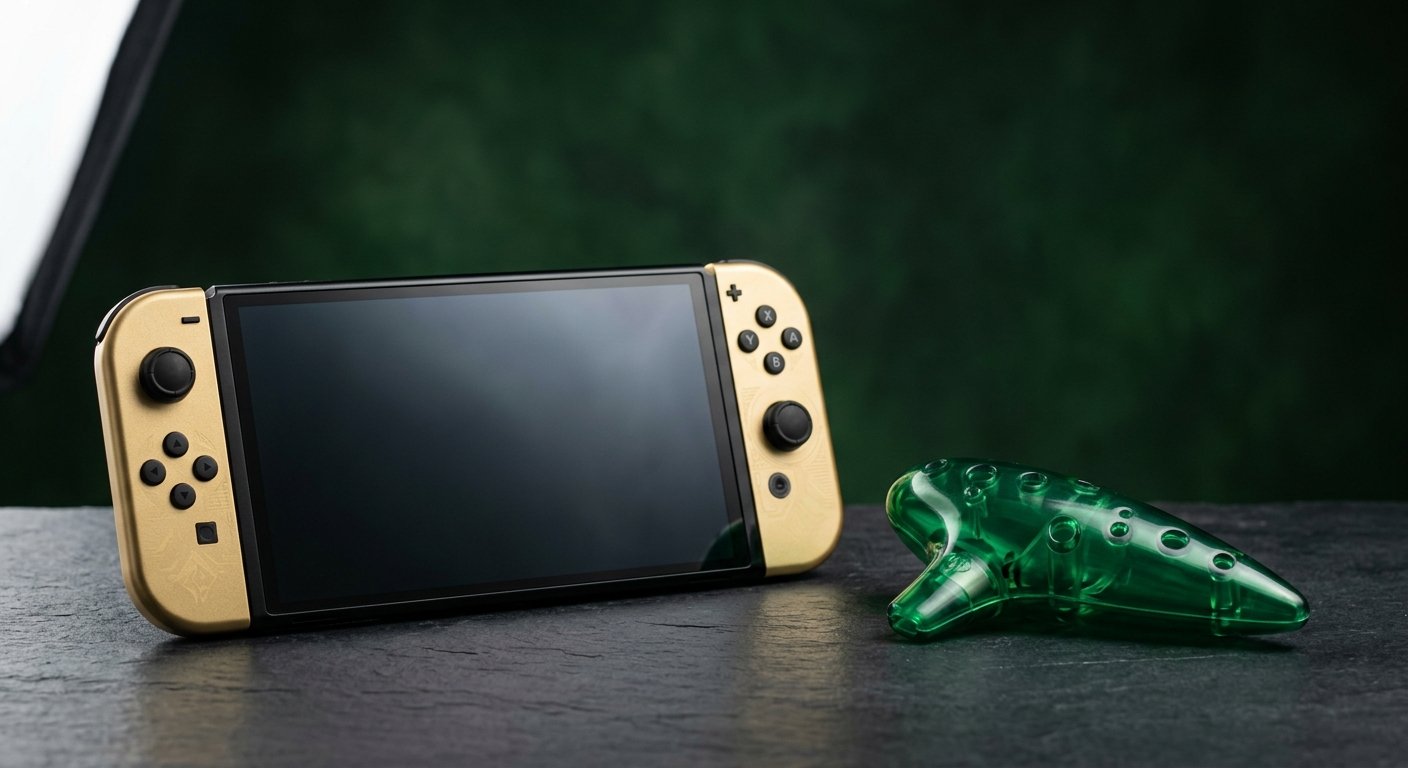
- **Special-edition console**: arrives October 29, alongside a themed Pro Controller and case — sold out on the official US store within hours
- **Live-action film**: title simply "The Legend of Zelda," directed by Wes Ball, opens April 30, 2027
- **Concert tour** featuring Koji Kondo's music, announced for 2027
- The original 1998 game still holds **the highest Metacritic score ever recorded** for a video game
The remake's feature block — a dedicated jump button, a free camera in the market, full voice acting, and a system called **Threads of Time** that logs the player's progress on a visual tapestry — played second fiddle in the press coverage. What dominated the conversation was the price and the date.
### What the $59.99 price tag says about Nintendo's catalog
Charging full, or near-full, price for a remake is increasingly common across the industry, but it's usually backed by an argument about total reconstruction: a new engine, a redesigned world, combat systems rebuilt from scratch. That's not quite what's happening here. Nintendo was explicit that the original structure stays intact — loading screens included, Z-targeting included. What changes is the surface: voice, camera, a jump button replacing the automatic ledge-grab.
That's not a knock on the game itself, which looks likely to be beautiful and playable. It's an observation about who the price was calculated for. $59.99 is, today, the historical ceiling Nintendo charges for catalog remasters — and it's applying that ceiling to a 28-year-old game, in a year with **no new Zelda on the calendar**. The 40th anniversary has effectively become the commercial anchor for the franchise's second half of 2026.
The date choice reinforces the reading. Two weeks separate the Ocarina of Time launch from GTA VI's — different platforms, an audience that barely overlaps — but the gesture of not backing off by even a single week is telling. Nintendo is saying, without saying it, that it doesn't think it needs to compete for shelf space with Rockstar. Given that the special-edition console sold out before the game even hit stores, the bet looks calculated, not naive.
### A pattern I've seen before, just running backward
Anyone who followed the Nintendo Switch Online N64 app launch in 2021 remembers that Ocarina of Time already came back to the catalog, for free, inside the subscription. Five years later, the same game — now with a free camera and voice acting — costs the price of a brand-new release. There's no technical contradiction in that; these are different products. But there's a messaging inconsistency Nintendo has never publicly resolved: at what point is the historical catalog a subscription perk, and at what point is it a premium product? The answer, apparently, depends on how much marketing the company can wrap around the nostalgia — and a 30-minute Direct, a film, a concert tour, and a console that sells out in hours is a lot of marketing.
It's also worth noting what this strategy costs the following day. Wednesday's general Direct, with actual new games, now has to compete with the hangover of attention from the previous day's announcement. Splitting the two events gave Zelda a stage entirely to itself, but it also raises the question of whether the "normal" Direct still carries announcement weight once the week's big emotional moment has already passed.
It remains to be seen whether this model — a Direct devoted purely to commercially mining an anniversary, with a game, a film, a museum tie-in, and merchandise all bundled into the same event — becomes routine for Nintendo's next round-number franchises, or whether it was a one-off experiment because 2026 simply didn't have a new Zelda to show.
Source: https://www.nintendo.com/us/nintendo-direct/9-8-2026/