Xbox Cloud Gaming Will Charge by the Hour: What It Reveals About Game Pass
Sep 8th '26 8:54am:
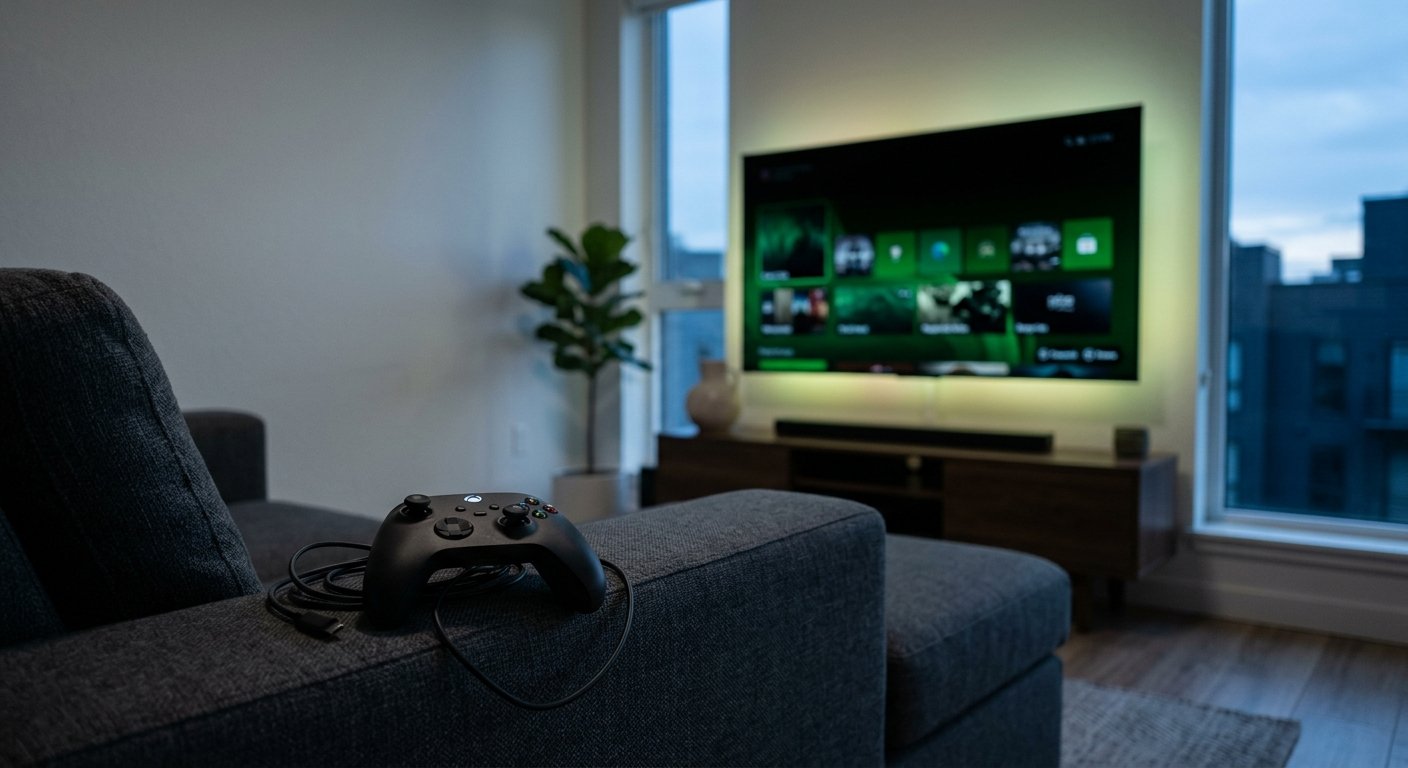
For six years, Microsoft sold a simple promise: subscribe to Game Pass Ultimate and play as much as you want in the cloud, no minutes counted. That promise ends in November.
On September 3rd, the company announced via Xbox Wire that Xbox Cloud Gaming will start imposing **monthly hour limits** for all Game Pass subscribers. Essential plan holders ($9.99/month) will get 5 hours of streaming per month. Premium subscribers ($14.99) get 10 hours. And Ultimate — the premium tier, the one that has had unlimited streaming since 2020 — drops to **15 hours a month**. Go past that, and players are invited to buy extra hours, priced at a figure Microsoft hasn't disclosed yet.
Do the math: 15 hours a month works out to a little under 30 minutes of play per day. For someone paying $22.99 a month on the most expensive tier in the lineup, that's a small fraction of the free time most people have after an eight-hour workday.
## A Number That Looks Small But Isn't
Microsoft moved quickly to soften the public impact of the news. According to the company, only **4% of Game Pass subscribers** regularly exceed these new limits. That sounds small — until you multiply it by the subscriber base. With an estimated 30 million users — a figure that's circulated since Wall Street Journal reporting, though Microsoft itself has never publicly confirmed it — that 4% works out to **roughly 1.2 million people**.
That's not a rounding error. It's an entire community of players who rely on Cloud Gaming as their primary way to play — someone with an Xbox One trying to run a Series X|S title without buying a new console, people gaming on a Smart TV, an underpowered laptop, or a phone on public transit. That's precisely the audience Microsoft, in theory, most wants to retain, because it's what sustains the sense that Game Pass is worth the price even without new hardware.
And here's the first contradiction in the announcement: the company keeps reinforcing, in the same statement, that Cloud Gaming is the alternative for people who can't or won't buy a new console — at a time when Xbox hardware prices only keep climbing. Except now that alternative comes with a clock running.
## Why Now, Specifically
There's a calendar detail no official statement will ever admit to, but it's hard to miss: the change takes effect in November, the same month **GTA VI** launches, on November 19th — arguably the most anticipated game of the decade, and one of the titles that would put the most strain on streaming infrastructure if it were available at scale via the cloud.
Calendar coincidences happen. But a calendar coincidence that also happens to line up with a capacity limitation has another name: traffic planning. Microsoft had been signaling this for months. In July, it tested ad-supported streaming. Under the Xbox division's new CEO, Asha Sharma, the company is reevaluating entire business models to bring profitability back to a division that, despite its size, has never been as lucrative as Windows or Azure.
And there's the broader backdrop, which Microsoft mentions almost in passing in its own announcement: demand for computing power is surging across the entire industry, driven in no small part by the same data centers now training AI models. Cloud gaming competes for GPU capacity with nearly the rest of the company's entire cloud portfolio. When the scarce resource is shared, cutting the item that generates less direct revenue is a spreadsheet decision, not a product one.
## The Pattern Nobody Wants to Admit Exists
Anyone who follows tech subscriptions recognizes the script. First comes the aggressive growth phase, with generous perks to win users and crush emerging competition — Nvidia already capped GeForce Now before this, for what it's worth, so Microsoft isn't even pioneering the practice, just arriving late to it. Then, once the user base matures and switching platforms becomes more of a hassle, the perk quietly shrinks. Ultimate has had unlimited streaming since 2020; Premium and Essential got it less than a year ago — meaning the company handed out the benefit right before taking it away, which suggests the cost math was already clear internally before the expansion even happened.
Over the past two years, Game Pass has already gone through two price hikes, the most recent in October of last year. Curiously, at some point this year Microsoft actually **lowered** the price on one tier of the service — a move that, from the outside, seemed to contradict the tightening logic. From the inside, it probably just meant monetization was being redistributed: less through the subscription price, more through usage of resources that are expensive for the company to maintain, like streaming servers.
## What's Still Up in the Air
Microsoft confirmed the hour numbers but held back the details that actually matter to a player's wallet: how much extra hours will cost, whether pricing will vary by market (quite likely, given the company's track record on regional pricing), and whether purchased-but-unused hours roll over to the next month. A report from The Verge suggests they will roll over — but that hasn't shown up in any official Xbox statement yet, so it's worth treating as a plausible rumor, not confirmed policy.
Also left hanging is the pay-as-you-go question: starting in November, people with no Game Pass subscription at all will be able to buy streaming hours to play titles they already own. In effect, Microsoft is launching an entirely new product — à la carte cloud gaming — tucked inside an announcement that, on the surface, reads as just a benefit cut.
## Where This Leaves Us
Anyone who installs games locally, whether on console or PC, keeps unlimited play time — the cut applies exclusively to cloud streaming. That means for the majority of the 96% of subscribers who rarely use cloud gaming heavily, almost nothing changes day to day.
But for the 1.2 million who live inside that Cloud Gaming experience — the Xbox One owner stretching their console's lifespan, the player on a weak laptop, the parent who can only game on their phone during a work break — November arrives with a new clock and an unknown price hanging off the end of it. The question isn't whether Microsoft will justify the change with infrastructure numbers — it already has. The question is how much each extra hour will actually cost, and whether that number will feel fair, or push that audience right back toward the physical hardware the cloud was supposed to make unnecessary.