The fan who never touched a controller is now a priority
Sep 8th '26 8:15am:
## Sega admits: non-players might be worth more than players
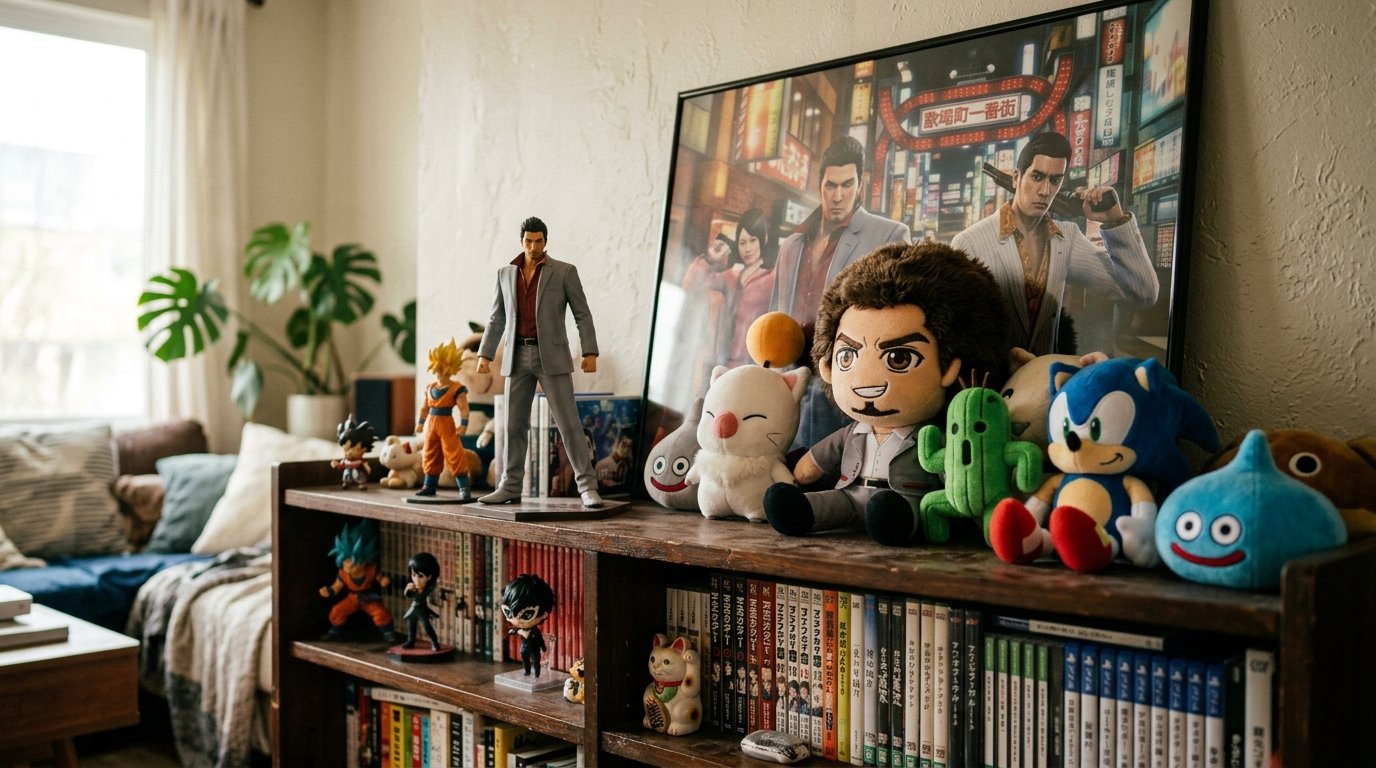
Shuji Utsumi, Sega's president and COO, said something in an interview with Nikkei that should unsettle anyone who still thinks of "fan community" as a synonym for "people who actually play." According to him, the company has seen a steady rise in fans who **don't play the games** — and in some cases, their engagement with the brand runs higher than that of people who sit down and actually play. He points to Like a Dragon as the clearest example: between 60% and 70% of buyers of the series' licensed merchandise are women, and a good chunk of them got to know Kiryu, Ichiban and the rest through official YouTube content or streamers' playthroughs. Never touched a controller.
Sega, for the record, still calls these people "gamers." No distinction made. And that's where it gets interesting.
### The data point nobody had said out loud
It's no secret that big franchises today live off merchandising, adaptations, and cultural presence outside the game itself. Pokémon has done this for thirty years. Nintendo made more off the Mario movie than most studios make off an entire franchise. But usually companies frame this as a "complement" to the existing player base — a way to monetize people who already love the game through other products.
What Utsumi described is different, and more uncomfortable for anyone working in game design: he's describing an audience that **enters through the side door and never gets around to playing**, and is still more valuable, or at least more visibly engaged, than the traditional audience. That flips a logic the industry had been treating as self-evident — that the game is the primary product and everything else is derivative of it.
Worth a parenthesis here: Sega didn't release revenue figures separating "fans who play" from "fans who don't," so this shouldn't be treated as an audited metric. It's the reading of the company's own president, given in a Japanese business interview, with all the rhetorical weight that carries — but no spreadsheet backing it up.
### Like a Dragon turned into the perfect lab for this
It makes sense the example chosen was Like a Dragon. The series went from cult niche to streaming phenomenon in under five years, largely because content creators turned the franchise's dramatic — and sometimes ridiculous — cutscenes into bite-sized, consumable content. Some people know Majima better from ten-minute YouTube compilations than any player who actually finished Yakuza 0.
And what Sega sells to that audience isn't the game. It's the themed wedding event the company itself organized recently, charging nearly a thousand dollars for a fake ceremony with your favorite character — complete with a divorce certificate included, because apparently there was demand for that too. It's the plush, the poster, the convention experience. Nobody there needs to have gotten past chapter 3 to pay for it.
**What this suggests:**
- The narrative and cast of characters have become the main product in some cases, with gameplay reduced to something closer to a secondary selling point
- The content creator does the "translation" work that used to belong to the game itself — deciding what part of the story is worth showing
- Monetization through merchandise and live events doesn't depend on in-game retention, which entirely changes which metric a company should actually care about
### Where this leaves things
If Utsumi's reading is accurate — and there's reason to think it is, given how much Sega has invested in adaptations, with 2026 marked as a strong year for both Persona and, of all things, Angry Birds also getting folded into this transmedia push — then the logical next step is for the company to start designing products with that non-playing audience in mind first. This is already happening indirectly: characters made too charismatic for their own script, cutscenes built to work as standalone clips, moments engineered to become a clip.
The risk, and this is the part the interview leaves out, is what happens to design once a studio starts optimizing for the watcher instead of the player. A scene built to go viral on its own doesn't always work inside the pacing of a forty-hour RPG. Sega seems comfortable saying both audiences are equally "gamers" — in practice, they're audiences with very different design needs, and not every studio will manage to serve both without sacrificing one.
Which leaves the question the interview never answered: once the fan who never played is worth more, does the game still sit at the center of the franchise, or has it already become just one format among several?