Why the Konami Code Exists (and Where It First Showed Up)
Aug 20th '26 5:38pm:
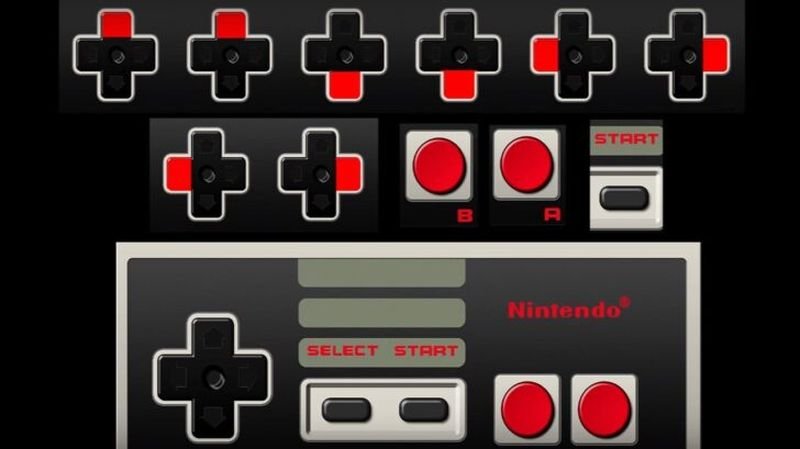
Up, up, down, down, left, right, left, right, B, A, Start. If you played anything in the 80s or 90s, or spent way too much time on gaming forums as a kid, that sequence is burned into your muscle memory somewhere. The funny part is almost nobody actually knows where it came from. Most people would swear the code was born in Contra. That makes sense, since that's where it became legend. But that's not where it was born.
<br>The code is two years older than that. It first showed up in 1986, in the NES version of Gradius, a side-scrolling shooter Konami was porting from the arcade to Nintendo's home console. And the story of how it ended up there is a lot more human, and a lot less "genius marketing move," than it usually gets told.
<br>The person who created it was a programmer named Kazuhisa Hashimoto, who'd joined Konami back in 1981, fresh out of school, at a time when the company was still manufacturing circuit boards for roulette and slot machines — nothing glamorous. Years later, once the Famicom (Japan's NES) started taking off, Konami put Hashimoto on the job of porting Gradius, a brutally hard arcade game, to the home console.
<br>Here's the part nobody expects: the code wasn't built for the player. It was built so Hashimoto himself could get his job done. He had a tiny team — really just one guy helping him out — and the arcade version of Gradius was punishing enough that even he couldn't finish it on his own, and he was the one supposed to be testing it. In a 2003 interview he said it plainly: he hadn't put in enough hours, couldn't beat it himself, so he put in the code. And since he was the one who'd actually be using it, he made sure it was something he could easily remember.
<br>In practice, the command handed the ship every power-up at once, skipping the part where you have to earn each upgrade by playing. Basically a shortcut for an exhausted developer. The plan was to strip it out before the official release — that kind of debug code usually disappears in the final build, that's still standard practice today. Somehow, though, nobody pulled it. The game shipped to the public with the cheat still live inside it, no warning, no footnote, nothing.
<br>That's when it took on a life of its own. Gradius players started stumbling onto the sequence by accident, or hearing about it through word of mouth — no internet, no YouTube, so imagine how much effort it took to spread that kind of secret in 1986 — and reported it back to Konami. Instead of patching the "mistake" out of future titles, the company leaned into it, and other in-house developers started dropping the same code into later games.
<br>The leap to worldwide fame, though, came with Contra in 1988. There, the code stopped granting power-ups and started handing out 30 extra lives right from the title screen, which is how it picked up the nicknames "Contra Code" and "30 Lives Code" in the US. And that nickname sticking makes total sense, because Contra showed no mercy: one hit and you were dead, with only three lives to get through the entire game. Without the code, finishing Contra was a feat only a few pulled off. With it, it turned into something like an unofficial requirement. An entire generation of American kids only saw that game's credits roll because of eleven button presses.
<br>From there, the code just kept spreading. It's been logged in over a hundred different games across the decades, including Castlevania, Metal Gear Solid, and Dance Dance Revolution, and even titles with zero connection to Konami started using variations of it as a tribute or easter egg. It broke out of the console world entirely and turned up in some pretty unexpected places: Family Guy episodes, scenes in Wreck-It Ralph, t-shirts, and even on the Bank of Canada's website, where typing the sequence on the page for the new ten-dollar bill triggers a rain of digital confetti and plays the national anthem. There's also a song by the pop-punk band The Ataris that references the code directly.
<br>Hashimoto passed away in February 2020, at 61, after almost thirty years with Konami. The company put out a short statement mourning him as "a deeply talented producer who first introduced the world to the Konami Code," which is a pretty elegant way to sum up the career of a guy who accidentally created one of the most recognizable artifacts in gaming culture.
<br>There's something almost ironic about it: the most famous code in video game history wasn't born out of a marketing brainstorm, or user research, or some committee deciding "let's create something memorable for the fans." It came from a tired programmer on a tight deadline, trying to finish testing a game that was too hard, before shipping it off to production. He forgot to take the shortcut out. And that oversight turned into, forty years later, part of the everyday vocabulary of anyone who's ever held a controller.