Why PS1-Style Graphics Make Indie Horror Games Scarier Than 4K
Aug 13th '26 8:24am:
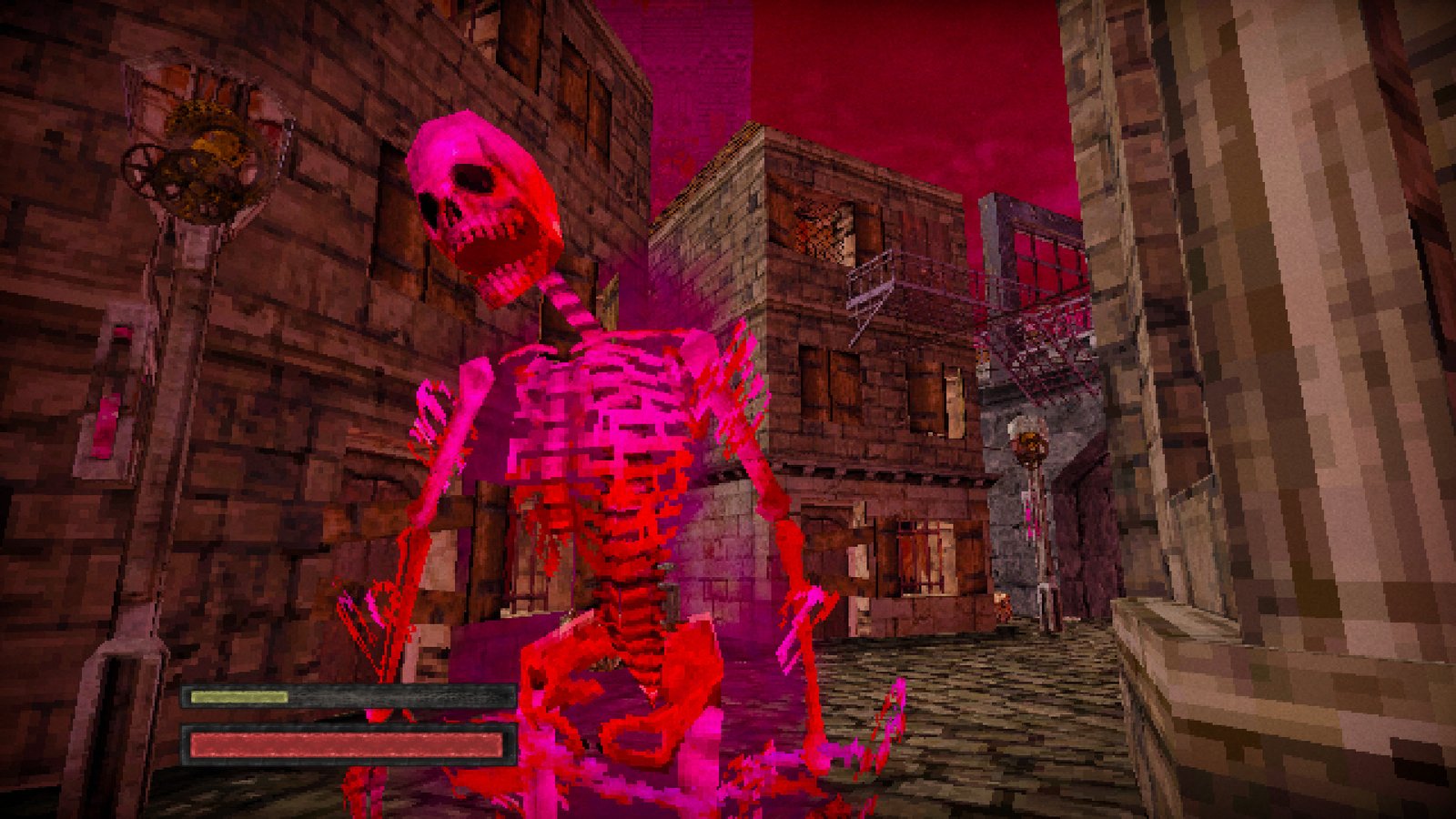
There's a moment in Fears to Fathom I played late at night, not really knowing what to expect, and what got me wasn't a monster or a jumpscare. It was the hallway. Just a poorly lit corridor, grainy texture on the walls, a low fog covering the far end that I couldn't quite make out. I stood still for a good few seconds before walking forward. And that's when it hit me — this is the design doing exactly what it's supposed to do.
The PS1 generation never had that fog by artistic choice, not really. Most of the time it was a way to hide hardware limitations — low VRAM, short draw distance, a processor that simply couldn't handle large environments without choking. The original Silent Hill is the example everyone brings up, almost a cliché at this point, but it still holds: Konami needed to hide object pop-in and used fog as a curtain. What was a technical workaround back then became, almost by accident, one of the most effective tension tools horror games have ever had.
## The Unknown Works Better Than the Visible
Decades later, a handful of small studios rediscovered this and started using it on purpose. And here's the difference worth explaining: it's not lazy nostalgia, it's a design decision. When you limit what the player can see — through fog, short draw distance, or low resolution blurring anything more than a couple meters away — the human brain does the dirty work on its own. It fills the gap with the worst possible outcome. Modern, hyper-detailed graphics remove that margin for imagination entirely. You see everything, so there's nothing left to fear beyond what's already on screen.
Crow Country is a solid case study here. It uses low-poly models and semi-fixed cameras, closer to classic Resident Evil, and the result is that you're never quite sure what's waiting around the next corner, even in fairly small environments. Signalis goes down a similar road, but with an even grimier, almost analog look, closer to degraded VHS tape than an actual game.
## Bad Textures and Almost-Right Faces
There's an effect I don't think enough people stop to consider: low-poly 3D models, especially human faces, fall into a kind of inverted uncanny valley. They're not realistic enough to read as truly human, but detailed enough to suggest a human figure — and that middle ground unsettles in a way neither hyper-realism nor cartoonish style quite manages. Puppet Combo's games lean into this almost relentlessly, with characters that look pulled straight from a cheap 90s horror VHS tape, and it works far better than blood rendered in 4K ever could.
## Fixed Cameras: Losing Control Is Part of the Fear
This might be the most technical point, and also the most overlooked one when people talk about this style. Classic survival horror used fixed or semi-fixed cameras, often paired with tank controls, mostly because free-roaming cameras just couldn't run well on period hardware. But the side effect was brilliant: the player loses control over what they can even see. The jumpscare doesn't come from the creature alone — it comes from not being able to swing the camera in time, from the game itself denying you the chance to react. Paratopic and Sylvio use this quite deliberately, almost claustrophobically.
## Nostalgia Helps, But It's Not the Whole Story
It's worth arguing, and I think it deserves a place in this piece, that a lot of people who grew up playing survival horror in the 90s and 2000s carry a deep emotional association with this specific look — the genre practically reacted to the announcement, and later cancellation, of PT, the Silent Hills teaser, as proof that this style still had massive commercial appeal. But boiling it all down to nostalgia is oversimplifying. Plenty of these indie studios weren't even old enough to have played PS1 at launch. They're choosing this aesthetic because it works mechanically, not just because it triggers fond memories.
In the end, what these games prove is that horror doesn't need high image fidelity to be effective — sometimes it's the opposite. The less clearly you show, the more room the player has to build their own nightmare. And that, ironically, is something 1996 hardware taught us without meaning to.