Nintendo Switch 2 Backward Compatibility: What Nintendo Isn't Telling You
Aug 9th '26 8:40am:
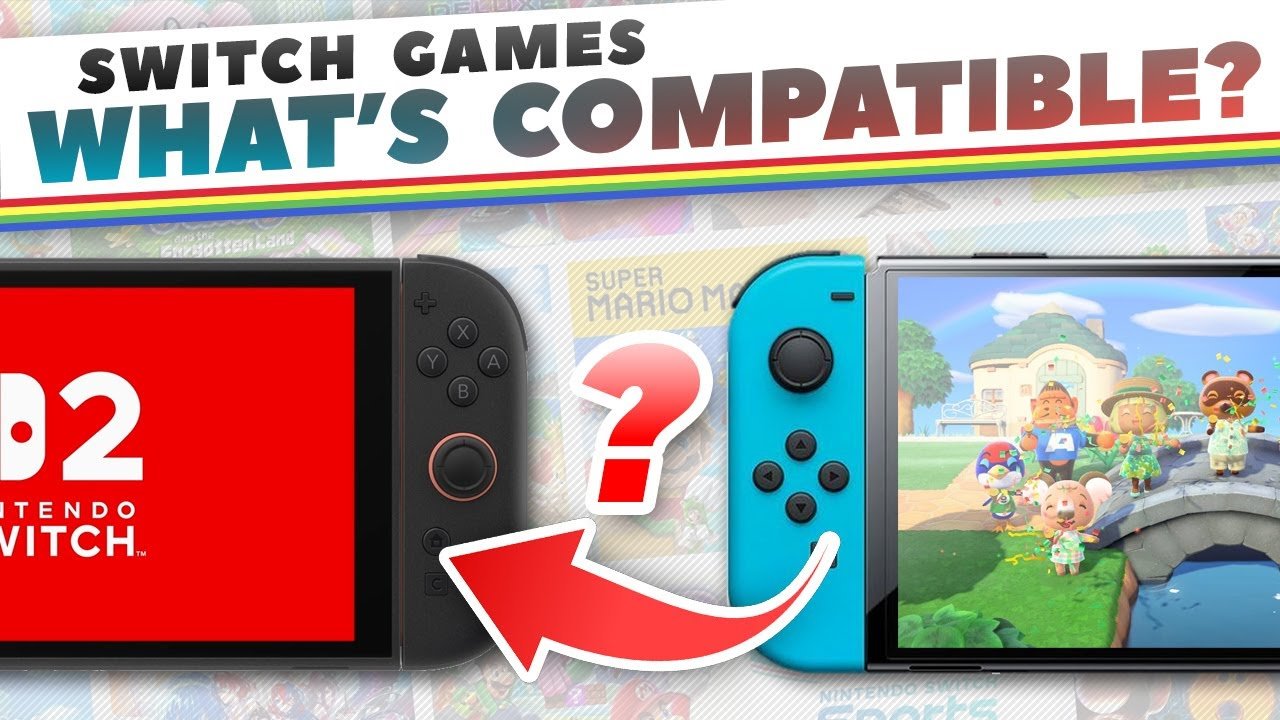
You buy a Switch 2, power it on for the first time, pop in a cartridge of a game you sank hundreds of hours into on the original Switch, and the screen freezes. That's not a hypothetical, it happened with more than a hundred titles at launch, and over a year later Nintendo is still pushing firmware updates almost every month just to fix old games that were supposedly already working. If backward compatibility was meant to be the reassuring pitch for anyone hesitant to buy the new console, it's fair to ask whether that promise was actually kept, or whether it's still being kept, bit by bit, patch by patch.
At launch things were messier than Nintendo's presentations let on. Official documents published by the company itself showed around 115 games with serious startup issues, some simply wouldn't launch or froze immediately, plus another batch of 46 titles that ran but came with graphical glitches, occasional crashes, or broken controls. There was also a separate list of things that wouldn't work at all, including entire streaming apps like Crunchyroll and Hulu, which is odd to swallow when you're talking about software, not some inherently incompatible piece of old hardware.
Then there's the physical accessory problem, which tends to get left out of the conversation but probably deserves more attention. Anyone who owned original Switch Joy-Cons lost the ability to physically dock them into the new console, they only connect wirelessly now, and things like the Labo piano, motorbike, or fishing rod turned into decorative clutter. For someone who spent real money on those peripherals, the word "backward compatible" implied something a lot broader than what Nintendo actually delivered.
That said, it would be unfair to stop at criticism without acknowledging the work that's happened since. Cases like Pokémon Brilliant Diamond and Shining Pearl, which suffered from intermittent crashes and eventually got fixed in a later system update, show there's genuine engineering effort behind this, not just a marketing line abandoned after launch. There are also reports of older games benefiting from shorter load times and more stable resolutions on the new hardware, a nice side effect of the architecture change even with all these bumps along the way.
What's still unclear is how acceptable this ongoing patching cycle really is for a console that sold backward compatibility as one of its core pillars from the very first announcement. It's one thing to expect a new console to need a few tweaks in its first months, that's always happened during generation transitions. It's another thing entirely to still be publishing monthly lists of games gaining and losing compatibility more than a year in, as happened recently with Attack on Titan 2, which lost compatibility after already being considered stable.
Maybe the real issue isn't that bugs exist, that's almost unavoidable when you shift the architecture under a library as massive as the Switch's, but the lack of transparency about the true scale of the problem at launch. Nintendo chose to publish dense technical PDFs instead of clearly communicating to consumers what was and wasn't guaranteed to work. That effectively pushed the testing and reporting burden onto the community, which became, without asking for it, the unofficial quality assurance team for the console's post-launch phase.
So the question stays open, without an easy answer: is this just the normal growing pain of a new hardware generation, with Nintendo sorting things out at its own pace, or is this a company that promised more than it could deliver on day one and is now managing expectations in slow motion? Every player probably has a different answer depending on which game froze on them first.