The Genius Trick PS1 Developers Used to Hide Loading Screens
Jul 26th '26 6:15pm:
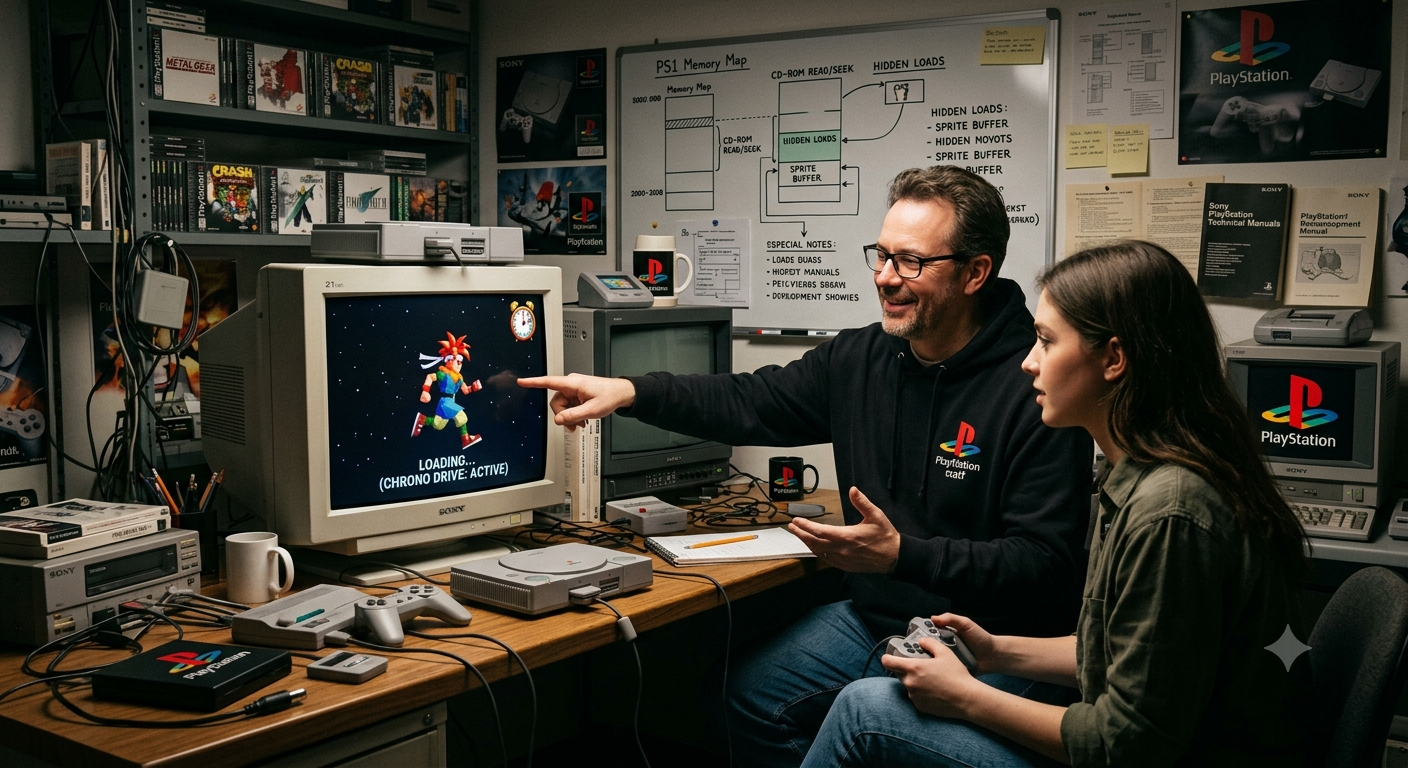
If you played video games in the 1990s, you almost certainly remember this exact moment: you’d pop the gray disc into the console, snap the lid shut, hit the *Power* button, and watch the golden Sony logo rise onto the screen, accompanied by that deep, futuristic chime echoing through the room. But right after the initial magic, reality hit. A black screen. The mechanical whirring of the laser lens hunting inside. And the wait.
For anyone coming off the Super Nintendo or SEGA Genesis era—where you simply blew into the cartridge, flipped the switch, and played instantly—the PlayStation 1 introduced a fascinating paradox. While it blew our minds with 3D worlds, CD-quality soundtracks, and jaw-dropping CGI cutscenes, it also introduced us to a brand-new habit: **the art of waiting on the loading screen**.
But why was a technology as revolutionary as the CD-ROM dramatically slower at reading data than old-school cartridges? And even more impressive: how did developers back then use sheer genius, engineering wizardry, and even creaking doors to make us forget that the game was desperately trying to load the next level?
Grab your memory card, brew a cup of coffee, and let’s dive into how the PS1’s biggest technical bottleneck sparked some of the most creative game design ideas in history.