The $100 Million Problem: How Indie Games Rescued Creativity in Gaming
Jul 24th '26 7:11am:
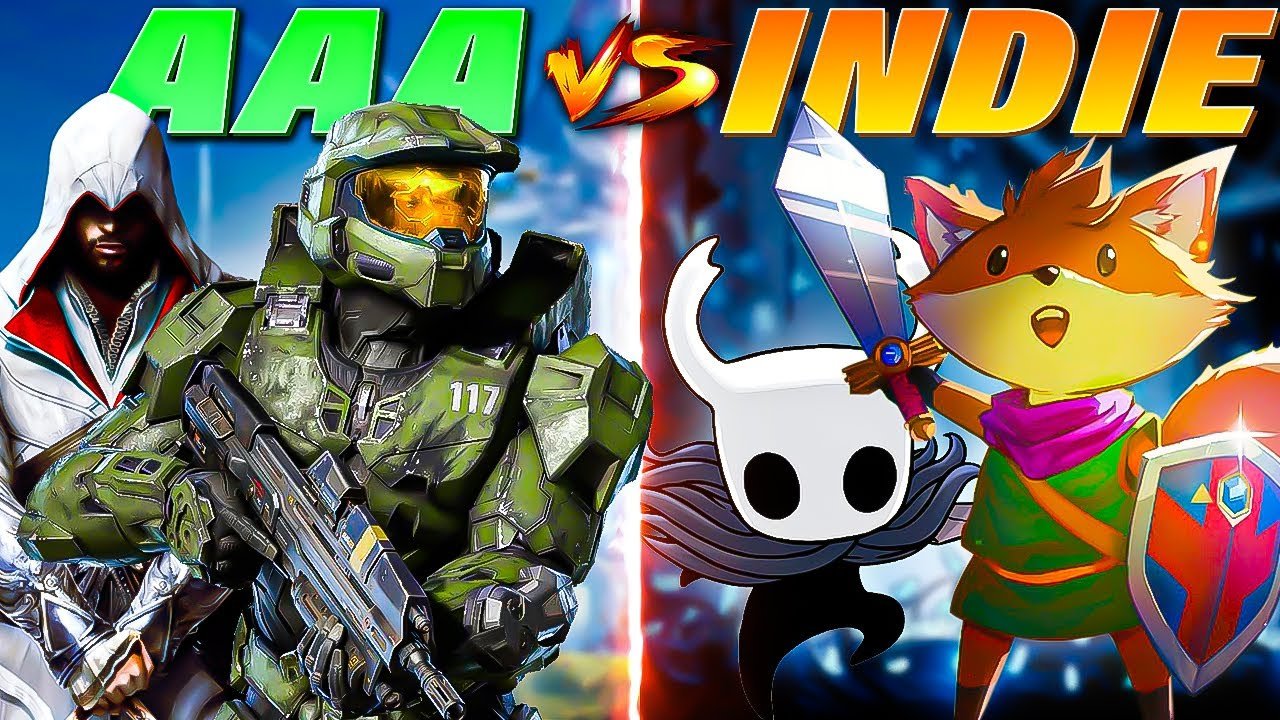
A few years ago, when word got out that a new AAA game was on the way, the expectation was genuine. Today, more often than not, you already have a rough idea of what's coming before the first trailer even drops. A sequel, a remake, or a live-service title built around a progression system designed to keep you hooked for six months instead of telling a story in twenty hours. It's not that talented people are missing from the big studios, far from it. The problem lies elsewhere, and it has less to do with talent than with money, and with who actually feels comfortable risking it.
A AAA game today often costs over a hundred million dollars to produce, not counting marketing. That means teams of thousands of people spread across several studios, investors demanding predictable returns, and a decision-making process that passes through so many committees that any genuinely strange idea gets sanded down before it even reaches the prototype stage. Nobody approves a hundred million dollars for an uncertain creative gamble. They approve it for the sequel to something that already sold fifteen million copies. It's basically Hollywood studio logic, and the result looks similar: more and more continuations, fewer and fewer original concepts coming out of nowhere.
That's where independent games stepped in, though "stepped in" is maybe the wrong phrase, since they never really left. They just spent a few years overshadowed by the scale of the big releases. What changed was access. Engines like Unity, Godot, or GameMaker lowered the barrier to entry so much that today one person, or a team of three or four, can put together something technically solid without needing an entire studio behind them. And paradoxically, it's exactly the lack of budget that frees these teams to take risks. When there isn't a hundred million dollars on the line, there also aren't a hundred executives deciding whether the idea is "marketable" enough.
Undertale is maybe the most cited example, and cited for good reason: a game made essentially by one person who decided to question the very combat mechanic that has defined the genre for decades. Hades took a roguelike, already a niche format on its own, and built a narrative around it that unfolds through repetition, turning "dying again" from frustration into part of the plot. Disco Elysium barely has combat in the traditional sense, it's almost all dialogue and introspection, and it still managed to become one of the most acclaimed games of the decade. Outer Wilds built an entire mystery around orbital physics and spatial memorization. Baba Is You turned the game's own rule syntax into the puzzle itself. None of these concepts would survive a hundred-million-dollar approval committee, and that's exactly why none of them came from one.
It's worth avoiding the easy simplification of "AAA bad, indie good," because that isn't true either. There are big studios that still take risks, FromSoftware is an obvious case, and Nintendo, in many of its internal titles, also keeps a strong creative identity despite its scale. On the other hand, the indie market today is oversaturated, full of mediocre games or thinly disguised clones of previous hits, because a low barrier to entry also means anyone can publish anything. The difference isn't studio size, it's the incentive structure behind the decision. A small studio can fail and start over. A hundred-million-dollar studio doesn't have that margin, so it doesn't even try anymore.
Distribution deserves a mention too, because none of this would be economically viable without it. Steam opened the door for a game made in someone's bedroom to reach millions of people without needing a traditional publisher to validate the concept first. Publishers like Devolver Digital or Annapurna Interactive understood that and built an entire business model around betting on weird things and letting the audience decide if it works, instead of deciding that in advance through focus groups.
At its core, this story isn't just about games. It's about what happens to any creative industry when money comes in too early and in too much quantity. Creativity didn't disappear from the AAA industry because the people inside stopped having ideas. It disappeared because the system stopped leaving room for ideas to fail. And maybe that's worth asking about any industry that considers itself too big to take a risk.