Sony confirmed the PS6 has no disc drive, and the handheld rumors finally make sense
Jul 15th '26 7:59pm:
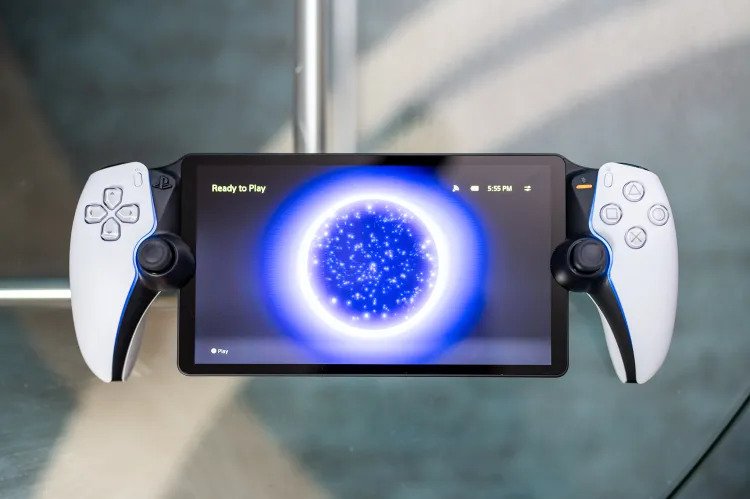
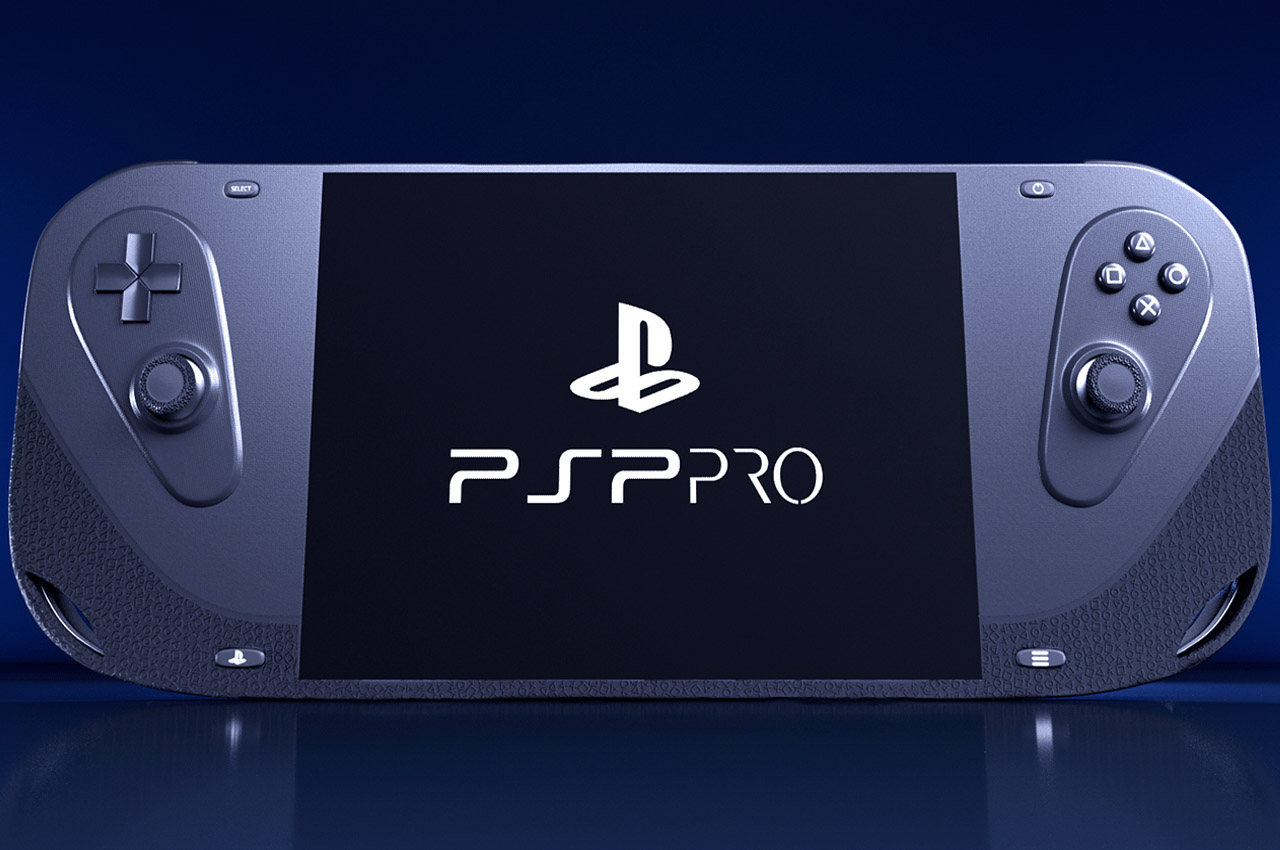
*Illustrative image: PlayStation's future might fit in the palm of your hand*
There's a line that sums up pretty well what's going on with Sony right now, and it goes something like this: they don't want to compete with PC anymore, they want to stop being compared to it. Sounds subtle, but it changes a lot about how you should read the company's recent moves, the gradual phase out of physical discs included, and also the growing rumors that the PS6, or at least a meaningful chunk of the PlayStation lineup going forward, will come in a portable format.
And look, this isn't forum speculation. It came out of an internal Sony Interactive Entertainment meeting back in June, the kind that later leaks out piece by piece, where heavyweight executives (president Hideaki Nishino, studios CEO Hermen Hulst, and finance VP Lynn Azar) were asked point blank how they plan to win back players who moved to PC, and also about the company's short term growth limits. The answer was revealing, even if wrapped in the usual corporate vagueness: the goal isn't to build a PlayStation that goes head to head with a gaming PC. It's to build something that only makes sense inside their own ecosystem, something meant to exist beyond the living room.
When a company talks about leaving the living room while already selling its own peripherals, like a monitor and the PULSE headphones, to cut down on TV dependence, the somewhat obvious path is a device you carry around. This isn't Sony's first shot at this either, anyone who remembers the Vita knows they already burned their hand on that stove once and it didn't go great. But the landscape now looks pretty different from back then.
There's a whole handheld gaming market today that simply didn't exist in 2011: Steam Deck, ROG Ally, Legion Go, and Microsoft testing the waters with devices running Windows tuned for gaming. If Sony genuinely wants to pull back people who left for PC, launching a portable that runs the PS5 and PS6 library natively, without relying on streaming, is a move that makes sense. On paper, at least.
While that conversation about portability was unfolding, Sony confirmed something a lot of fans already expected but that still stung when it landed: the historic factory in Austria, responsible for a good chunk of the Blu-ray disc production used in PlayStation games, is going to cut output down to around ten percent of current levels by 2028. It's the same plant that has made more than 26 billion discs over its history and still produces hundreds of thousands of units a day. It's being converted to manufacture optical microlenses instead, small components used for things like projecting turn signal light onto the street, among other applications.
The three hundred employees are staying on, now being retrained for the new production line, according to Sony DADC CEO Dietmar Tanzer himself. That fact alone says a lot, this isn't a last minute call, it's years of planning. And it pretty much confirms what a lot of people suspected, that it's very unlikely the PS6 ships with a built in disc drive. Which also lines up with the handheld logic, since a compact device like that simply doesn't have the room or the technical reason to carry an optical drive.
Player reaction, predictably, wasn't kind. There was a lot of "we literally own nothing anymore" type commentary spreading fast, and the Entertainment Retailers Association even spoke out publicly against it, saying that removing discs isn't progress, it's just removing consumer choice. Some people are threatening to cancel PS Plus, others are talking openly about switching to PC or Xbox.
Except here's the most ironic part of this whole story, maybe the most important one too: Microsoft seems to be making pretty much the same move, just quietly. Sources point to the next Xbox, known internally as Project Helix, also shipping without a disc drive, though the company hasn't confirmed that officially yet. And they're already testing a disc to digital feature that converts ownership of an old physical disc into a license tied to whoever's holding the disc at that moment. So people mad at Sony and threatening to switch teams might find out there isn't much of a refuge over there either. The underlying fight, increasingly, seems to be against the whole digital ownership model, not against one specific manufacturer.
Industry analysts have been pretty blunt about the reasoning behind all this: digital gives you a bigger margin, no manufacturing cost, no logistics, no retailer taking a cut of the sale. That's why the general read is that this decision isn't getting reversed, even with part of the community reacting badly right now in the heat of the moment. There was another detail from that same meeting that I found telling: the company doesn't just want to sell hardware, it wants to sell a full experience, with service, subscription, and proprietary peripherals all tied into the same ecosystem. The more portable and more digital that gets, the easier it is to control the whole player journey, from purchase to wherever and however they end up playing.
Is it worth worrying about? Depends on what kind of player you are, honestly. If you like buying physical games, reselling them later, lending them to a friend, or just enjoy having an actual shelf of a collection, this news is genuinely annoying and the concern makes sense. The model coming down the pipe puts even more control in manufacturers' hands over what you can do with something you technically paid for.
On the other hand, if your priority is playing anywhere without swapping media, with your whole library always on hand, a portable, digital first PlayStation might be exactly what was missing, especially if the price ends up competitive against building an equivalent PC from scratch, which these days is not cheap by any measure.
Either way, it's fair to say Sony isn't making this move blind. The conversion of the Austrian factory, the investment in proprietary peripherals, the repeated talk about an exclusive experience beyond the living room, all of it points to a strategy that's been stitched together for years. The real question at this point isn't whether this is happening. It's whether players are willing to pay the price of all that convenience with the loss of actual ownership over their own games.