You'll Never Own a Digital Game: Inside the Debate Splitting Gamers Right Now.
Jul 14th '26 4:43pm:
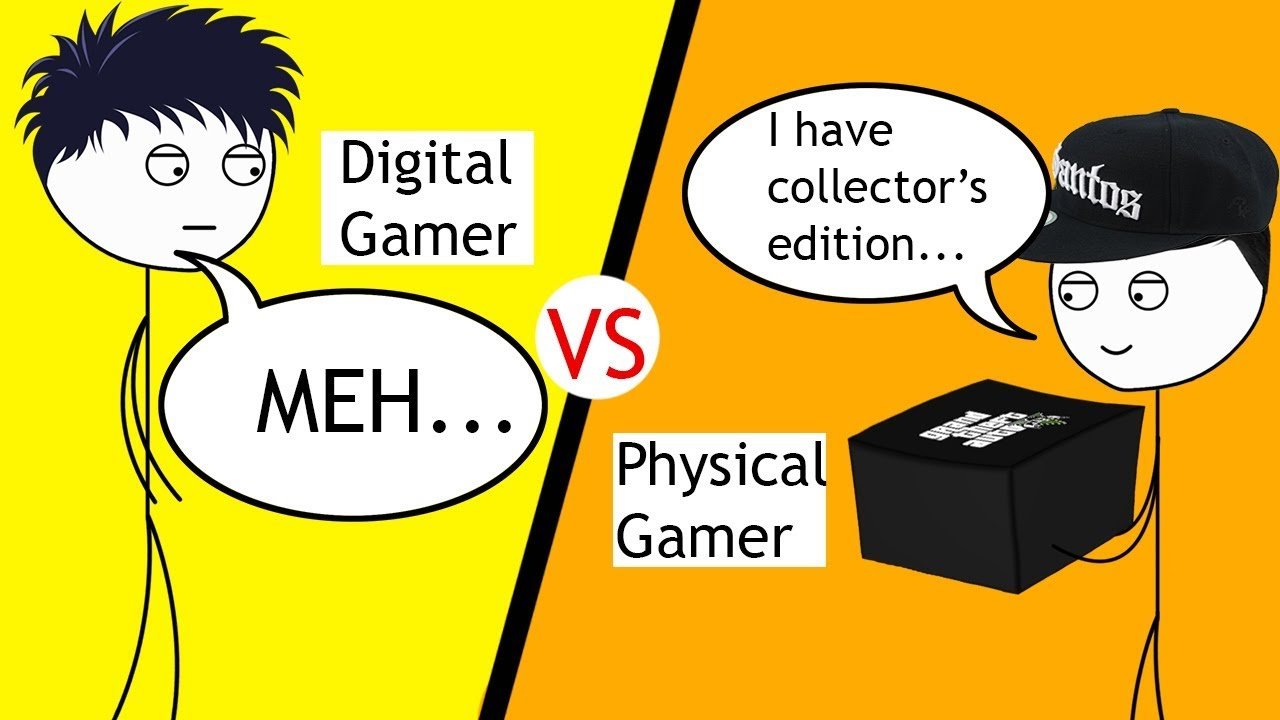
If you grew up ripping open the case of a brand new game, smelling that plastic, lining up the discs on a shelf, this next bit is going to sting a little. In July 2026 Sony confirmed that starting January 2028, no new PlayStation game will ship on disc anymore. The whole future catalog goes digital, full stop. And Sony isn't alone here: Rockstar already confirmed GTA 6 won't get a physical release, and most analysts expect Microsoft to follow with its next Xbox, known for now only by the codename Project Helix.
It's not an overstatement to call this a turning point. The numbers are pretty brutal, honestly. Last fiscal quarter, 85% of PlayStation software sales were already digital, up from 80% the year before. For the whole fiscal year, 78% of purchases came from digital. And in the US, spending on new physical games dropped to its lowest level since this kind of data started being tracked, back in the mid-90s.
If you want to go deeper, there's been a lot of solid coverage over the past few weeks. Deadline covered the official announcement (https://deadline.com/2026/07/sony-playstation-ending-physical-video-game-discs-1236972201), GeekWire dug into the industry impact (https://geekwire.com/2026/no-discs-more-problems-what-sonys-all-digital-playstation-means-for-gamers-and-the-industry), Push Square pulled the financial numbers straight from Sony's report (https://pushsquare.com/news/2026/07/just-15percent-of-all-ps5-software-was-purchased-physically-last-quarter), and Slate wrote a more critical take on what this means for preservation (https://slate.com/technology/2026/07/sony-playstation-discs-physical-media). Worth reading too, especially the Kotaku piece, which digs up the kind of ironic contrast with Sony's own speech back in 2013 (https://kotaku.com/sonys-famous-e3-2013-press-conference-celebrating-disc-based-games-hits-different-now-2000711966).
Now, the physical versus digital debate tends to sound, at first glance, like something only a nostalgic person who refuses to adapt would care about. But there's a more serious issue buried under all that sentimentality about a plastic case.
The first one, maybe the most obvious, is about what it actually means to own something. When you buy a disc, you have a physical object you can sell, lend, trade, or keep forever, without depending on whatever the manufacturer decides to do ten years from now. When you buy digital, in practice you're buying a license to use, tied to the store's terms of service. If the platform decides to pull a game from the catalog, shut down servers, or just disappear from the market, your access can vanish overnight. And this isn't hypothetical: Sony itself has removed content from the PlayStation Network before, and Microsoft once announced, then walked back after backlash, that it would cut access to movies people had already bought from its video store.
There's also the used games market, which is being erased pretty quietly. Buying a discounted secondhand game, trading in a title you already beat for something else, getting an old game as a gift from a cousin, all of that depends on the product existing physically. Without discs, that whole ecosystem just disappears, and the people who lose the most are exactly the ones playing on a tighter budget.
Then there's preservation, which to me is the most serious part of all this. Today you can pick up a game from the 80s and run it on an emulator, sometimes even on the original hardware. With digital-only games, that's no longer guaranteed. If the store closes, if activation servers get shut down, if the company decides to stop supporting it, the game can become unplayable forever, even though you technically "bought" it. Some preservation groups, like the people behind the RPCS3 emulator, have already started asking the community for help archiving game data and metadata before it's too late.
Oh, and there's the always-online dependency too. Even single-player games often require periodic online checks just to validate the license. There's a recent report that PlayStation itself is applying something like a 30-day check-in window for digital purchases made after a March 2026 update: if the console doesn't connect to the internet within that window, the license expires and the game can simply stop launching until you reconnect.
The funny thing is this isn't the first time the industry has tried to shove the fully digital model down players' throats. And the pushback happening now echoes a controversy from thirteen years ago pretty closely.
Back in 2013, at the Xbox One launch, Microsoft revealed a fairly restrictive DRM system. The idea was for the console to check in online every 24 hours to validate games, on top of making resale and lending much harder, only possible through "participating retailers." The backlash was so strong, memes, petitions, a flood of criticism from gaming press, that Microsoft reversed course in under a month. They dropped the constant connection requirement and restored the right to resell and lend discs freely.
The ironic part is that at that same E3 in 2013, Sony took advantage of its rival's stumble to put together one of the most memorable press conferences in console history. Then-CEO of Sony Interactive Entertainment America, Jack Tretton, got on stage and, straight-faced, praised the physical model, saying anyone who bought a PS4 disc could resell it, lend it, or keep it forever. The final slide of the presentation said just that: "Keep It Forever." Thirteen years later, it's Sony itself closing that door.
Worth noting this shift isn't unique to games, either. Netflix shut down its DVD-by-mail service in 2023, after more than twenty years running it, following the same logic of convenience over ownership. Yet, oddly enough, other physical media markets are heading the opposite direction. Vinyl, for instance, made such a strong comeback that it topped a billion dollars in sales last year, the best result since 1983. Which kind of proves a point: the death of physical media isn't some inevitable fate, it's a market choice. Driven, most of the time, by short-term convenience and cost-cutting for manufacturers, not necessarily by what consumers actually want.
Sony still sold around 70 million physical discs just last year, which is far from irrelevant, especially among franchises with strong collector appeal, like Resident Evil and James Bond. So there's clearly still a loyal base for the physical format, even deep into the streaming and instant-download era.
Niche initiatives have already popped up, and should keep growing, like Limited Run Games, which produces collectible physical editions of games that would normally only ship digitally. There's also a growing push for legislation forcing stores to make it clear, at the point of purchase, that consumers are buying a license and not full ownership of the product. A few US states have already started rolling that out.
In the end, I think the physical versus digital debate isn't really about resisting technology out of pure attachment. It's about understanding what it actually means to own something these days, and making sure gaming history, which is just as legitimate an art form as film or music, doesn't disappear simply because a company decided to shut down a server one day.