Why the Sega Genesis Sounded So Harsh (And Why It Wasn't a Flaw)
Jul 12th '26 10:13am:
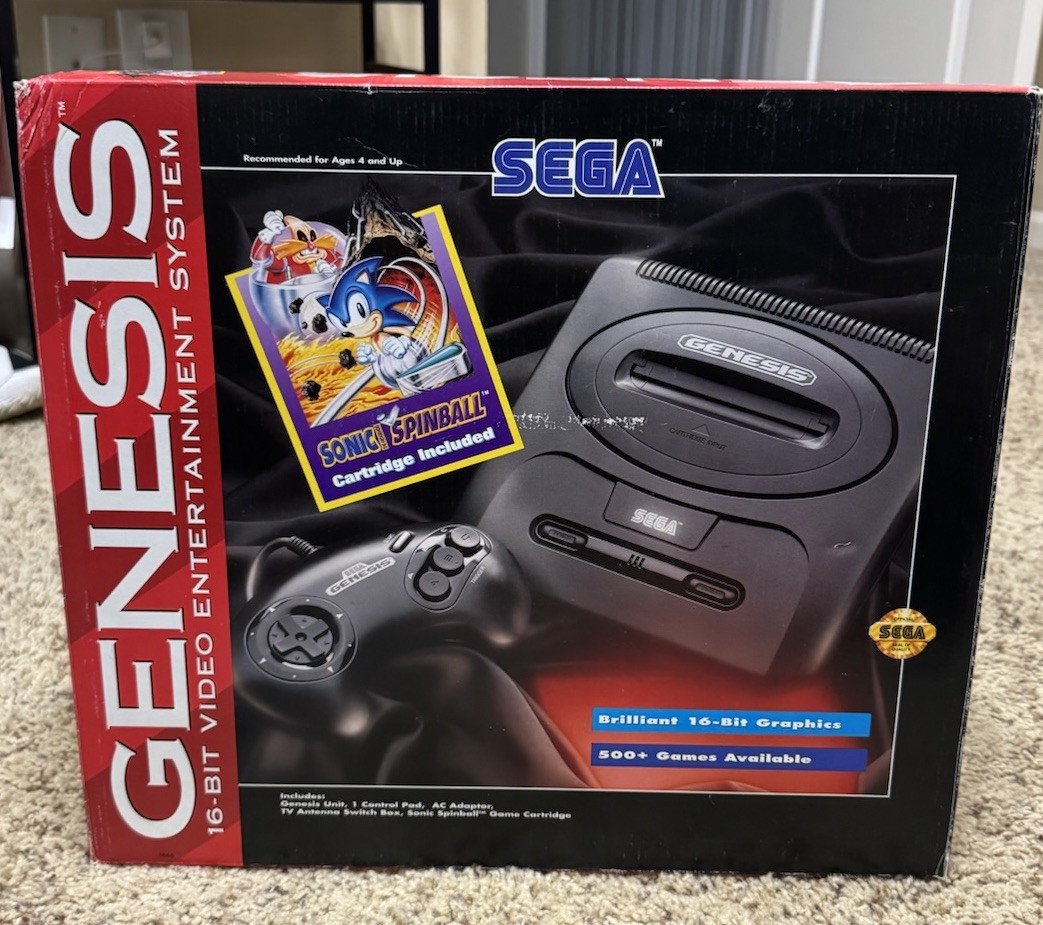
Because it uses real FM synthesis (the YM2612 chip) instead of playing recorded samples like the SNES did. FM already has that metallic, aggressive character built in, and the hardware also cut part of the bass, leaving the sound thinner and sharper than it needed to be.
That's the quick answer, but on its own it barely explains anything. And honestly, it's funny, every time this topic comes up in a retro gaming group someone repeats the same line, "it's the FM chip," and that's it, conversation over. Except there's a lot more going on in there, and a good chunk of it has nothing to do with the main chip at all.
Let's start with the basics, because without this the rest won't make sense. When you compare a SNES soundtrack to a Genesis one, even someone with zero electronics knowledge notices the difference right away. The SNES sounds rounder, closer to real instruments. The Genesis sounds sharp, almost industrial at times. That's not a lack of talent from the composers, far from it. It's a direct consequence of two completely different ways of generating sound, chosen years before any game even existed.
The SNES uses a Sony chip, the SPC700, paired with an eight-channel DSP that basically plays back PCM, meaning recorded audio. Record a real piano, compress it, store it in memory, and the console just plays that chunk of sound whenever it's needed. Same logic as a sampler.
The Genesis does something else entirely. Its main channel is the Yamaha YM2612, a six-channel FM synthesis chip, and instead of playing something already recorded, it builds the sound on the fly, mathematically, by modulating the frequency of one oscillator with another. There's no sample involved at all. Every note is synthesized from scratch.
That difference in philosophy alone already explains a big chunk of the gap between the two consoles.
FM synthesis, by the way, wasn't invented for games. John Chowning developed the technique at Stanford back in the 70s, and it became commercially famous through the Yamaha DX7, the synth that basically defined the sound of the 80s (that bright electric piano playing in pretty much every ballad from that era? That's FM). The basic idea is you take an oscillator, called the carrier, and use another one, the modulator, to rapidly shift its frequency. Depending on how those two relate and how intense the modulation is, you get harmonics that didn't exist in either original signal.
The result tends to be metallic, with somewhat artificial harmonics, great for bells, electric sounds, aggressive bass, sci-fi effects. Bad, on the other hand, at convincingly imitating acoustic instruments. A piano in FM sounds like a stylized version of a piano. A violin string sounds like a rough approximation. That's why so many Genesis soundtracks feel closer to electronic music than to an orchestra, even when the original intent was orchestral.
Now here's a detail almost nobody talks about, and to me it's the most interesting part of the whole thing.
The YM2612 on its own, with no processing afterward, actually sounds fairly clean. The problem is what happens after the signal leaves the chip. On the earliest Genesis units, the famous "Model 1," the audio passed through a relatively gentle low-pass filter before reaching the audio output. That preserved a lot of the high-end harmonics generated by FM synthesis, and the result was a brighter sound, almost crystalline depending on who you ask.
But over the hardware revisions, especially with the Model 2 (the cheaper version, released in '93 and by far the most common one people actually owned), Sega simplified the audio circuit to cut production costs. That changed the console's frequency response, cutting even more bass and leaving the sound thinner, more strident. There's footage on YouTube comparing the same section of Sonic 2 played on a Japanese Model 1 against an American Model 2, and the difference is audible even to untrained ears.
So part of the harshness we associate with the Genesis isn't even purely a limitation of the FM chip. It's also a cost engineering decision that shifted from board revision to board revision over the years.
There's another piece to this puzzle, and it usually gets overlooked: the Genesis also carried, for compatibility with the Master System, a PSG chip, the Programmable Sound Generator, a relative of the SN76489 family used in older machines like the ZX Spectrum. That chip generates simple square waves and white noise, four channels total, three tone and one noise. It's the kind of beep you'd associate with something even more retro than this.
Plenty of games use the PSG alongside the YM2612, usually for sound effects or percussion reinforcement, while FM handles the main melody. When the two stack together, especially in games with rushed mixing, the result gets even denser, because you're literally piling raw square waves on top of an FM chip that's already aggressive by nature.
And there's a third factor that, to me, explains a very specific slice of the console's "raw" sound: the DAC channel inside the YM2612 itself. It allowed simple PCM samples to play, things like digitized drums or voice. The catch is that channel would steal one of the six FM channels whenever it was active, and quality was limited by the cartridge's tiny memory and the very low sample rate the hardware could sustain. When a game tried to use digitized drums, it usually came out grainy, almost distorted, because it was running around 8 to 13 kHz, way below CD standard (44.1 kHz). That's why the drums in Streets of Rage sound so crunchy, almost like old AM radio.
And interestingly, that exact grainy texture is now part of the aesthetic people love about the console's sound.
Worth pointing out: Genesis composers weren't held back by lack of talent. Yuzo Koshiro, the Streets of Rage guy, is still revered today for pulling sounds out of the YM2612 that feel almost like studio house music, using FM the same way electronic producers used commercial synths like the DX7. The difference between a game with a forgettable soundtrack and one with a legendary one almost always came down to how well the composer understood the chip's operators and algorithms. The hardware set the ceiling and the floor, but there was a huge amount of room for virtuosity inside that range.
Might as well bring the SNES comparison back here, since that sound rivalry is basically 90s folklore at this point. The SNES, with PCM, got much closer to real instrument timbres, strings, horns, piano, everything sounded more organic because it technically was a recording being played back, even if compressed. Koji Kondo and Yasunori Mitsuda made near-orchestral soundtracks within that constraint. The Genesis, on the other hand, had the edge in electronic, industrial, aggressive music, exactly where FM shines. That's why Streets of Rage 2 still sounds modern and danceable today, while orchestral attempts on the Genesis (like parts of Sonic 3D Blast) often come out sounding stranger than intended.
Neither approach is objectively better, honestly. They're two engineering philosophies optimized for different things, and that's basically why the Genesis vs SNES sound debate still starts fights in forums to this day.
And it still matters, even in 2026, for two reasons that are very much alive. One is the chiptune and electronic music scene, which adopted the YM2612 as a serious instrument in its own right, there are MIDI interfaces today that control real (or emulated) chips like standalone synths, and producers chase that raw timbre on purpose, going after that aggressive, nostalgic texture. The other is the preservation and emulation community, projects like Nuked OPN2 try to replicate the YM2612's behavior bit for bit, imperfections included, because at some point people realized emulating "the correct sound" in a generic way doesn't capture the chip's real personality. That brought back the whole discussion of which hardware revision counts as the true reference, and that's how the low-pass filter story became relevant again after decades of being forgotten.
In the end, the Genesis's harshness doesn't come from a single cause. It comes from several decisions stacked on top of each other: FM instead of PCM, a legacy PSG running alongside it, a DAC with an extremely low sample rate, and filter variations across hardware revisions that shifted throughout the console's commercial life. None of it was exactly a mistake, they were cost and technology trade-offs available in 1988. Audio just happened to be the area where those trade-offs showed up the most.
Either way, it's kind of funny that a 35-year-old console still sparks this level of technical debate. I think that alone says a lot about how deeply that sound got stuck in the people who grew up with it.