How Nintendo Accidentally Created Its Own Worst Enemy (And Survived Anyway)
Jul 5th '26 11:04am:
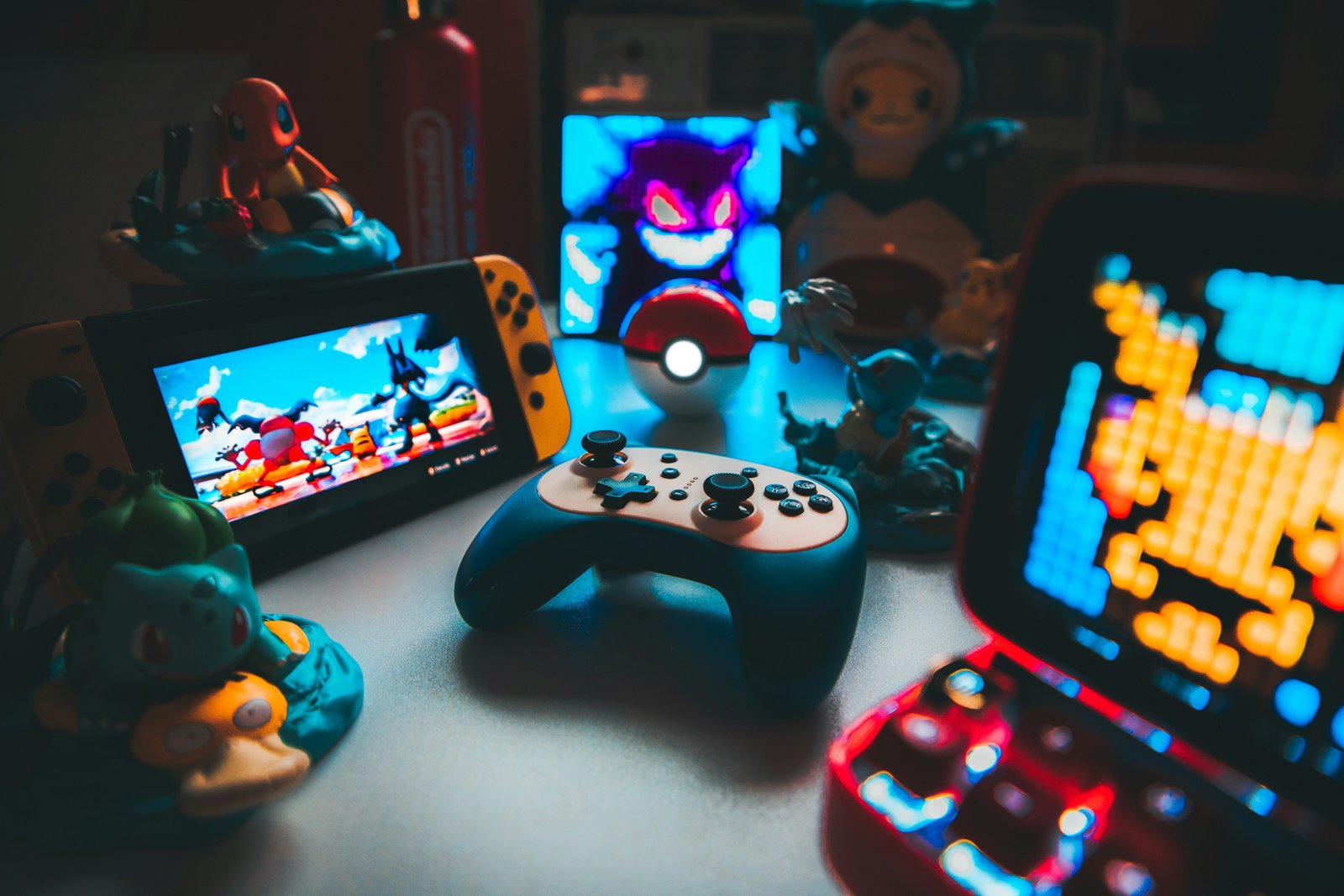
Before we get to playing cards and mustached plumbers, it's worth telling the story a lot of people consider the biggest business blunder ever made by a games company. And the funny part is Nintendo itself created, completely by accident, the rival that would chase it for the next three decades.
In the early 90s, Nintendo and Sony were developing a CD add-on together for the Super Nintendo. It was called "Play Station," with a space in the name. The deal was even announced publicly, at CES 1991. But Nintendo, worried about losing control over royalties on CD-based games, quietly turned its back on the partnership days later and signed a deal with Philips for the same kind of product instead. Imagine Sony's face.
Sony ended up with a nearly finished piece of technology and no partner. So it decided to go it alone. And well, everyone knows what happened next: the PlayStation was born, and it would become Nintendo's biggest historical rival, helping shape the console market into what it still looks like today. The full details of this story, along with a few other pretty questionable decisions the company has made, are in an article from Canaltech.
That episode sums up Nintendo pretty well, honestly. A company that made brilliant decisions and catastrophic ones over more than 130 years, and survived almost all of them. What's always caught my attention in this story isn't so much the wins, but how the company keeps reinventing itself whenever things get tight.
Nintendo was founded in 1889, in Kyoto, by a guy named Fusajiro Yamauchi. The only product was Hanafuda, a traditional Japanese card deck, hand-painted, mostly used for gambling games. The name itself gives away a bit of how the company thought about things: one possible translation for "Nintendo" is something like "leave luck to heaven." Makes sense for a playing card maker.
For decades that's all it was. Cards. But they kept refining the process, no rush. Around 1902 they started producing Western-style decks too, and later on Nintendo became the first Japanese company to license Disney characters for its products. Small stuff, but it shows they already had a bit of a commercial instinct.
Then came the strangest chapter in the company's history, and it's the one people talk about the least. In the postwar years, under Hiroshi Yamauchi (the founder's grandson), Nintendo tried pretty much everything to survive in a Japan that was rebuilding itself. It ran a taxi company at one point, a chain of "love hotels" (short-stay hotels, in case you're not familiar with the term), an instant rice line, and even vacuum cleaners. None of it stuck long-term. But I think that period matters because it shows a willingness to test a market, fail fast, and move on to the next thing. That pattern would repeat decades later, when the company walked away from traditional hardware to bet on something stranger, like the Wii.
The real turning point happened in the 60s. A maintenance engineer named Gunpei Yokoi had built, almost as a joke, an extendable mechanical arm to kill time at work. Yamauchi saw it and had it turned into a product. The Ultra Hand was born, sold over a million units, and pushed the company firmly into toys and then into electronics.
Yokoi would go on to become one of the most important figures in Nintendo's history. He created the Game & Watch in 1980, the company's first handhelds with LCD screens, and later the Game Boy itself. His design philosophy had a fancy name, "lateral thinking with withered technology," which basically meant using cheap, already-proven parts instead of chasing whatever was most advanced on the market. That explains a lot even today, like why Nintendo consoles rarely compete on raw processing power. And they still sell extremely well, which is a bit counterintuitive if you stop to think about it.
In the 70s the company moved into arcades, competing with names like Atari and Taito. The real jump in quality came in 1981, with Donkey Kong, created by a young designer named Shigeru Miyamoto, now one of the most respected (and copied) names in the industry. The game introduced a nameless character, just called "Jumpman," who would later be renamed Mario, in a fairly random tribute to the landlord who rented out Nintendo's American office. Funny how a landlord's name ended up becoming one of the most valuable brands in entertainment.
In 1983 the American video game industry basically collapsed. Too many bad games, an oversaturated market, Atari going under. The so-called "crash of 83." And it was right into that wrecked landscape that Nintendo released the Famicom in Japan, and two years later its western version, the NES.
To win back the trust of retailers who had just gotten burned, Nintendo made a few decisions that seem obvious now but weren't back then. They created the "Seal of Quality," a stamp guaranteeing the game had gone through the company's approval process, and a regional lockout chip to block unlicensed games from running on the console. Technical rigor mixed with brand strategy. It worked. The NES basically rescued the home console market and became synonymous with video games for an entire generation.
Success brought competition, of course. Sega showed up more aggressive, more "cool" (or at least that's how it was marketed), with the Mega Drive and Sonic, created specifically to rival Mario. Nintendo's answer was the Super Nintendo, released in 1990 in Japan and 1991 in the west. A massive technical leap in graphics and sound, and the console cemented franchises that still sell today, like Zelda and Donkey Kong Country.
And that's around when the CD story I mentioned at the start took place. The refusal to move to discs, and the insistence on cartridges for the N64, released in 96, cost the company technical and commercial ground against the PlayStation, which had cheaper media and way more storage space. A decision that echoed for years.
The early 2000s were rough. The GameCube was a technically solid console, but it suffered from a lack of third-party developer support and carried a somewhat "kiddy" image that pushed away part of the adult audience. It lost ground to both the PS2 and the freshly arrived Xbox. It was one of the moments the company most needed to rethink everything.
The answer came from a direction nobody really expected. Satoru Iwata took over as president in 2002 and brought a somewhat counterintuitive idea: instead of going head to head with Sony and Microsoft on processing power, why not create entirely new product categories? This later got labeled a "blue ocean" strategy, for anyone into that kind of business jargon.
The first strong result was the Nintendo DS, in 2004, with two screens, one of them touch-sensitive, and games like Brain Age that pulled in people who had never played video games before. But the real earthquake was the Wii, in 2006. Simple motion controls, anyone could get the hang of it in five minutes, and suddenly you had grandmothers playing virtual tennis in the living room. It sold over 100 million units. Proof that innovating on the experience can matter more than raw technical power, even if that sounds a bit against the common sense of the tech industry.
Not every attempt at reinvention lands on the first try, obviously. The Wii U, released in 2012, tried to repeat the formula with a controller that had a built-in touchscreen, but the messaging was so confusing that a lot of people thought it was just an accessory for the Wii, not an actual new console. That, plus a weak lineup of games in the early years, led to the company's worst recent commercial performance. It was a failure, no way around it. But the lessons around portability and integrated screens ended up becoming the direct foundation for what came next.
The Switch, released in 2017, solved a question the industry had been asking for years in a fairly elegant way: why keep home consoles and handhelds separate, if you can move the same experience between the two without any interruption? Removable controllers, built-in screen, a dock to connect to the TV. It's passed 150 million units sold, which is an absurd number.
That success also brought out the more controversial side of things. The company has ramped up its fight against piracy and emulation quite a bit in recent years, with lawsuits against streamers and stores selling modded consoles (there's a recent case involving a streamer named Jesse Keighin, who openly mocked the company's lawyers and ended up ordered to pay around 17 thousand dollars). It also faced heavy criticism over "Joy-Con drift," that recurring issue with the controllers' analog sticks, which led to class action lawsuits in several countries.
These days Nintendo keeps investing in modernizing its relationship with the public. An online service with classic games, a companion app for phones, big-budget movies with Mario, and the theme park in Japan. And of course it keeps that conservative, almost obsessive posture around protecting its own intellectual property, which keeps producing both crushing wins and some pretty unexpected losses in court (there was a funny case of a corner store in Costa Rica called "Super Mario" that the company sued and lost against, by the way).
From hand-painted Hanafuda cards to processors running open worlds, it's quite the journey. A company that once sold instant rice and ran short-stay hotels, but always found its way back, one way or another, to its original calling of making things simple and memorable.
I keep wondering which Nintendo console or game marked your childhood. Or which one still has a special spot on your shelf, if you're the kind of person who keeps that stuff around.