Stop Wasting Money: Is PC Gaming or Console Actually Cheaper in 2026?
Jul 1st '26 5:37am:
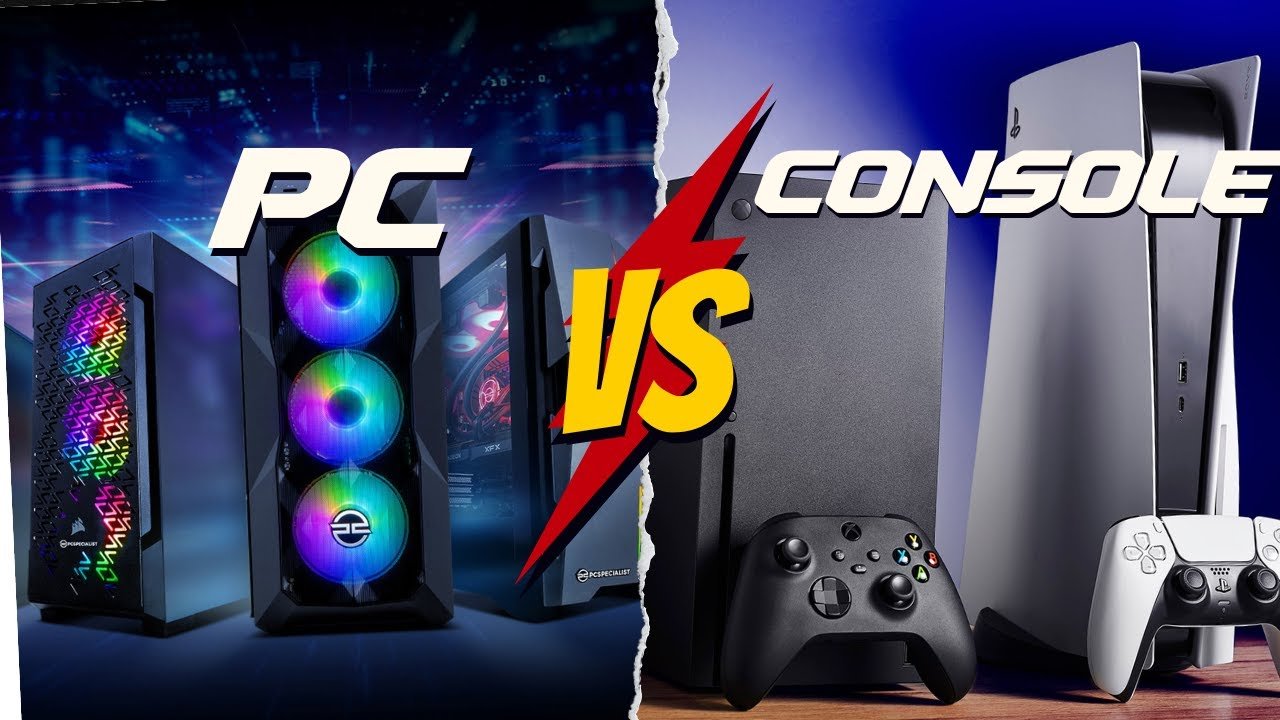
## Find out if it’s worth investing in a customizable, high-performance ecosystem or the immediate simplicity of consoles for your wallet and gaming routine
The debate about choosing a PC or a console is an old one. But nowadays, it goes way beyond measuring frames per second or screen resolution. Deep down, it has more to do with the free time you have, how you like to play, and, most importantly, how much you are willing to spend all at once.
With current consoles on the market and the price of computer parts fluctuating so much, the choice has gotten a bit more complex. But the logic behind each platform remains quite different.
To understand what pays off more, it is worth looking closely at the upfront price, the costs that pop up later, and that old issue of just wanting to sit on the couch and play without any hassle.
## The price to get started: where it hits hardest
If we are just looking at the price of the box in the store, consoles win hands down. It is no secret that companies like Sony and Microsoft sell their devices almost at no profit, sometimes even losing money on hardware. They do this because they know they will get that cash back later, when you buy games and subscribe to their digital services.
Currently, for the price of a top-tier console, you can play with very good visual quality and without lag. The hardware inside is closed, which makes life easy for developers. They know exactly what they are working with and can squeeze the most out of components that, in a computer, would be considered normal or mid-range.
On PC, it’s a whole different story. The hit to the budget right at the start is much bigger if you want something that goes head-to-head with the newest consoles. A good graphics card is expensive, and you still have to add a processor, a power supply that can handle the load, RAM, and fast storage. In the end, the bill easily passes double the price of a console.
But there is a detail that people forget. On PC you don’t need to buy the best of everything all at once. You can start lower, reuse parts, hunt for deals on used components, and upgrade slowly as your wallet allows. On a console, it’s just that closed block and that's it.
## Those costs nobody tells you about at the time of purchase
The initial advantage of consoles starts to disappear a bit when we look at the following years. A lot of people make the mistake of looking only at the price tag in the store and forget to put on paper what they will spend to keep the hobby going.
The main hidden cost on consoles is the subscription to play online. It’s a fee that I, honestly, find kind of absurd nowadays. You already bought the game, you already pay for your internet at home, but you have to pay a monthly fee to the console owner just to be able to play with your friends. If you add up this subscription over five or six years, which is the normal lifespan of a generation, the accumulated amount pays for almost another console. On PC, except for a few specific subscription games (like MMOs), online multiplayer is free.
The other issue is game prices. On consoles, you are stuck to their official store, whether it’s the PlayStation Store or Xbox Live. Sure, some sales happen sometimes, but new releases take a long time to drop in price because there is no direct competition in there.
On PC, the fight is huge. There is [Steam](https://store.steampowered.com), Epic Games, GOG, and several authorized sites selling activation keys. This competition makes prices drop much faster. Not to mention the games that Epic hands out for free almost every week.
Backward compatibility also enters this cost-benefit equation. If you bought a game on PC ten years ago, the chances of it running on your current computer (and much better) are huge. On consoles, the current generation has improved this and runs last-gen games, but historically, a generation change always meant losing your old library or having to pay again for a "remastered" version.
## The convenience of just wanting to plug and play
Now, moving away from the money part and talking about routine, the ease of use of consoles is unbeatable. It’s the famous "plug and play."
You buy the game, set it to download, and that’s it. You don’t need to keep checking if your system can handle it, if you need to update your graphics card driver, or why the controller isn't pairing right. The interface is made to be used with a controller, lying on the couch, without complication. The operating system is light and focused only on running the game.
The PC will always have a layer of technical annoyance. Anyone who plays on a computer has had the experience of opening a game and it just closing out of nowhere, or having to mess with graphics settings for half an hour to find the balance between the game looking pretty and not stuttering. Not to mention the hassle of having to manage five or six different store launchers running at the same time on Windows.
Another thing I love about modern consoles is the sleep mode. You are playing, an unexpected thing comes up, you just turn off the console. The next day, you turn it on and the game comes back exactly where you left off in three seconds. On PC, even though SSDs have improved loading times, the process of booting Windows, opening the store, loading the game, and going through the initial menus still takes longer and breaks the flow.
## Real performance and the factor of doing more things
For those who insist on maxed-out graphics, perfect textures, and ultra-high frame rates, PC is the only way. Consoles have evolved a lot with fast SSDs and performance modes, but they have a physical and thermal limit. They need to fit in a box that won't melt in your living room.
On a computer you have access to real Ray Tracing, ultra-high resolutions if you have the budget for it, and the famous "mods." The PC community manages to extend the life of old games for years by creating new content and visual improvements that console owners rarely allow through their closed systems. If your PC starts getting slow on new games, you just swap out the graphics card or add more RAM and get a few more years of lifespan without needing to throw the whole machine away.
But I think the argument that weighs heaviest in favor of the PC regarding cost-benefit is its usefulness in daily life. A console only serves to play games and watch Netflix. It’s a leisure device.
A gaming computer, being a powerful machine, works for everything. It works for working, studying, editing videos, programming, or doing design work. For those who study or work from home, the high value of a PC is justified because it eliminates the need to buy a notebook for work and a console for gaming. It does both things very well.
## Simple Summary
In the end, the choice depends on what you prioritize. The console is perfect for those who have a busy routine and just want to play games without dealing with technical work, paying less right at the start. The PC ends up being more expensive at launch, but it pays for itself over time because games are cheaper, online play is free, and the machine also serves for work and study, offering the best graphic quality possible for those who demand it.