How Final Fantasy VII Broke the Rules of Tech and Changed Gaming Forever
Jun 28th '26 8:05am:
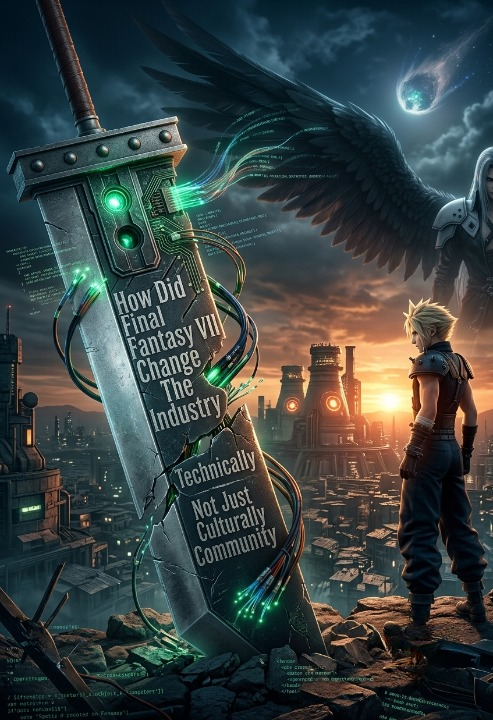
When we talk about *Final Fantasy VII*, people usually go straight to the characters. Cloud, Aerith, Sephiroth—you know the names. It’s easy to focus on that stuff because it’s iconic, and as mentioned in **image_082e17.png**, the cultural footprint is huge. But if you actually dig into how it was built, it gets a lot more interesting. It wasn't just a popular game; it was a mess of technical gambles that actually paid off.
The jump to the PlayStation was a massive deal back in '97. Before that, RPGs mostly felt like playing through a comic book. Square decided to change that, but they had to get creative because the hardware wasn't really built for what they wanted.
They ended up using these pre-rendered 2D backgrounds. Honestly, it was a bit of a trick—it made the game look way more detailed than the system could actually handle in real-time. It forced the camera to stay in specific spots, which is kind of limiting, but it gave the developers control over how you saw things. Midgar felt like this huge, oppressive place because they could frame it exactly how they wanted.
Then there was the storage issue.
Going to CD-ROMs was a big risk. Nintendo stuck with cartridges, but Square went with Sony because they needed the space for all the video cutscenes and the music. It let them make a game that felt like a long movie. You had to swap discs, which sounds annoying now, but at the time, it just made the story feel like it was taking you on a really long trip.
* The battle system, that ATB thing, had to feel snappy even while the game was doing a lot of heavy lifting in the background.
* Transitioning into a fight without a long loading screen was a tough technical hurdle for them to clear.
* The Materia system was basically a way for players to mess with stats without having to dig through boring menus constantly. It felt pretty organic, I think.
The industry basically had to catch up after this. You suddenly had everyone chasing this look, trying to make their games more cinematic. It wasn't just about the code; it was about trying to make games feel like an experience. It changed how developers thought about budgets, too. They realized people were willing to sit through massive, long games if the presentation was good enough.
Was it perfect? No. There were plenty of janky moments. But it set a bar that pushed everyone else to step up. Honestly, looking back, it's impressive they got it running at all without the whole thing crashing constantly.
It’s just weird to think that a bunch of technical compromises ended up shaping how almost every big game is made today.
We're still playing the fallout of that one release.