Pokémon Winds and Pokémon Waves Feel Like a Turning Point — And Not Just Because It’s Gen 10
Feb 28th '26 8:59am:
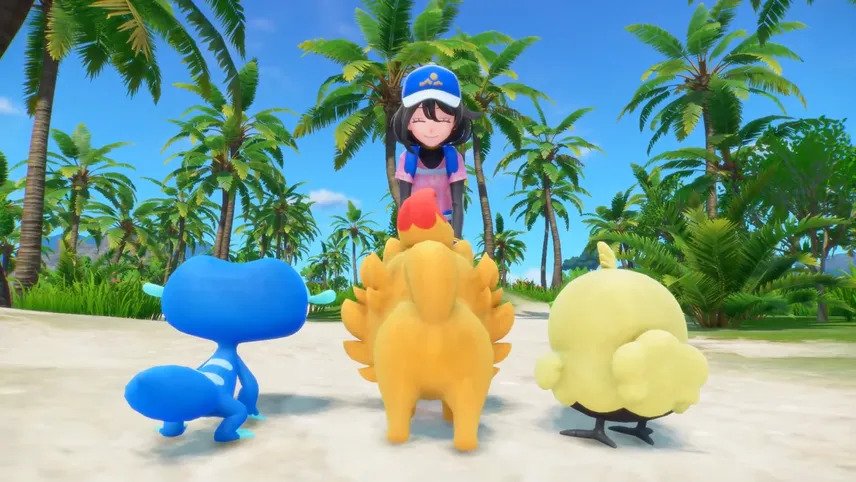
*“Pokémon Winds and Pokémon Waves: Why This Actually Feels Different”*
There’s always hype when a new Pokémon generation gets announced. Always. But this time? I don’t know… it hit differently.
When **Pokémon Winds** and **Pokémon Waves** were revealed as the official start of Generation 10, I expected the usual cycle. New starters. A new region. A slightly shinier engine. People arguing online within minutes. Business as usual.
But the trailer didn’t feel like business as usual.
It felt like a franchise pausing for a second, looking at its own history, and deciding it didn’t want to just iterate anymore. It wanted to shift.
And that’s a big deal.
## Generation 10 Carries Weight
Ten generations isn’t just a number. It’s a statement.
Very few game franchises get to ten mainline entries while still being culturally relevant. Pokémon isn’t just surviving — it’s still shaping conversations. That kind of longevity creates pressure. You can’t celebrate a milestone like this with something safe.
That’s why the reveal during Pokémon Presents felt intentional. This wasn’t framed as “here are the next games.” It was framed as “here’s the next era.”
And that subtle difference matters.
## The World Looks Like It Breathes
Let’s talk about what stood out immediately.
The setting revolves around islands, oceans, wind currents, shifting skies. But instead of feeling like a theme park version of “tropical region,” it feels integrated. The environments don’t look like backdrops. They look like ecosystems.
In previous games, even when the world was technically open, you could feel the seams. Terrain sometimes felt decorative. Here, in Winds and Waves, there’s this impression — even if it’s early — that the landscape isn’t just something you walk across. It’s something you move through.
There are wide ocean horizons, dense greenery reacting to weather, distant Pokémon visible without the world fading into fog too early. That’s not just a graphical improvement. That’s environmental storytelling.
And honestly? Pokémon has needed that.
## Built for Switch 2, Not Squeezed Onto It
The fact that both titles are launching for Nintendo Switch 2 exclusively changes the equation.
This isn’t a cross-gen compromise. It isn’t “how do we make this run on older hardware?” It’s “what can we build if we stop holding back?”
That distinction alone could explain the more ambitious scale. Higher environmental density. Smoother animation cycles. Lighting that actually feels atmospheric instead of functional.
But beyond visuals, it opens the door for systemic depth. More reactive weather systems. Smarter AI behaviors. Possibly more complex battle interactions influenced by terrain or climate.
When hardware stops being a bottleneck, design gets braver.
## The Starters Already Tell a Story
You can usually gauge the tone of a generation by its starters.
Here, the Grass, Fire, and Water trio don’t feel random. Their silhouettes, textures, and personality cues seem aligned with the wind-and-sea motif. That cohesion suggests a stronger regional identity.
I’ve seen debates online about which one is “best,” which is inevitable. But what’s interesting is that people aren’t just arguing about stats. They’re talking about vibe.
That’s the kind of emotional investment you want on day one.
## IGN Focused on Legacy. CNET Focused on Tech. I’m Focused on Feel.
IGN highlighted the historical weight of Generation 10. CNET leaned into the technological leap and what the new console enables.
Both angles make sense.
But what keeps replaying in my head isn’t the milestone or the hardware. It’s the atmosphere.
The trailer feels calmer. Wider. Less cramped. It gives space. And that space creates something Pokémon hasn’t always prioritized: a sense of solitude.
If exploration becomes less checklist-driven and more experiential, Winds and Waves could quietly redefine what “adventure” means in this series.
## The Sea Changes the Formula
An island-heavy region isn’t just aesthetic. It changes traversal logic.
Oceans aren’t roads. They’re open systems. Movement across water implies scale. Scale implies risk. Risk implies freedom.
If the developers lean into that — letting players navigate currents, discover hidden islets, encounter rare Pokémon in unpredictable weather — this could be the first Pokémon generation where exploration feels less linear and more organic.
Not bigger for marketing purposes.
Bigger in emotional texture.
## Narrative Possibilities Are Wide Open
We don’t know much about the story yet. And that’s good.
Wind and waves evoke instability, motion, transformation. That opens narrative doors beyond the standard gym-badge arc. Maybe the conflict isn’t just about power. Maybe it’s about balance. Climate. Migration. Natural forces shifting.
There’s something poetic about a tenth generation centering on movement.
After all, Pokémon itself has been in constant motion for decades.
## Competitive Implications Linger in the Background
Every generation shakes up the competitive meta. New abilities, new mechanics, new forms of temporary transformation.
Given the environmental emphasis, I wouldn’t be surprised if terrain and weather interactions become more dynamic. Imagine wind conditions subtly influencing accuracy. Or ocean battles changing movement options.
If they integrate environmental context into combat more deeply, that could refresh the strategic layer without relying on flashy gimmicks.
And the competitive scene would absolutely feel that.
## This Feels Like a Reset Without Being a Reboot
That’s the strange part.
Winds and Waves don’t feel like they’re abandoning Pokémon’s identity. They feel like they’re rediscovering it.
At its core, Pokémon has always been about exploration, companionship, and discovering creatures in the wild. Over time, structure sometimes overshadowed wonder.
This reveal hints at wonder returning to the foreground.
And maybe that’s what Generation 10 needed most.
---
## Instead of a Typical FAQ, Let’s Talk About What People Are Really Asking
A lot of players are wondering whether Pokémon Winds and Pokémon Waves truly mark Generation 10. Yes, they do. These titles represent the official start of the next core cycle, meaning entirely new Pokémon, a new region, and a competitive reset.
Another recurring question revolves around exclusivity. As announced, both games are designed specifically for Nintendo Switch 2. That exclusivity likely explains the visible technical leap and suggests a development process unrestrained by older hardware limitations.
People are also curious about whether the world is fully open. While exact structural details haven’t been exhaustively outlined, the trailer strongly indicates a broad, island-based open world with heavy emphasis on maritime exploration.
Release timing is projected for 2027, though exact dates remain to be finalized.
And maybe the most interesting question floating around is this one: will this generation actually feel different to play?
That answer, honestly, we won’t know until hands-on impressions arrive. But for the first time in a while, it doesn’t feel like we’re just watching another incremental upgrade.
It feels like we’re standing at the edge of something bigger.
---
### Sources
[https://www.pokemon.com/us/pokemon-news/see-the-new-trailer-for-pokemon-winds-and-pokemon-waves-coming-to-nintendo-switch-2](https://www.pokemon.com/us/pokemon-news/see-the-new-trailer-for-pokemon-winds-and-pokemon-waves-coming-to-nintendo-switch-2)
[https://www.ign.com/articles/pokemon-gen-10-revealed](https://www.ign.com/articles/pokemon-gen-10-revealed)
[https://www.cnet.com/tech/gaming/pokemon-winds-and-waves-revealed-for-switch-2/](https://www.cnet.com/tech/gaming/pokemon-winds-and-waves-revealed-for-switch-2/)